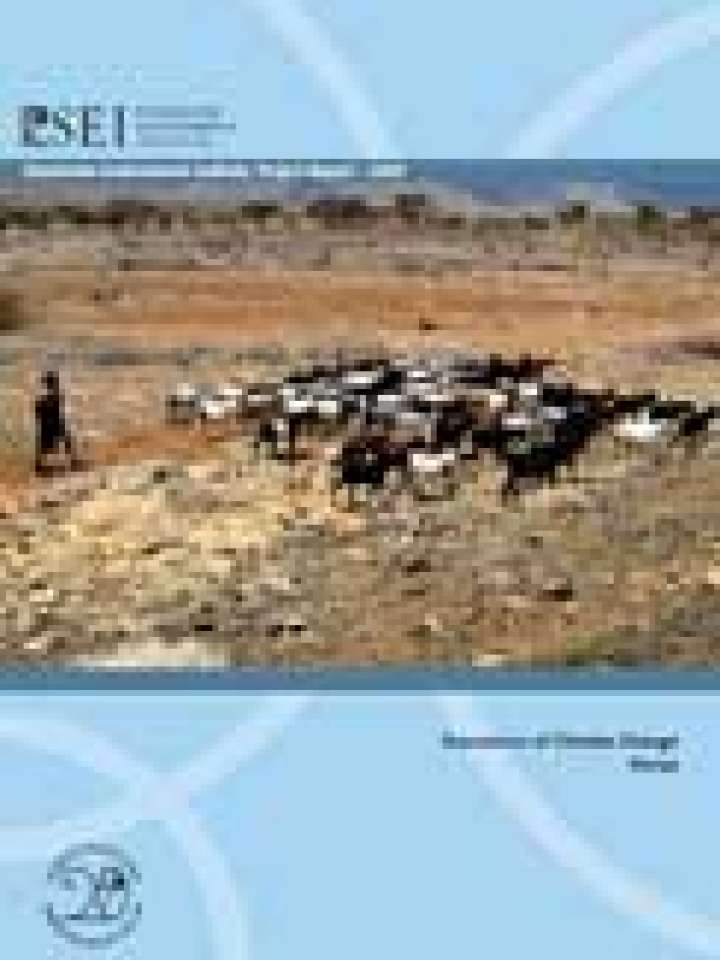
Economics of climate change - Kenya
Final report submitted in advance of COP15:
This report supports the development of a national policy and sectoral strategies, and the urgent needs for adaptation. It assesses the economics of climate change in Kenya and covers: (1) the impacts and economic costs of climate change; (2) the costs of adaptation; and (3) the potential for low carbon growth.
Amongst the key messages, it asserts that: (i) periodic floods and droughts (extreme events) already cause major socio-economic impacts and reduce economic growth in Kenya; (ii) Africa is predicted to have greater impacts than other world regions, because of higher vulnerability and lower adaptive capacity; (iii) considered projections of future change in mean annual temperature, precipitation, extreme events, sea level rise, rural health, agricultural sector, water resources, energy, and biodiversity, would generate potentially large economic costs in Kenya in the absence of adaptation; (iv) adaptation can reduce the economic impacts of climate change but has a cost; and (v) robust adaptation strategies are required but need to target development activities.
The study has advanced a number of approaches to investigate these areas, using aggregated analysis (top-down), sector assessment (bottom-up) and case studies. It was funded by DFID and DANIDA and undertaken by the Stockholm Environment Institute (in Oxford) working with local partners.
Explore further