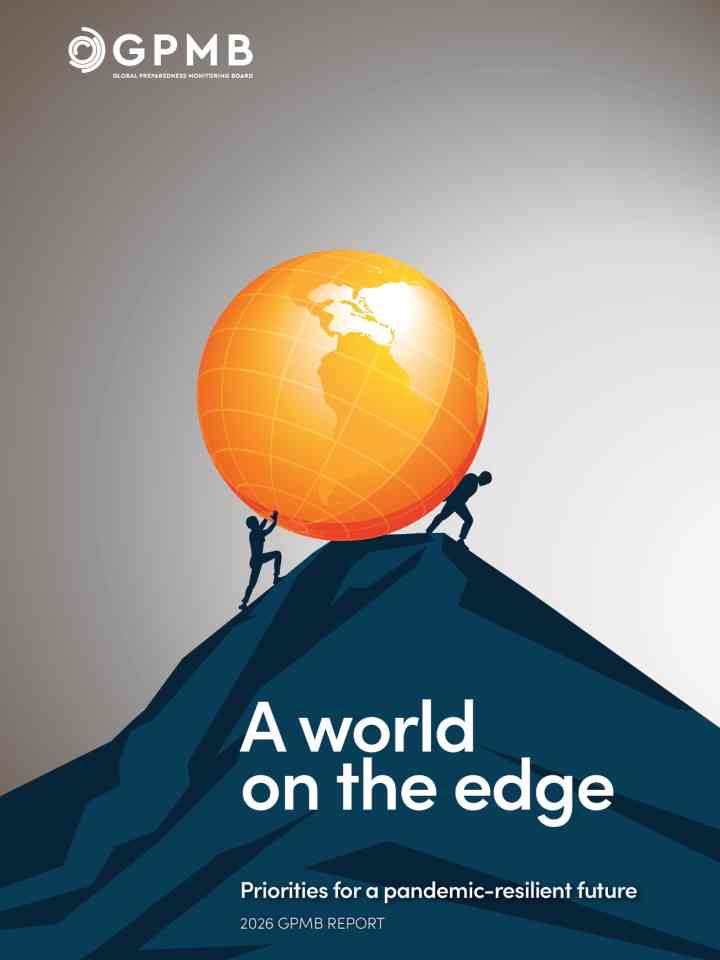
A world on the edge: priorities for a pandemic‑resilient future
The report examines whether the world is safer from health emergencies than it was a decade ago, looking at the impacts of the six Public Health Emergencies of International Concern (PHEICs) declared between 2014 and 2025 — from the West African Ebola epidemic through COVID-19 to the 2024 mpox surge. This is the 2026 final report from the Global Preparedness Monitoring Board (GPMB), an independent body co-convened by WHO and the World Bank. Titled "A World on the Edge," it's the GPMB's concluding assessment after eight years of monitoring global pandemic preparedness.
The report finds that infectious disease outbreaks are becoming more frequent and more damaging, economic impacts are growing, and equitable access to vaccines and treatments has actually gotten worse since COVID-19 — not better. Development assistance for health has fallen back to 2009 levels, and societies have emerged from recent crises poorer, more unequal, and more politically divided. Most critically, the report identifies a deep erosion of trust — between governments and citizens, between nations, and in multilateral institutions — alongside persistent inequity in access to countermeasures. The GPMB concludes with three urgent priorities: establishing independent pandemic risk monitoring, ensuring equitable access to medical countermeasures through the WHO Pandemic Agreement, and creating sustainable financing that doesn't evaporate between crises.
Explore further