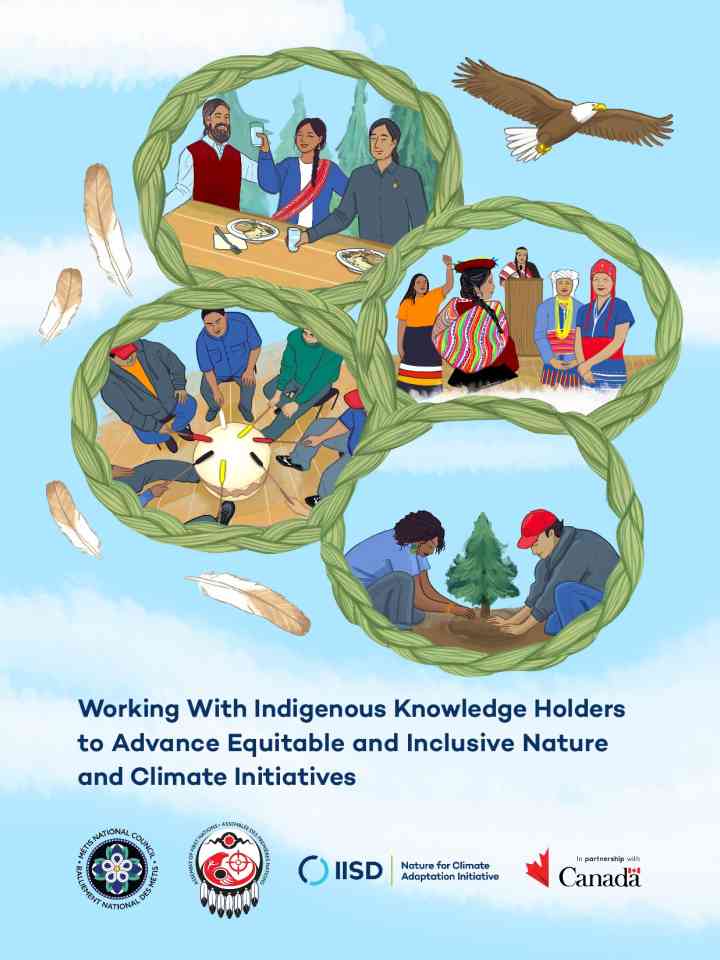
Working with indigenous knowledge holders to advance equitable and inclusive nature and climate initiatives
The article explores how Indigenous Knowledge (IK) systems can be ethically and effectively integrated into climate adaptation and nature-based solutions. It highlights the growing recognition in global frameworks—such as the Paris Agreement, the Convention on Biological Diversity, and the UN Convention to Combat Desertification—of the crucial role Indigenous Peoples play in stewarding ecosystems and addressing environmental challenges. The brief aims to guide policymakers, practitioners, and organizations in working collaboratively with Indigenous Knowledge holders while respecting their rights, values, and worldviews.
The guidance emphasizes that meaningful engagement with Indigenous Knowledge requires rights-based and relationship-centered approaches. Key principles include respecting Indigenous sovereignty over knowledge, ensuring free, prior, and informed consent (FPIC), fostering long-term partnerships, recognizing Indigenous women’s leadership, and providing direct access to funding for Indigenous-led initiatives. The brief concludes that combining Indigenous Knowledge with other knowledge systems—while ensuring ethical engagement and equitable governance—can strengthen climate adaptation efforts and biodiversity protection.
Explore further