Tropical cyclone risk evolution in the Philippines and Vietnam
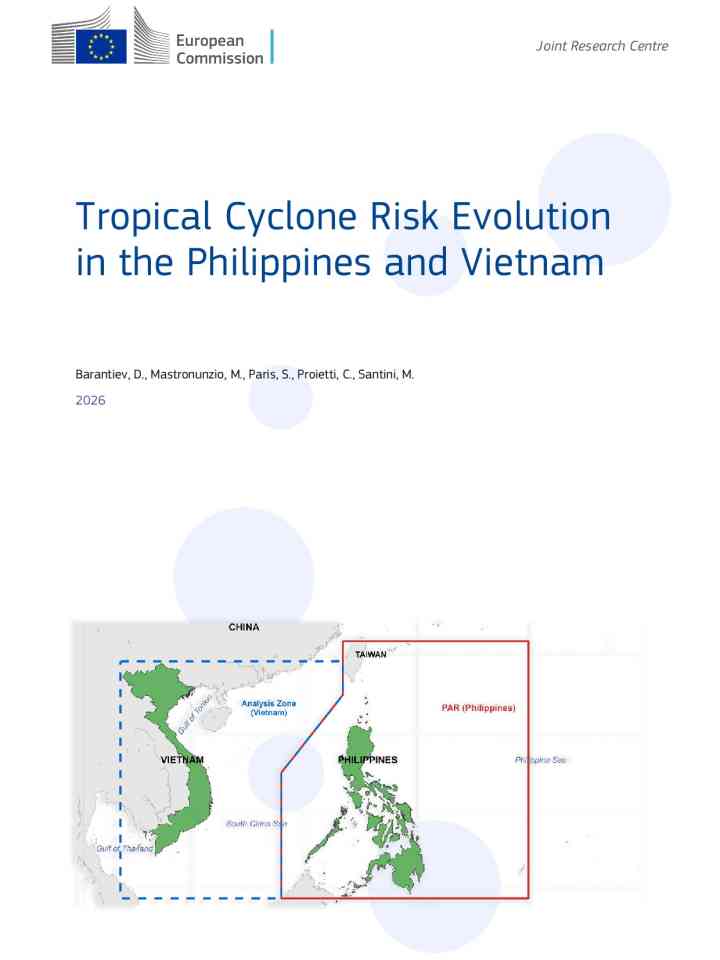
This report was carried out at the request of the Directorate-General for European Civil Protection and Humanitarian Aid Operations (DG ECHO) to inform the preparedness and anticipatory action frameworks to DG ECHO’s Regional Office in Bangkok. This report analyses how the tropical cyclone hazard landscape in Southeast Asia is changing, combining seven decades of climatological data (1951 - 2024) with a detailed assessment of the hyperactive 2025 season. The results confirm a shift from a frequency‑driven to an intensity‑driven risk regime, marked by stronger storms, higher thermodynamic efficiency, and a poleward migration of peak intensity.
The 2025 season served as a stress‑test for these trends, exposing a re‑intensification anomaly in the South China Sea, where the Accumulated Cyclone Energy over Vietnam nearly matched that of the Philippine Sea. This demonstrates that the basin can now sustain - and occasionally rebuild - major typhoon intensity close to landfall. The analysis also shows that overlapping storm sequences effectively removed recovery windows, creating compound stress conditions for infrastructure and emergency response, overwhelming local coping capacities. These findings highlight shifting spatial risk profiles that are highly relevant for updating anticipatory action and disaster preparedness frameworks.
Explore further