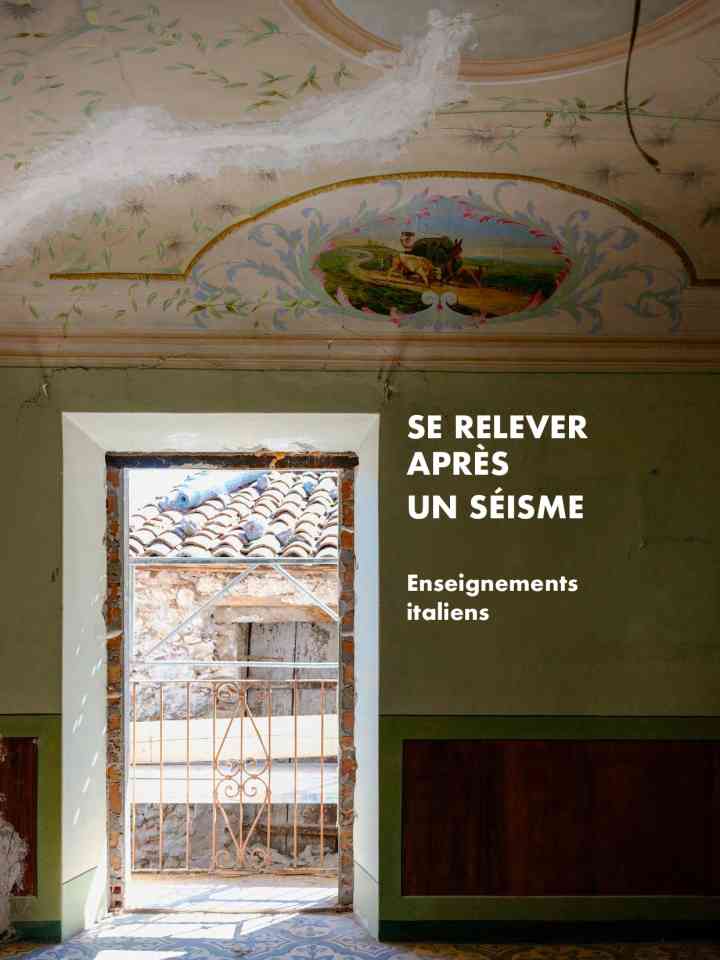
Se relever après un séisme: Enseignements italiens
This report summarizes lessons learned from post-earthquake reconstruction in Central Italy, with an in-depth analysis of the cases of L'Aquila (2009), Amatrice (2016), and the island of Ischia (2017). It aligns with the Build Back Better (BBB) approach and examines the complexity of the long-term recovery phase. It further investigates the opportunity for development in the wake of a catastrophe, financing and insurance systems, the challenges of emergency housing solution, restoration of cultural and heritage sites, and the issues of governance. The report aims to transfer this knowledge to enhance territorial resilience to seismic risk, particularly in France.
A range of key takeaways from the report are provided below:
- Reconstruction must extend beyond material repair to include the regeneration of the social, economic, and cultural fabric.
- Italian experience shows that the early initiation of reconstruction operations during the post-emergency phase is fundamental.
- The contrast between Amatrice (nearly 300 victims) and Norcia (1 victim) in the 2016 earthquakes underscores the vital importance of a deeply ingrained risk culture and the enforcement of preventative seismic codes.
- The Italian system is a model where the State funds not only repair but also the necessary seismic improvement to re-establish habitability.
- The restoration of monuments like the Santa Maria del Suffragio church in L'Aquila highlighted the superiority of ancient techniques based on flexibility and controlled elasticity.
- Emergency housing solutions, despite being rapid and safe, can undermine the revitalization of the original historic centers.
Explore further
Hazards
Earthquake
Themes
Recovery
Urban risk and planning
ISBN/ISSN/DOI
ISBN: 9782492142062
Number of pages
96 p.
Publication year
2025