
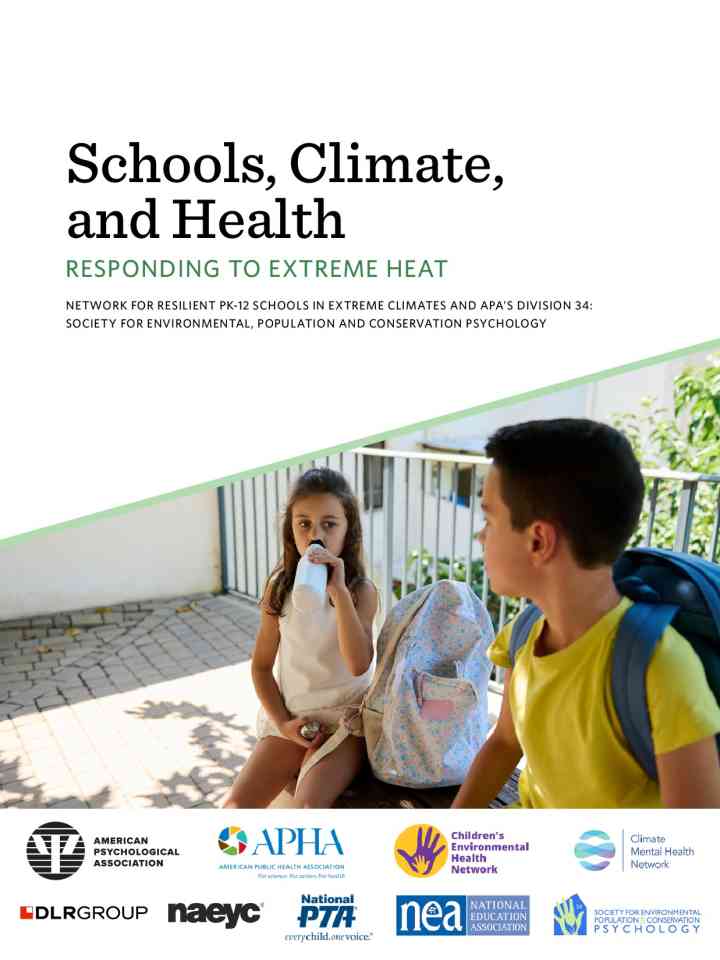
Schools, climate and health: Responding to extreme heat
This report examines how extreme heat affects students, educators, families, and school systems and provides practical, evidence-informed guidance grounded in psychological science to help school communities respond. Children spend a substantial portion of their waking hours in school buildings, often during the hottest parts of the day and year. Extreme heat is not a seasonal inconvenience. It is a growing health, learning, and operational challenge for school communities. When school environments are unable to protect students and educators from extreme heat, the result is not only lost instructional time, but preventable harm to both children and educators’ well-being.
Recommendations proposed by this report include:
- Designate district-level heat leadership and accountability structures
- Develop and implement heat thresholds and monitoring procedures, integrated into emergency and safety planning
- Prioritise mitigation in the most impacted areas
- Reduce student and educator heat exposure across classrooms, transportation, and school activities using system-level protections
- Ensure automatic protection for students and staff who are more vulnerable to extreme heat
- Implement developmentally and physiologically informed protocols for monitoring symptoms and managing heat‑related health risks
- Reduce educator heat exposure through additional protections
Explore further
Country and region
United States of America
Number of pages
16 p.
Publication year
2026