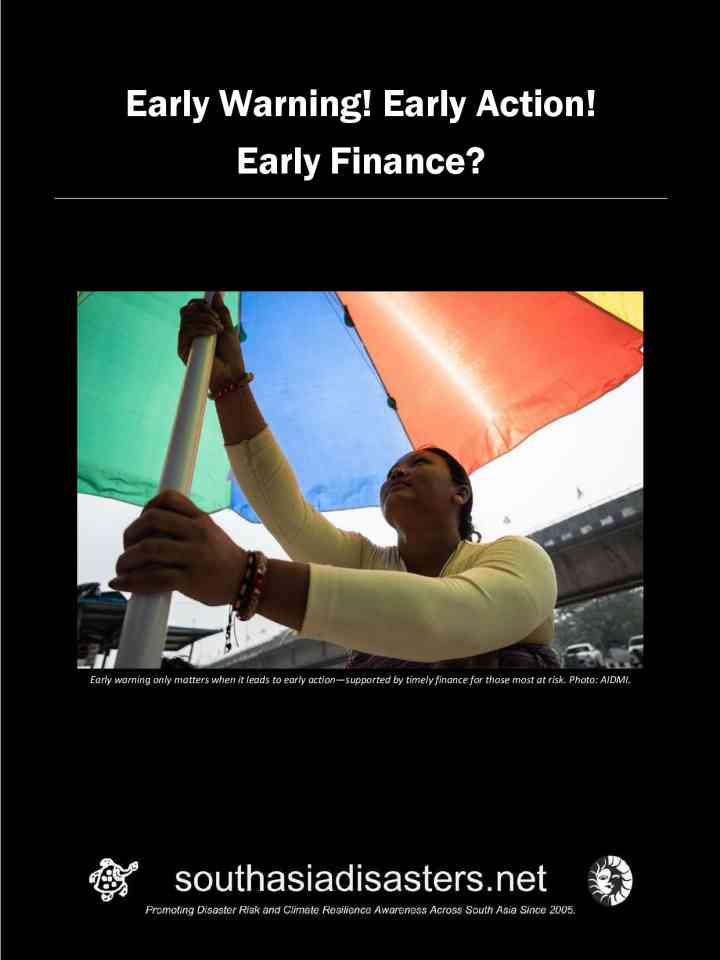
Early warning! Early action! Early finance?
This special issue is about drawing lessons about recognising the importance of acting early, learning from practice, and strengthening the systems that make early action possible. Drawing on experiences from India and insights from global initiatives such as the Risk-informed Early Action Partnership (REAP), the publication explores practical approaches to reducing disaster impacts before crises occur. It features examples of heat resilience measures, anticipatory action, community-led preparedness, and innovative financing mechanisms that enable vulnerable populations to act on risk information.
The experiences presented in this issue point to a shared conclusion: early warning systems and anticipatory action are necessary, but they are not sufficient. Their value is realised only when they lead to timely action and are supported by systems that enable people to respond before risks escalate. The challenge ahead is not about generating more information, but about ensuring that existing knowledge consistently leads to action.
Explore further