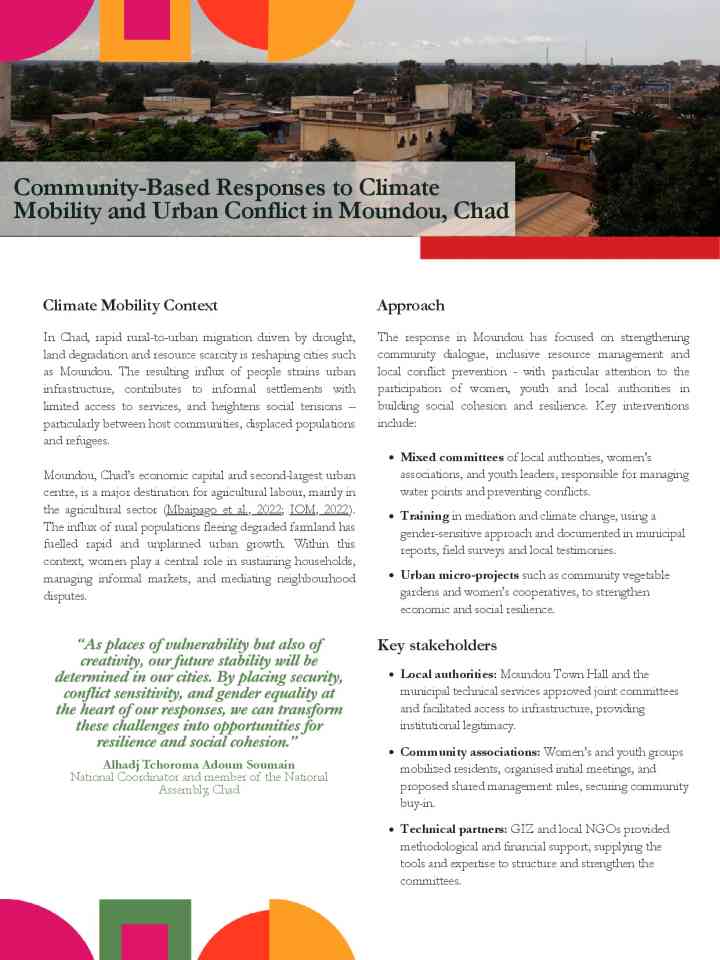
Community-based responses to climate mobility and urban conflict in Moundou, Chad
This case study examines community-based responses to climate mobility and urban conflict in Moundou, Chad, where rapid rural-to-urban migration driven by drought, land degradation and resource scarcity is reshaping the city. The publication describes how the influx of people has strained urban infrastructure, contributed to informal settlements and heightened social tensions between host communities, displaced populations and refugees. The response focused on strengthening community dialogue, inclusive resource management and local conflict prevention, with particular attention to the participation of women, youth and local authorities. Key interventions included mixed committees managing water points, training in mediation and climate change, and urban micro-projects such as community vegetable gardens and women’s cooperatives.
The case study reports that joint water management committees led to a 35 per cent reduction in reported water-point conflicts by 2023, while training in social mediation helped ease tensions between displaced and host populations. Women-led urban micro-projects provided regular income and supported education. The publication concludes that climate mobility is an urban issue, that women are strategic actors in resource management and mediation, and that resilience policies should integrate community mediation mechanisms, dialogue spaces and stronger social protection systems.
Explore further