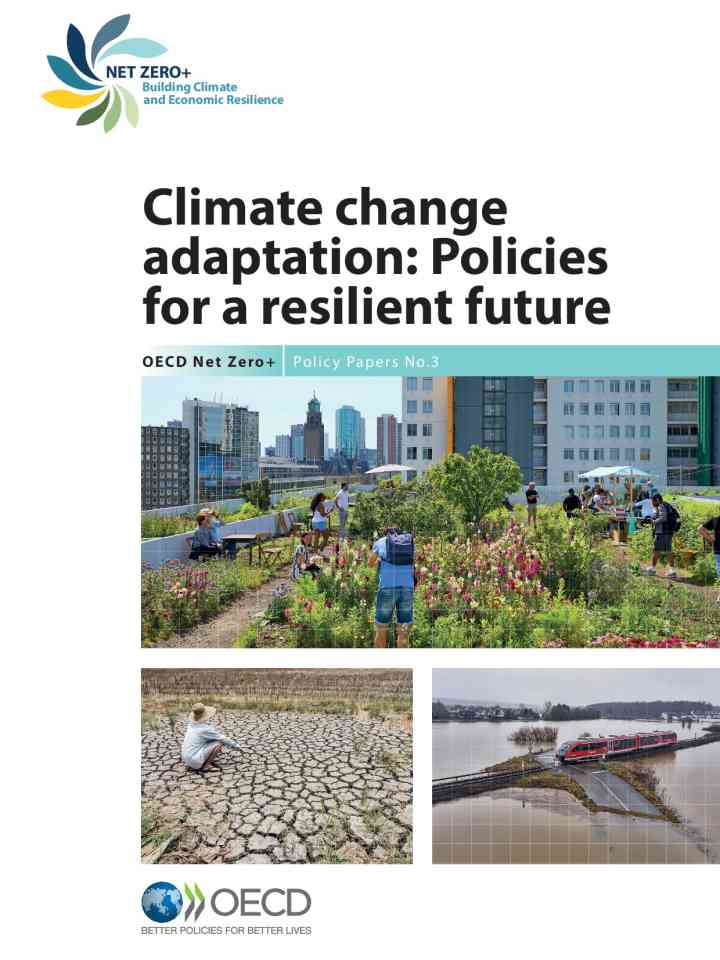
Climate change adaptation: Policies for a resilient future
This paper outlines four key steps for effective policymaking for climate change adaptation, highlighting the role of multiple levels of government. Specific attention is paid to building resilience in food systems, given their unique vulnerability to climate change.
Effective policy making for adaptation involves a four-step, iterative process: 1) assessing climate risks, 2) developing national adaptation strategies and plans, 3) implementation, and 4) evaluating results. Assessing climate risks is an essential step aimed at identifying adaptation gaps and prioritising actions, and should combine data on hazards, exposure, and vulnerabilities. Evidence highlights that data and methodological limitations are still key barriers to this first critical step of adaptation policy making.
Explore further