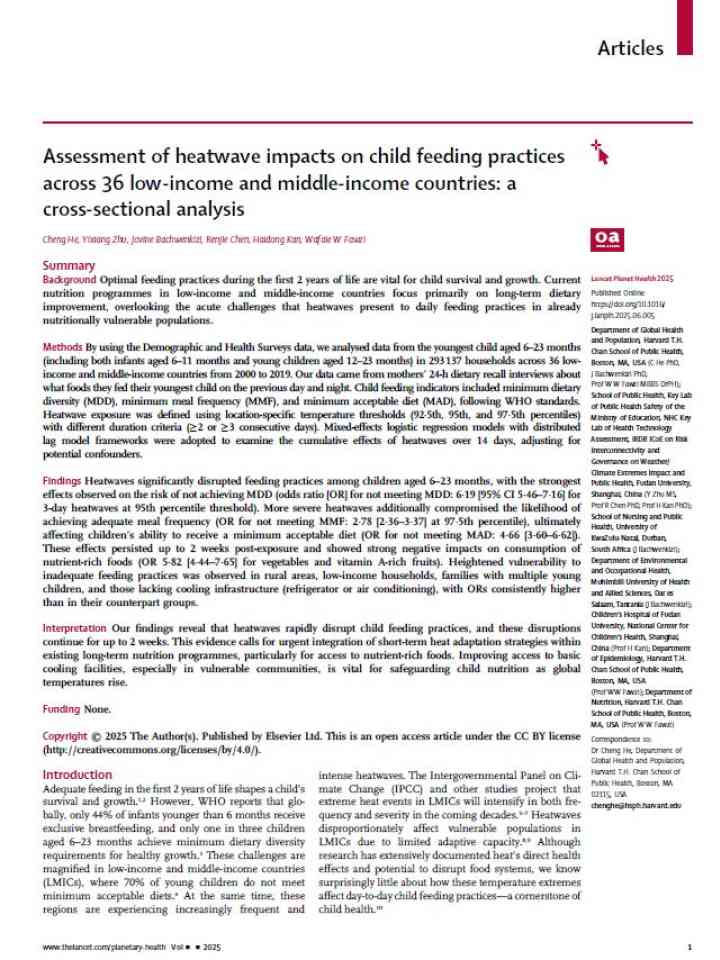
Assessment of heatwave impacts on child feeding practices across 36 low-income and middle-income countries: a cross-sectional analysis
This study analysed data from the youngest child aged 6–23 months (including both infants aged 6–11 months and young children aged 12–23 months) in 293 137 households across 36 low-income and middle-income countries from 2000 to 2019. Optimal feeding practices during the first 2 years of life are vital for child survival and growth. Current nutrition programmes in low-income and middle-income countries focus primarily on long-term dietary improvement, overlooking the acute challenges that heatwaves present to daily feeding practices in already nutritionally vulnerable populations.
Heatwaves significantly disrupted feeding practices among children aged 6–23 months, with the strongest effects observed on the risk of not achieving MDD (odds ratio [OR] for not meeting MDD: 6·19 [95% CI 5·46–7·16] for 3-day heatwaves at 95th percentile threshold). More severe heatwaves additionally compromised the likelihood of achieving adequate meal frequency (OR for not meeting MMF: 2·78 [2·36–3·37] at 97·5th percentile), ultimately affecting children's ability to receive a minimum acceptable diet (OR for not meeting MAD: 4·66 [3·60–6·62]). These effects persisted up to 2 weeks post-exposure and showed strong negative impacts on consumption of nutrient-rich foods (OR 5·82 [4·44–7·65] for vegetables and vitamin A-rich fruits). Heightened vulnerability to inadequate feeding practices was observed in rural areas, low-income households, families with multiple young children, and those lacking cooling infrastructure (refrigerator or air conditioning), with ORs consistently higher than in their counterpart groups.
Explore further