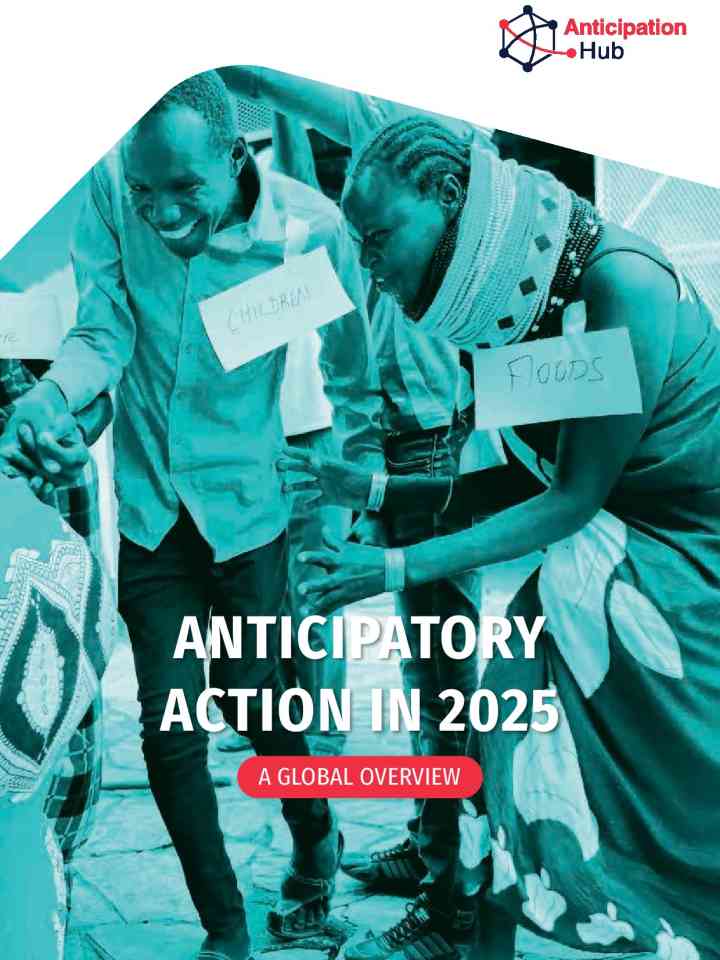
Anticipatory action in 2025: a global overview
This report provides the fourth annual global overview of anticipatory action — defined as acting ahead of a predicted hazardous event to prevent or reduce impacts before they fully unfold. In 2025, the approach recorded 146 activations across 54 countries, releasing nearly $120 million and directly reaching 9.6 million people. Active frameworks grew 70% year-on-year, from 154 to 262, spanning 75 countries, with floods, droughts and tropical storms as the most common hazards covered. For the first time, the report also tracks donor funding, distinguishing between "fuel" funding for activations and "build" funding for system development, with Germany and the EU identified as the largest contributors.
The report highlights a broader maturation of the approach: 205 additional frameworks were under development across 71 countries, 57 countries were actively working to institutionalize anticipatory action within national disaster risk management systems, and the Philippines became the first country to pass nationwide legislation mandating it. Cash and voucher assistance, early warnings, and WASH activities remained the most frequently delivered actions. Key challenges looking ahead include diversifying funding sources, strengthening government-led coordination, and maintaining innovation under growing humanitarian budget constraints.
Explore further