
Items: 15
The 180-point Master of Climate Change Science and Policy will give you the necessary combination of policy and science knowledge to address the real-world problem of climate change.
A major research project to help communities on British Columbia’s South Coast prepare and adapt for sea level rise and flooding has been announced.
This article explains how the thoughts and beliefs people hold about preparing for natural hazards influences their behaviour.
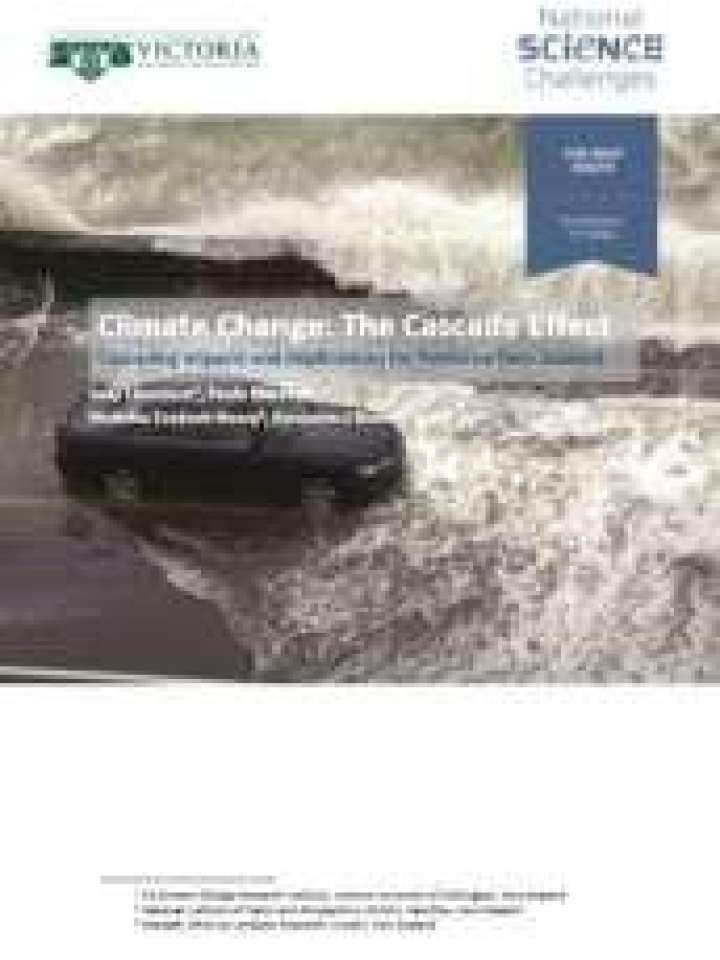
The interconnected – or cascading – social and economic impacts are the focus of this research, which builds on the Climate Change Impacts and Implications (CCII) work completed in 2016.
According to new research, heatwaves and other extreme weather events caused by climate change could have profound implications for personality traits and mental health. Genes that regulate people's levels of dopamine - a neurotransmitter that determines behaviour - are more affected by climatically stressful environments than by temperate ones.
This paper provides a critique of New Zealand's policies on disaster risk reduction. The country faces significant risks associated with natural hazards and is one of the most vulnerable countries to such risks for its size.

Recently published research from Victoria University of Wellington and GNS Science has provided a unique insight into the hydrological effects of earthquakes in New Zealand. The different ways groundwater systems respond to the type of earthquake shaking is critical to understanding how landslides evolve in both the short and long term.
This paper presents a novel way to aggregate separate measures of disaster impact and apply it to two recent catastrophic events: the Christchurch (New Zealand) earthquakes and the Greater Bangkok (Thailand) floods of 2011.
Voluntary Commitments
The organization has no registered commitments.
The Sendai Framework Voluntary Commitments (SFVC) online platform allows stakeholders to inform the public about their work on DRR. The SFVC online platform is a useful toolto know who is doing what and where for the implementation of the Sendai Framework, which could foster potential collaboration among stakeholders. All stakeholders (private sector, civil society organizations, academia, media, local governments, etc.) working on DRR can submit their commitments and report on their progress and deliverables.