Items: 14
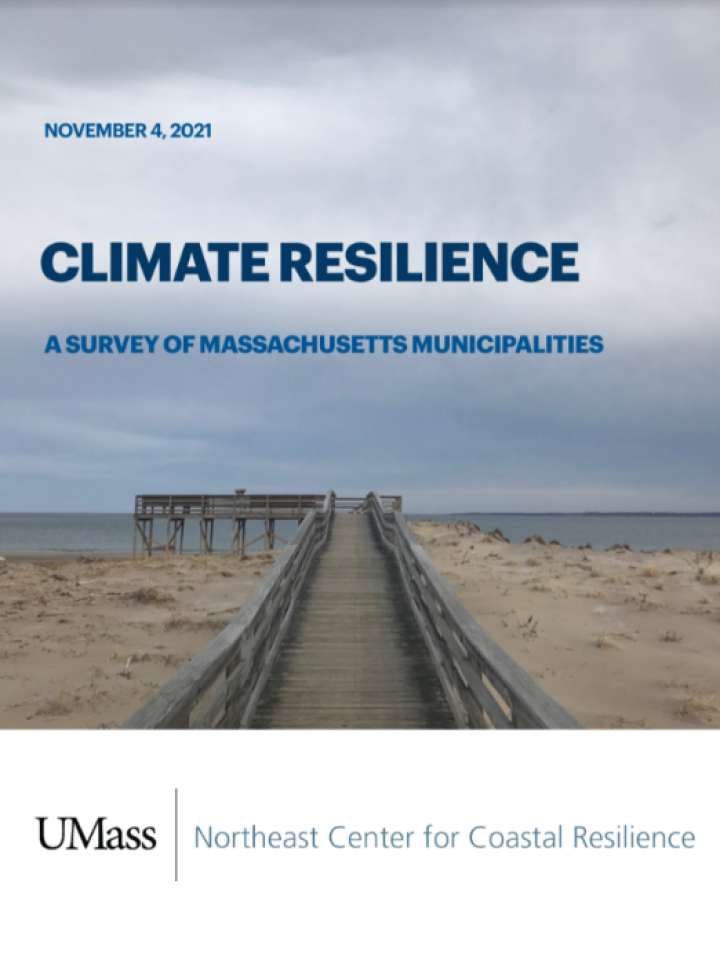
This survey-based study provides a comprehensive outlook and data baseline on climate resilience in Massachusetts from the point of view of municipalities.
Results of the study of 111 Bay State municipalities and planning agencies will be used to refine the mission of the Northeast Center for Coastal Resilience.
Research by University of Massachusetts Amherst economist Marta Vicarelli finds that weather shocks experienced during the early stages of life have significant effects on children between 2-6 years of age.
Humans experience a wide array of disasters that generally fall into two categories: natural hazards such as hurricanes, earthquakes, tsunamis, volcanic eruptions, etc.; and unnatural, or man-made, hazards such as wars, explosions, wildfires, chem
New research warns that a Nankai-induced tsunami is likely to hit southeast Japan in the next few decades. The disaster could displace four times the number of people affected by the massive Tohoku tsunami of 2011. The scientists used new GPS-based methods for modeling earthquake-induced tsunamis.
A recent first-of-its-kind analysis of wildfire records over 20 years shows that human-started fires accounted for 84 percent of all wildfires, tripled the length of the fire season and dominated an area seven times greater than that affected by lightning-caused fires. Humans have “a remarkable influence” on modern U.S. wildfire regimes, research concludes.
Voluntary Commitments
The organization has no registered commitments.
The Sendai Framework Voluntary Commitments (SFVC) online platform allows stakeholders to inform the public about their work on DRR. The SFVC online platform is a useful toolto know who is doing what and where for the implementation of the Sendai Framework, which could foster potential collaboration among stakeholders. All stakeholders (private sector, civil society organizations, academia, media, local governments, etc.) working on DRR can submit their commitments and report on their progress and deliverables.