
Items: 6
Fierce season redefined what is possible under a warming climate, researcher warns.
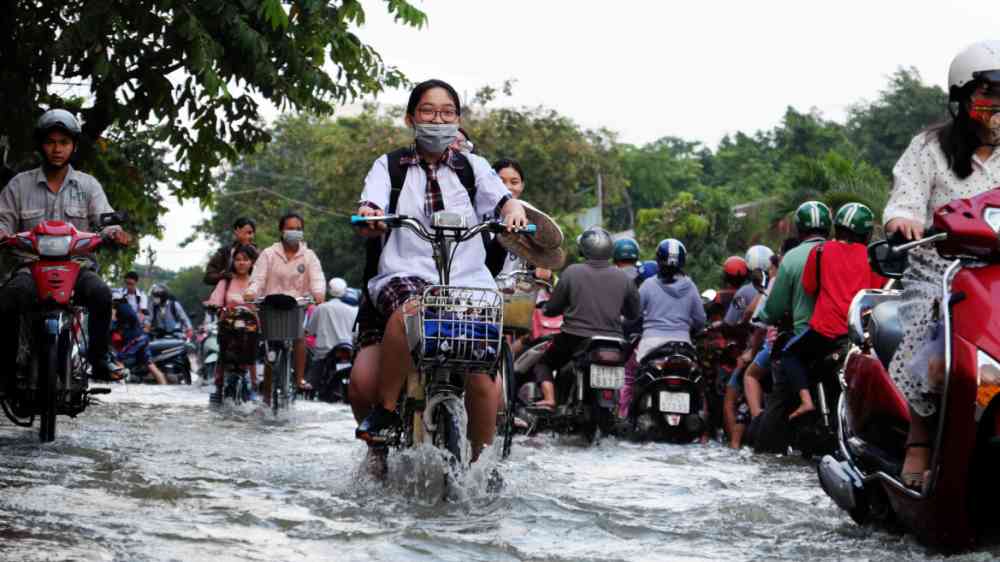
Ideological barriers keep professional planners “stuck in the middle” between local governments and the public, researchers find.
Lower humidity and higher temperatures are driving extreme weather that makes wildfires more frequent and intense, say experts.
New research from University of Alberta geographers uses traditional Indigenous knowledge to better understand spring flooding in the Kashechewan First Nation, located in the southwestern James Bay region. Results show that climate change and human-induced changes have exacerbated the timing and extent of spring flooding in the region.
According to a new study, wildfires have caused nearly a quarter of all permafrost thaw—2,000 square kilometres—in Western Canada’s boreal peatlands over the past 30 years. This poses hazards to both infrastructure and humans by damaging important cultural sites and making travel across the land much more challenging.
Resilient Systems, Resilient Communities emerges from the University of Alberta interdisciplinary research network, Intersections of Sustainability, which focuses on the relationship between water governance, climate change, and community futures.
Voluntary Commitments
The organization has no registered commitments.
The Sendai Framework Voluntary Commitments (SFVC) online platform allows stakeholders to inform the public about their work on DRR. The SFVC online platform is a useful toolto know who is doing what and where for the implementation of the Sendai Framework, which could foster potential collaboration among stakeholders. All stakeholders (private sector, civil society organizations, academia, media, local governments, etc.) working on DRR can submit their commitments and report on their progress and deliverables.