
University of Aberdeen
ABDN
Academic & Scientific
Mission
- Life-enriching research, learning and knowledge
- World-class teaching and learning
- Personalised, international student experience
- Rigorous, relevant, impactful research
- Focus on social, cultural and economic impact
- A culture of equality and diversity in which all staff and students thrive
- An integrated, collaborative and sustainable infrastructure
Items: 7
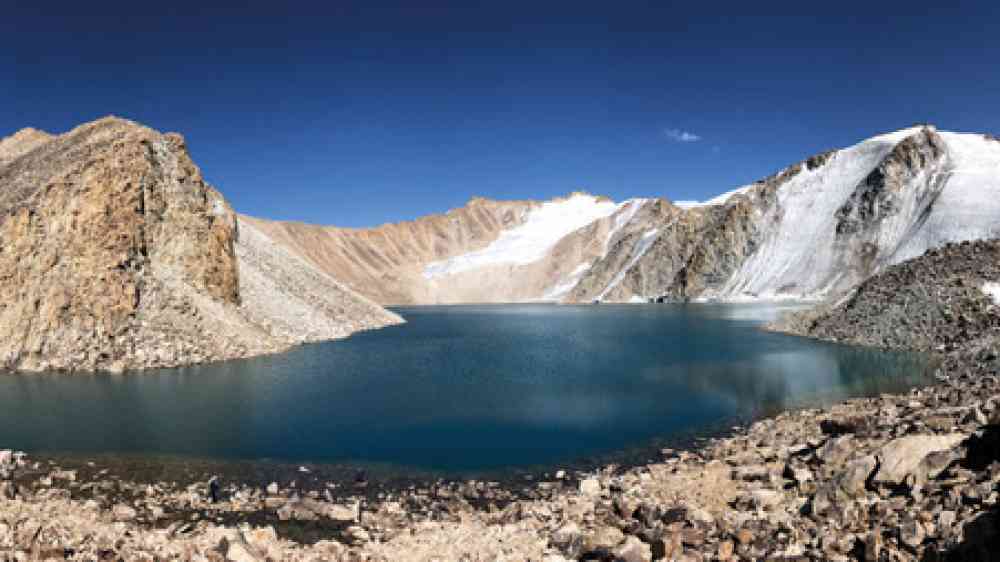
Researchers call for urgent rethink of global hazard monitoring as "Small Alpine Lake Outbursts" emerge in a warming world.

The findings of a new study shows governance and preparedness rather than hazard magnitude determine whether avalanches become mass-casualty events.
Glaciers could become a powerful tool for monitoring some volcanoes, according to new research that shows for the first time how the altitude of glaciers located on volcanoes could signal future unrest including the threat of an eruption.
Satellite images could offer a new way to monitor for avalanche threats to remote mountain communities, according to Aberdeen scientists studying a deadly Himalayan avalanche.
Using an innovative technique that uses the seismic noise of waves crashing at the coastline of Campi Flegrei in Italy, scientists have produced a seismic image of the deeper structure of a supervolcano, revealing the main route bringing hot fluids to the surface.
Scientists have created the world's first 3D thermal image of an active volcano. The research team is aiming is to develop a fully automated drone monitoring system that is more accurate, safer and cheaper than current methods, which are unaffordable in developing countries where many of the world’s active volcanoes are located.
A new study has found the first direct evidence of a so-called 'hot zone' feeding a supervolcano in southern Italy that experts say is nearing eruption conditions. The study suggests that magma was prevented from rising to the surface in the 1980s by a rock formation. Where the large layer of magma will migrate now is unknown.
Voluntary Commitments
The organization has no registered commitments.
The Sendai Framework Voluntary Commitments (SFVC) online platform allows stakeholders to inform the public about their work on DRR. The SFVC online platform is a useful toolto know who is doing what and where for the implementation of the Sendai Framework, which could foster potential collaboration among stakeholders. All stakeholders (private sector, civil society organizations, academia, media, local governments, etc.) working on DRR can submit their commitments and report on their progress and deliverables.