swissinfo.ch - International Service of the Swiss Broadcasting Corporation
News and Media
Items: 20
At the opening of the Global Platform in Geneva, Manuel Sager, director general of the Swiss Agency for Development and Cooperation, urged officials to invest more in disaster prevention and preparedness.
On Thursday, an avalanche crashed spectacularly into a hotel restaurant at a small mountain resort in eastern Switzerland. Three people received minor injuries. What are the avalanche risks in Switzerland and how are such hazards monitored?
It may seem quite a leap from studying snowflakes with a magnifying glass to forecasting one of the greatest natural threats in the Alps, but the step is part of how Switzerland manages avalanches.
India is one of the biggest emitters of carbon dioxide in the world. At the same time, rural and isolated communities in the country are hit hard by climate change. Swiss aid is being used to try to tackle these two interlinking issues.
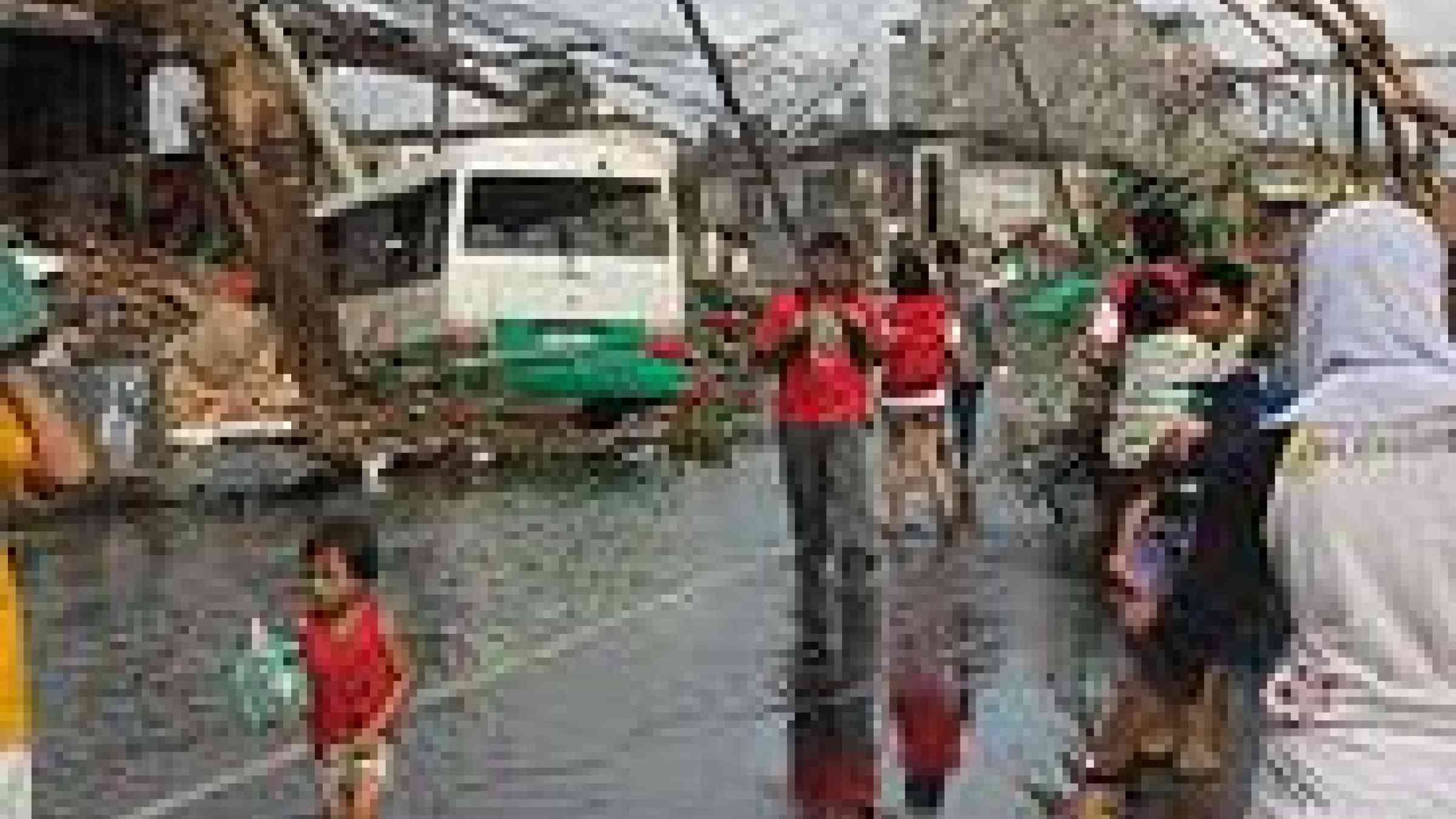
This is not a once in a lifetime event anymore. That means changing where we plan to put people; if we place people in these coastal areas we have to come up with something else, like cyclone shelters, or we have to improve the building standards.
The canton of Bern is at risk from devastating floods because its lakes, which take melt water from the mountains, are sometimes too small to contain all the water that comes their way.

Thanks to new monitoring techniques that improve flood forecasting, Switzerland is now less prone to the catastrophic type of flooding that has hit the country over the past few decades.

Although the the last serious earthquake occurred in the Basel area in 1356, experts agree that it is a high risk seismic zone.
Voluntary Commitments
The organization has no registered commitments.
The Sendai Framework Voluntary Commitments (SFVC) online platform allows stakeholders to inform the public about their work on DRR. The SFVC online platform is a useful toolto know who is doing what and where for the implementation of the Sendai Framework, which could foster potential collaboration among stakeholders. All stakeholders (private sector, civil society organizations, academia, media, local governments, etc.) working on DRR can submit their commitments and report on their progress and deliverables.
Contact information
Fax:
+1-202 522 3123