
Items: 33
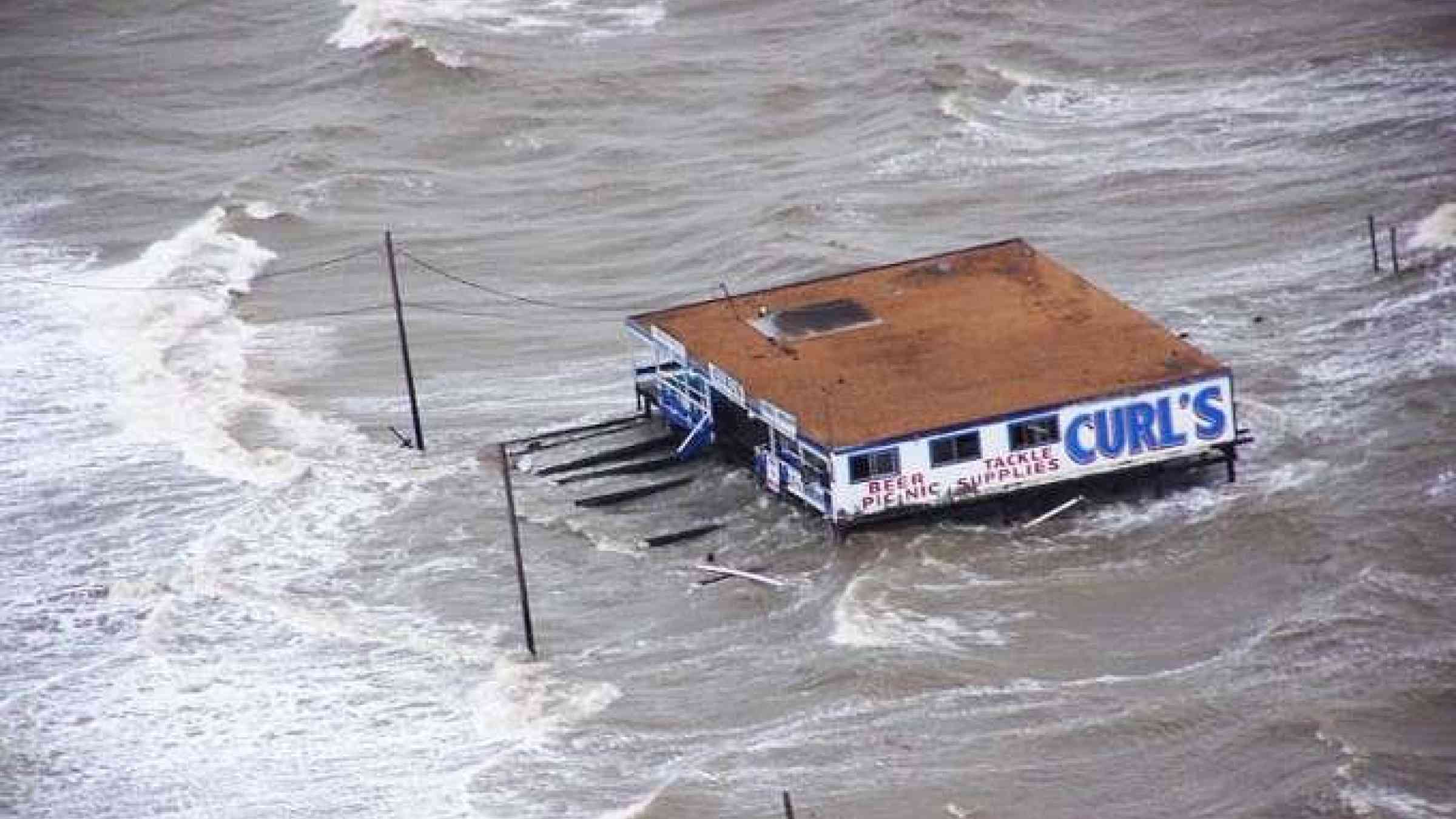
A new study finds that by 2150, the seemingly small difference between an increase of 1.5 and 2.0 C would mean the permanent inundation of lands currently home to about 5 million people, including 60,000 who live on small island nations. Even under the best-case climate policy being considered today, many places will still have to deal with rising seas and more frequent coastal floods.
Heat waves are among the deadliest and most common of environmental extremes. Using a global climate model, a team led by Princeton University researchers measured how severely heat waves interact with urban heat islands, now and in the future, in 50 American cities across three climate zones.
Researchers previously thought that global warming affected the North American monsoon only by delaying it. But a new, high-resolution climate model shows that total rainfall is affected and that the region is facing a large reduction in precipitation. The model is a step toward building better systems for predicting and preparing for the monsoon.
Predicting how climate change will affect the incidence of infectious diseases would have great public health benefits. To do so, researchers need new statistical models that incorporate both climate factors and the climate-disease relationship, accounting for uncertainties in both. A new study looks at statistical techniques that can be used to model this relationship.
Study finds that sea-level rise will boost the occurrence of moderate rather than severe flooding in some regions accustomed to severe flooding, while in other areas with little history of severe flooding, the reverse is true. This improves the accuracy of a set of flood predictions and presents important consequences for the management of coastal flooding.
The U.S. Nuclear Regulatory Commission (NRC) relied on faulty analysis to justify its refusal to adopt a critical measure for protecting Americans from the occurrence of a catastrophic nuclear-waste fire at any one of dozens of reactor sites around the country, according to an article in the May 26 issue of Science magazine.
A team of Princeton engineers has deployed an advanced drought and flood risk monitoring program for environmentally vulnerable regions like Niger and other areas in Africa and in Latin America. The program assimilates weather data that are plentiful but hard to analyze for those on the ground.
Objective measures of storm intensity show that North Atlantic hurricanes have grown more destructive. But residents' views depend more on gender, belief in climate change and recent experience with hurricanes, according to a new study. Understanding how people perceive the threat of hurricanes is crucial for preparedness and policies to make communities more resilient.
Voluntary Commitments
The organization has no registered commitments.
The Sendai Framework Voluntary Commitments (SFVC) online platform allows stakeholders to inform the public about their work on DRR. The SFVC online platform is a useful toolto know who is doing what and where for the implementation of the Sendai Framework, which could foster potential collaboration among stakeholders. All stakeholders (private sector, civil society organizations, academia, media, local governments, etc.) working on DRR can submit their commitments and report on their progress and deliverables.
Contact information
Fax:
+421250944001