Items: 66
A school built from brittle concrete collapsed in Mexico during the September earthquake. Steel rebars are needed to act as a cage containing the concrete in the event of an earthquake, preventing concrete columns from breaking in half. Although building codes have been improved, they generally do not apply to old buildings.
Two earthquakes striking Mexico City 32 years apart have demonstrated major differences in destruction. The earthquake in 1985 brought significantly more damage, though the one in 2017 felt 10 times worse. Thanks to improved building codes and in general more resilient infrastructure, a great reduction in loss and damage was made possible.
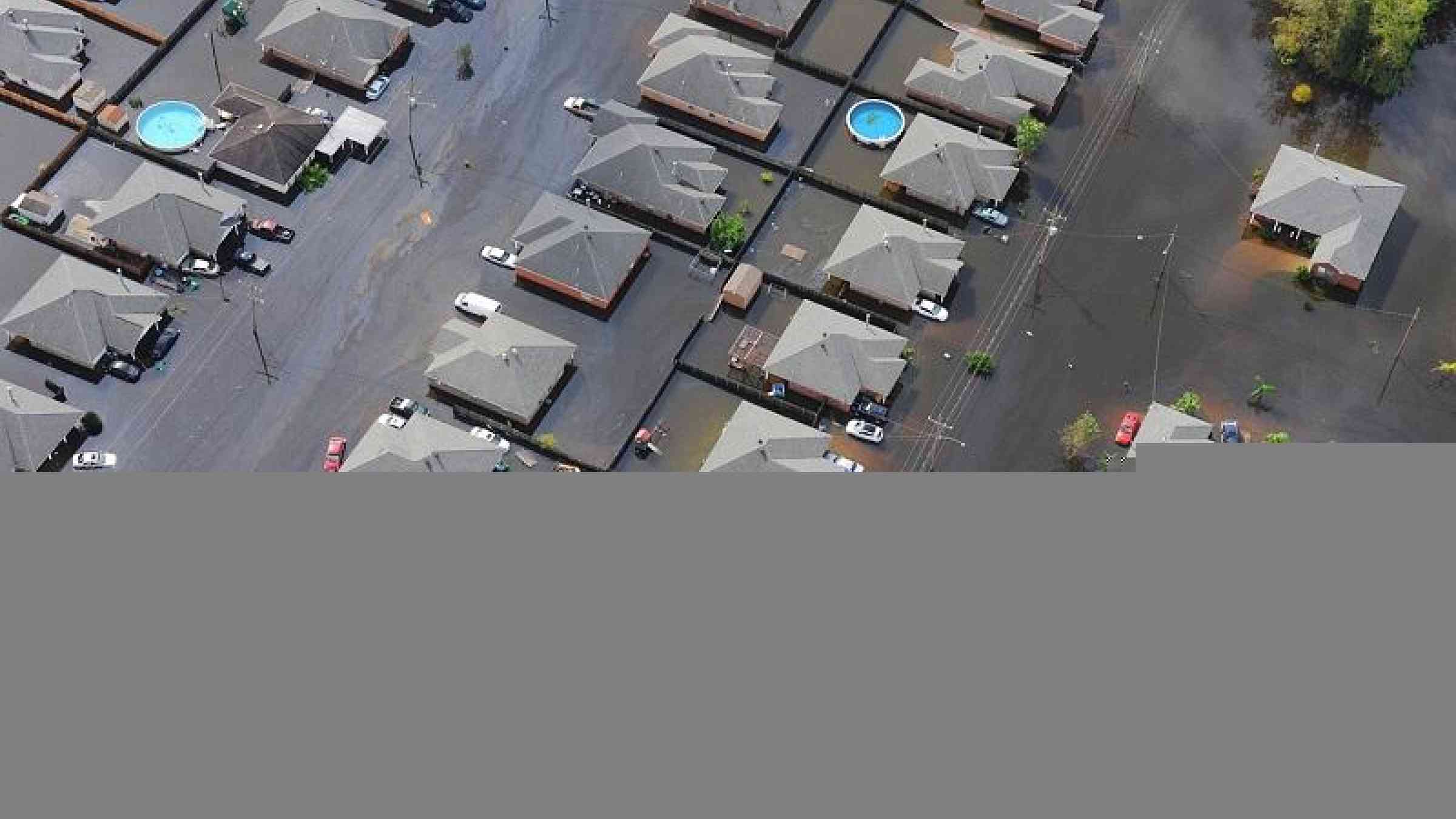
Climate scientists provide evidence on how warming seas and atmosphere will amplify hurricanes and other disasters. Simultaneously, the media discourse on disasters is framing them as something sinister, a misplaced attribution that historically leads us in the wrong direction.
A new report shows that the number of seaside communities in the U.S. that would flood twice a month might double to 170 by 2035. This is due to rising temperatures and melting glaciers that result in rising sea levels. Global efforts to curb greenhouse-gas emissions are necessary in order to minimize the effect.
While the future of the West Coast’s earthquake early warning system is in peril from proposed budget cuts, the network is beginning to slowly gain traction in both small and big ways. A scattering of buildings are now equipped with audible alarms that will give occupants an advance warning ranging from seconds to more than a minute before the shaking from a major earthquake begins.
A new report on California’s seismic vulnerabilities said that 3.5 million homes could be damaged if an 8.0 earthquake occurred on the San Andreas fault. Computer simulations now show that it is possible, although not likely, that the northern and southern sections of the fault could rupture simultaneously. It is therefore important to prepare for many possibilities.
Scientists studying Japan’s 2011 Tohoku earthquake say they have found a faster method than seismic waves to tell when a temblor is on its way. The findings track the subtle gravitational shifts that can occur immediately after the initial rupture, and could help researchers design faster and more powerful warning technologies.
Even though California is in earthquake country, it has fallen far behind other areas including Japan, Mexico and Taiwan in developing an earthquake warning system.
Voluntary Commitments
The organization has no registered commitments.
The Sendai Framework Voluntary Commitments (SFVC) online platform allows stakeholders to inform the public about their work on DRR. The SFVC online platform is a useful toolto know who is doing what and where for the implementation of the Sendai Framework, which could foster potential collaboration among stakeholders. All stakeholders (private sector, civil society organizations, academia, media, local governments, etc.) working on DRR can submit their commitments and report on their progress and deliverables.
Contact information
Fax:
+57-2-331-3418