Items: 20
The use of social media during natural disasters can limit psychological damage and can allow people to act as amplifiers of official information, according to a research conducted by the University of Western Sydney (UWS)...
'We just can't go on ladling more costs on to individual consumers to the point that people can't afford insurance. When people can't afford insurance then the government ends up paying, so the government must mitigate,' said Suncorp chief executive...
Insurance Australia Group (IAG) wants a big increase in government budgets for disaster mitigation, which are tiny compared to the $6 billion spent on recovery and rebuilding in recent years...
Premier Anna Bligh said $14 million would be spent this year to implement the recommendations, and a total of $76 million over the next five years, within the framework of a campaign to prepare for 'natural' disasters...
'After a disaster, individuals and politicians often find it easier to blame someone else, often an insurance company or a bank, for the poor outcome of a lifestyle decision. This is understandable but it doesn't help people better prepare for the next disaster,' writes Patrick Snowball, group chief executive of Suncorp, in an editorial...
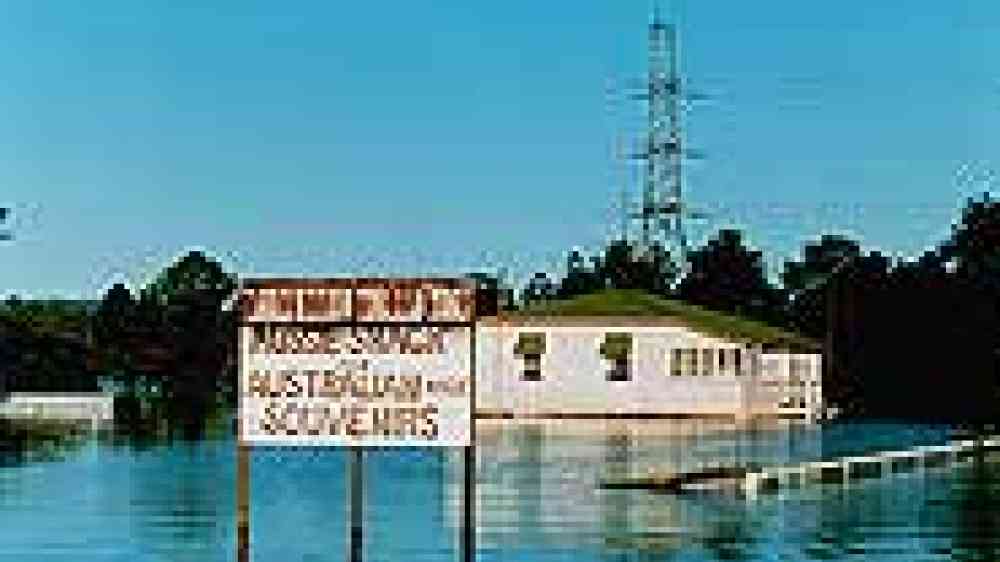
Henry Ergas stresses that despite the rising cost of the recent flood damage, there is still a need to rebuild on a basis that manages future risks. 'There has been too much development, and too little investment in risk reduction, in disaster-prone areas' he writes, in an opinion piece for the Australian...
'What should be done to better prepare the country for large-scale events?' asks Erwann Michel-Kerjan, managing director of the US Wharton Business School's Risk Centre and chairman of the OECD High-Level Advisory Board on the financial management of catastrophes, in a report for the Australian....
Henry Ergas reports for the Australian on successive governments' oversight that led to development in high risk areas. He calls for a reassessment of policies that he says have failed time after time, and that left as they are, will only fail again...
Voluntary Commitments
The organization has no registered commitments.
The Sendai Framework Voluntary Commitments (SFVC) online platform allows stakeholders to inform the public about their work on DRR. The SFVC online platform is a useful toolto know who is doing what and where for the implementation of the Sendai Framework, which could foster potential collaboration among stakeholders. All stakeholders (private sector, civil society organizations, academia, media, local governments, etc.) working on DRR can submit their commitments and report on their progress and deliverables.
Contact information
Fax:
+81-3 5212 1649