
Why are behavioural insights important for whole-of-society disaster preparedness?
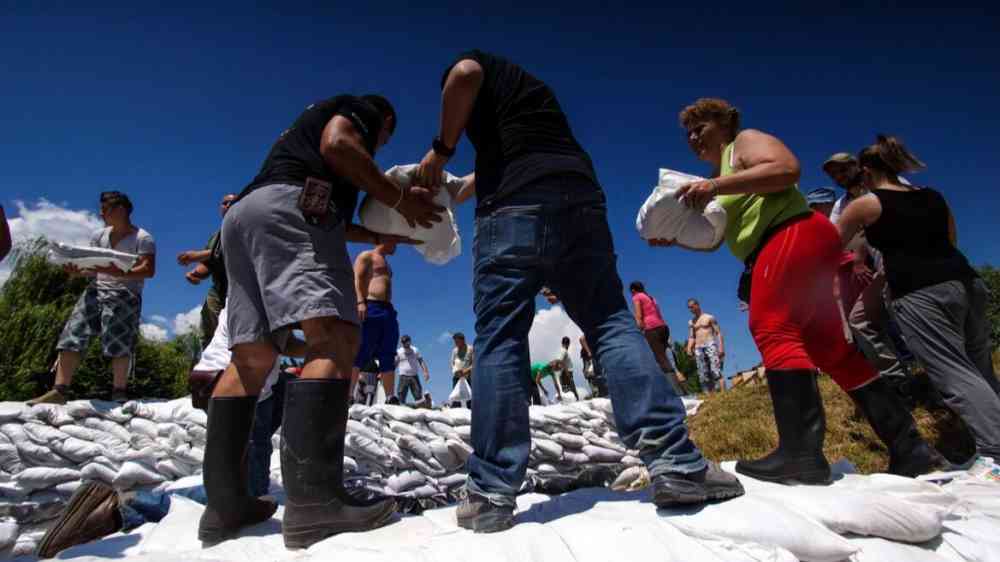
Being prepared for Europe's changing risk landscape is essential to building societal resilience. Special Eurobarometer 547 pinpoints several areas of improvement in population preparedness, now addressed through key actions under the Preparedness Union Strategy.
Even if well informed, there can be other factors that influence people's actions, often leading to less rational and more emotionally driven choices. Behavioural and social sciences aim to understand the factors that influence individual's decision-making and behaviour. They can thus help design solutions that align with how people process information and make decisions, ensuring that preparedness efforts are accessible, motivating, and easy to act on ultimately resulting in effective disaster resilience activities. By addressing behavioural barriers, behavioural insights can motivate stakeholders to act on these high-return investments reaching predominantly more cost-effective solutions according to benefit-cost ratio (BCR) studies.
Phases of disasters
Applying knowledge from behavioural and social science can help explain why people or organizations do not take the necessary measures to prepare in the cold phase, the time before a disaster occurs. These events often have high impact, but relatively low probability. In general, people struggle to correctly perceive the risk of low-probability/high-impact events and may thus underprepare for such events. A lack of preparedness can be exacerbated by an optimism bias - the belief that bad things are less likely to happen to oneself than to others, as well as an overestimation of one's own ability to respond. This tendency may also lead people to ignore public warnings. Evidence suggests that the often-taken approach of simply advising people of the risks they may face in their region is thus insufficient to motivate preparedness behaviours.
During a disaster, i.e. in the hot phase, contrary to common belief, there is a risk that people underreact, possibly driven by an inaccurate perception of the actual threat they are facing. In uncertain situations, people also tend to look towards (similar) others to inform their own behaviour. In addition, late warnings, false alarms, misinformation - whether spread deliberately or not - or misunderstandings of the warnings, can further increase uncertainty and lead to wrong or untimely actions being taken.
Reducing uncertainty and ambiguity in emergency events is thus vital and can also be achieved by improving preparedness of the population in the cold phase, and by providing clear, easy, concrete, actionable steps to take. Similarly, continued measures for building trust in relevant public authorities and emergency responders can facilitate the spread and uptake of correct information during the hot phase.
Understanding risk perceptions, cultural values and practices
Understanding of different cultural values and practices throughout the population can increase our understanding of whether information is trusted, understood or used, which can lead to more inclusive and targeted approaches for behavioural change, for example, with regards to the use of warnings. Risk mitigation can cover a wide array of behaviours, which may differ across specific groups, including vulnerable populations. Information provision and warnings need to take group characteristics into account, including how to reach them. For instance, seasonal labourers, youth, homeless people or migrant populations may necessitate the use of different communication channels.
One of the biggest challenges that the Red Cross network faces in reducing heat impacts is that many people do not perceive themselves to be at risk, and therefore they do not take appropriate self-protective actions. If we understand existing risk perceptions, we can better tailor our strategies towards behaviour change.
Behavioural science plays a crucial role in disaster preparedness by uncovering the psychological and social barriers preventing people from adopting critical safety behaviours. As an example, Haiti, is a country highly exposed to natural disasters such as hurricanes, floods, earthquakes, and landslides. Despite regular exposure, individual and community responses are shaped by behavioural factors, including misunderstanding of early warning messages, mistrust in messengers, and a tendency to underestimate risks.
Addressing such barriers requires a better understanding of diverse influences, such as cultural beliefs, past experiences, and access to resources, to design effective and tailored solutions, also in less exposed countries. Recognizing that disaster prevention is not a one-size-fits-all endeavour is vital, as behaviours and responses vary widely depending on the disaster type and the affected populations' heterogeneity. Although European contexts differ from Haiti's, the methods and insights drawn from a behavioural science diagnostic on disaster preparedness and responses can be equally valuable for identifying barriers and informing response strategies generally. For example, barriers can include (Llopis et al., 2020):
- Alert failures: Unreliable or unavailable alert systems, leaving citizens unaware of imminent disasters.
- Unclear messages: Complex, unclear warnings and distrust in the messengers can lead to confusion and inaction.
- Risk denial: People underestimate health risks due to biases, resource constraints, or a desire to prioritize protecting material goods.
- Insufficient infrastructure: A lack of safe shelters and poor or unsuitable infrastructure can impede evacuation efforts.
- Negative experiences: In repeat situations, past experiences of theft, lack of privacy, or poor management discouraged evacuation.
Enhancing the understanding of climate impacts across the system
People do not always make decisions based on rational optimization, as might be the case for government-led adaptation initiatives. For example, people with low adaptive capacity buy less-effective adaptation measures or delay the action, which sends them into a downward spiral of repetitive losses. By addressing behavioural barriers, such as procrastination, misperception of risks, and resistance to change, behavioural insights can motivate stakeholders to act on these high-return investments. Investing in resilient infrastructure before the disaster is predominantly a more cost-effective solution according to benefit-cost ratio (BCR) studies.
For example, involving stakeholders at the very start of planning processes to set strategic agendas and in assessing current and future climate risks can increase knowledge sharing and learning, which in turn can influence risk reduction behaviours and practices.
Incorporating innovative, human-centred solutions to tackle barriers and biases that hinder disaster preparedness and responses
By establishing conducive environments where stakeholders can collaborate, learn, and innovate together, effective citizen engagement can be established. The Red Cross uses the participatory risk assessment EVCA (Enhanced Vulnerability and Capacity Assessment), which aims to work closely with citizens in assessing capacities, risks and solutions. Similarly for adaptation efforts, the EVCA is an important tool to assess changing risks and solutions. In addition, interactive learning approaches, such as serious climate games in which participants have to make decisions which will have consequences, can increase the ability to understand the complexity linked to the uncertainty of climate change and the consequences of a lack of climate action.
Examples like city learning labs can offer inclusive spaces to learn and design change together with multiple stakeholders across different sectors in society. This also supports better understanding of when and how to act for preparedness and prevention.
In the preparation of warning or alert messages, developing engaging content and information delivery is essential to capture attention, especially as preparing for a disaster rarely aligns with the urgency of response efforts.
- In Haiti, creative approaches like music videos featuring trusted local musicians, text and audio messages, and community radio broadcasts were designed to address mistrust, low literacy levels, and complex messaging (Lim & Llopis, 2024).
These human-centred solutions not only make the content accessible but also emotionally compelling and appealing, helping people internalize risks and take preventive actions that are often overlooked until it's too late. These innovative approaches provide valuable lessons for engaging diverse audiences:
- Music Videos: Trusted musicians delivered culturally relevant disaster messages via TV, radio, and social media.
- Text and audio messages: simple and accessible disaster preparedness tips shared via mobile phones.
- Local Radio: Community radio and podcasts shared actionable steps for disaster safety, even in remote areas, and piggybacked on COVID-19 messaging broadcasted during the pandemic.
Helping policymakers understand and address their own disaster risks-related biases
Behavioural science can also help policymakers understand and address their own disaster risk-related biases before, during, and after disasters, ensuring more effective decision-making at every stage. Biases, such as confirmation bias, status quo bias, and sunk cost fallacies, can distort judgments, leading to ineffective policies or delayed actions. For example, policymakers might favour familiar strategies that align with their beliefs (confirmation bias) or resist changing course even when evidence suggests a need for adaptation (status quo bias).