
Securing tenure and building resilience: lessons from Harare
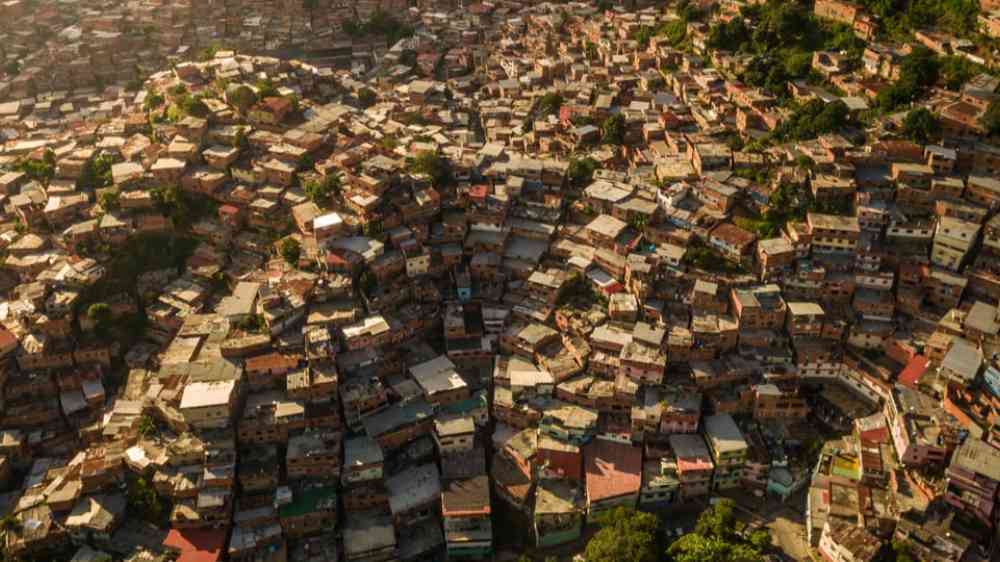
Like many African cities, Zimbabwe’s capital has expanded rapidly in recent years, with an accompanying increase in the spread of informal settlements. Many of its residents lack secure tenure, which increases their vulnerability to climate and other risks. This study, which describes how residents in three of the city’s informal settlements are responding to climate-related hazards, shows how tenure security can improve resilience through community-led settlement upgrading.
Harare, the capital city of Zimbabwe, is a critical case study in urban resilience and the challenges of rapid urbanisation. With more than 33% of its population living in informal settlements and with insecure tenure, Harare resembles other African cities characterised by informal urbanisation.
However, Harare’s situation is worsened by hyperinflation, restrictive regulations and historical inequalities, making urban systems more unstable and difficult to manage. Although the city has expanded, its infrastructure has deteriorated due to national socio-economic and political developments.
Infrastructure reconstruction requires an estimated US$10 billion (PDF) , but Zimbabwe's political isolation has hindered access to funding.
Harare’s history of contentious policies, such as ‘slum’ clearances, underscores the tension between urban development and human rights. Although the sheer scale of the city’s informal settlements has made mass clearances impracticable, alternatives to upgrade and improve living conditions have been slow to emerge. Therefore, a growing proportion of the urban population lives in conditions that increase vulnerability and exposure to climate and other risks.
In Harare’s informal settlements, tenure insecurity shapes climate risk, while tenure security appears to strengthen resilience. The case of Dzivarasekwa Extension, described below, illustrates how incremental tenure security can foster resilience by unlocking community-led upgrading, strengthening social cohesion and promoting constructive engagement with local authorities.
No place to call home
Since Zimbabwe gained independence in 1980, its urban population has steadily increased. However, as in many other African cities, housing development has not kept pace, leading to the proliferation of informal settlements across towns and cities. Although poverty is more prevalent in rural areas, many urban households live on the margins of the poverty line and 38% live below it.
To access formal housing, individuals must go on a housing waiting list to be allocated a plot (or ’stand’) on which to build. Until recently, this list was only open to those who could formally prove they were employed and had savings. The authorities have recently loosened application requirements, but the waiting list has become a revenue-generating tool, entrenching the politics of land patronage.
For the urban poor, particularly those working in the informal sector, this often means that limited savings are spent fighting eviction threats, including through complex litigation procedures, yet they still live with the constant fear of eviction.
Tenure insecurity creates a structural foundation of vulnerability, which shapes risk-management behaviours and access to risk-reducing infrastructure and services, constrains investment and collective adaptation, and undermines engagement with city authorities. Informal settlers, already living with insecurity, now face the additional and growing threat of climate change.
To position the City of Harare as a hub of resilience and support for underserved residents, formalising their tenure is essential. This approach creates opportunities for residents to invest in and improve their communities, enabling incremental solutions to address existing deficiencies and fostering climate resilient urban development
– Patience Mudimu-Matsangaise, Dialogue on Shelter for the Homeless in Zimbabwe Trust
Injustice amplified: climate change and the unfair burden on Harare’s informal settlements
Zimbabwe is facing the devastating impacts of climate change head-on. In 2024 its worst drought in 40 years prompted a national state of emergency and laid bare the deep-rooted inequalities that determine who bears the brunt of climate risks. In Harare, these inequities are starkly visible across informal settlements, where residents already contend with tenure insecurity, poor infrastructure, inadequate housing and limited access to basic services.
Evidence from three informal settlements – Dzivarasekwa Extension, Tafara and Crowborough North – shows how climate impacts are felt most acutely where vulnerabilities overlap. These settlements, all located on Harare’s periphery in hazard-prone zones, highlight how different levels of tenure security influence both risk exposure and the capacity to respond.
Residents in all three settlements are responding to climate-related hazards but their responses differ between ‘coping’, ‘adaptive’ and’ transformative’ dimensions of resilience:
- Coping strategies tend to be reactive, aimed at surviving or recovering from shocks in the short term, using existing resources and strategies. They tend to be short-term, individual-level responses that are often insufficient in addressing root causes
- Adaptive strategies signal a shift towards more anticipatory, collective efforts to manage risk that enable learning and adjustment of behaviour or systems in response to changing conditions. They often involve making minor changes to existing systems, such as infrastructure upgrades , and
- Transformative approaches go further by addressing root causes of vulnerability and creating conditions for long-term, systemic change. They have the capacity to address underlying drivers of risk and restructure systems to reduce future vulnerability. They involve fundamental systemic shifts, such as institutional reform, co-production with government and shifts in tenure.
A secure foundation: tenure security shapes risk and resilience
In Dzivarasekwa Extension, tenure security created the foundations for long-term investments in housing and infrastructure, as well as sustained engagement with the city government, which has led to the co-production of settlement upgrades.
Housing design and material improvements provide better insulation and ventilation to withstand temperature extremes, while stormwater systems and upgraded water provision reduce flood and drought risks. Residents also pooled savings to finance power connections in partnership with the utility provider, helping shift the settlement toward more affordable and low-carbon energy. Here, tenure security unlocked investment and collective organisation, enabling a shift from individual to collective responses to risk.
In Tafara, tenure is partially secure: land was allocated and residents are allowed to build permanent structures, but formal tenure has yet to be achieved. Still, the community has mobilised to improve infrastructure – constructing ecosan toilets (waterless toilets that convert human waste to compost), drilling boreholes and implementing other nature-based solutions.
Yet without formal recognition or broader institutional support, initiatives can only be small-scale. Residents are coping and there are signs of emerging adaptive capacity, but without stronger tenure rights, risks remain high and progress fragile.
Crowborough North presents a contrasting picture. As a newer settlement with politically mediated access to land, residents face continuous threats of eviction. This precarity stifles investment in permanent structures and undermines collective action. Responses to climate risks are largely reactive and individualised.
In the absence of basic infrastructure and with little support from public authorities, residents are left to cope under increasingly harsh conditions, lacking the stability needed to build resilience.