Morocco leads the way in protecting people and communities from disasters
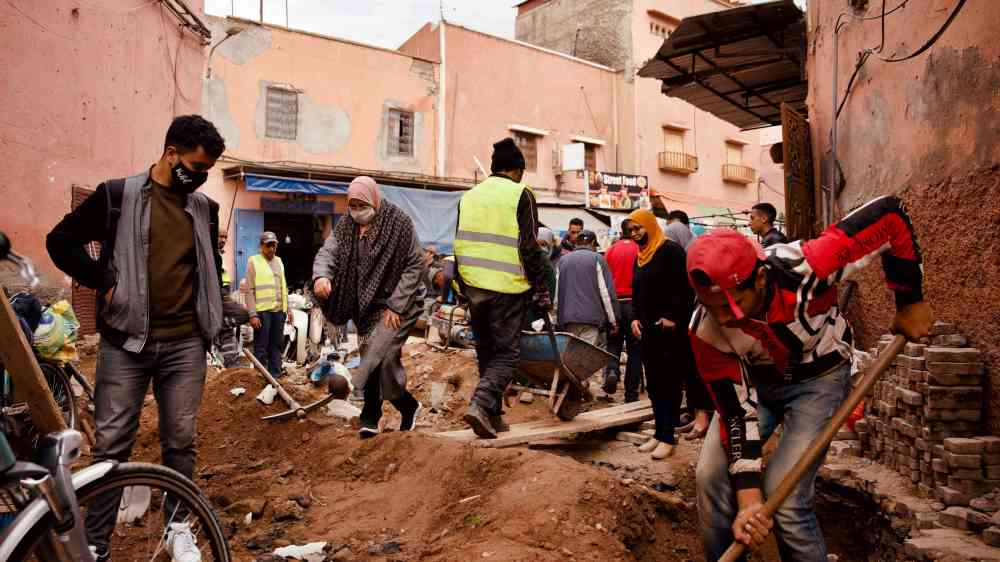
The Integrated Disaster Risk Management and Resilience Program helped Morocco move from responding to disasters after they happen to preventing losses before they occur. By 2025, the program had financed over 300 resilience projects, protected millions of people, and established one of the region’s most advanced disaster financing systems.
Challenge
Floods, earthquakes, landslides, droughts, and coastal erosion regularly threaten lives and livelihoods, while climate change and rapid urbanization increased the frequency and severity of these risks. The September 2023 Al-Haouz earthquake, killed nearly 3,000 people and affected around 300,000. Flash floods in Safi in December 2025 killed at least 37 people, while severe flooding in northern Morocco in January–February 2026 displaced more than 180,000 people and led the government to declare several provinces disaster areas.
WBG Approach
The World Bank Group supported Morocco through a combination of financing, policy reform, technical assistance, and partnerships over more than a decade. Rather than focusing only on emergency response, the program helped Morocco build a complete system for managing risk before disasters occur. The World Bank Group supported the reform of Morocco’s disaster fund into a resilience financing mechanism, the creation of a permanent disaster management directorate, and the adoption of the country’s first national strategy for disaster risk management. It also supported a new public-private insurance system that protects both insured and uninsured households.
Technical assistance helped strengthen resilient infrastructure standards, safer building regulations, and city resilience planning in Fez and Mohammedia/Ain Harrouda. The WBG partnered with the Global Facility for Disaster Reduction and Recovery, the Global Shield Financing Facility, and Swiss Secretariat for Economic Affairs (SECO) to provide expertise and financing
Results
- Between 2016 and 2025, Morocco financed over 300 disaster risk reduction projects worth more than $408 million, including flood protection works, early warning systems, hazard mapping, and safer urban planning.
- By March 2025, completed structural projects protected nearly 700,000 people, of whom approximately 50 percent were women, nearly tripling the original target.
- By 2025, completed non-structural projects, including risk mapping, early warning, and preparedness, benefited more than 36 million people nationwide, around half of them women.
- In 2020-2025, Morocco created a permanent Directorate for Disaster Risk Management with 89 staff and adopted its first National Disaster Risk Management Strategy for 2020-2030.
- By 2025, a new catastrophe insurance system covered nearly 20 million people, while a public solidarity fund mobilized $133 million and disbursed $300 million after the 2023 Al-Haouz earthquake.
- Since 2023, a new early-warning-system for floods has protected 240,000 people in four high-risk areas.
Contribution to WBG Targets & Jobs
he program contributed directly to the World Bank Group (WBG)’s climate adaptation and resilience agenda by reducing disaster risk and/or enhancing disaster risk preparedness for more than 36 million Moroccans, with women representing roughly half of beneficiaries. Flood protection, drainage, and infrastructure investments also generated temporary construction and engineering jobs at local level, while strengthening the long-term resilience of businesses, agriculture, and urban economies vulnerable to floods and earthquakes.
Lessons Learned
Morocco’s experience shows that disaster resilience is most effective when institutional reform, investment, and financial protection advance together. Creating a dedicated disaster management authority and a long-term national strategy made it possible to sustain investments and coordinate action across ministries and local governments. When Al-Haouz earthquake struck in 2023, Morocco’s new insurance and solidarity system was able to mobilize resources rapidly when they were most needed, and this demonstrated the importance of having financial protection mechanisms in place before a disaster occurs.
Next Steps
The WBG will continue supporting Morocco to deepen its resilience to disasters and climate-related shocks. Future support will focus on expanding flood early-warning-systems, strengthening the resilience of critical infrastructure and buildings, improving local disaster preparedness, and scaling up risk-informed urban planning. The ongoing Global Shield grant is helping Morocco further strengthen its financial protection against climate-related shocks. Morocco’s experience is also informing new operations in other countries, positioning the country as a regional leader and source of lessons for disaster resilience.