1. Home
  2. Knowledge Base | PreventionWeb

Research briefs

Keep up to date with the latest research on disaster risk and resilience on the PreventionWeb knowledge base.

Explore cutting-edge research on disaster risk reduction and resilience through PreventionWeb's dedicated research briefs section. Our platform curates and highlights the most recent academic studies, providing valuable insights into disaster risk management. Each research brief distills key findings from peer-reviewed journals and academic publications.

Submit a research brief.

These briefs are designed to keep you informed about the latest scientific advances. Links to the full publications are always included, ensuring easy access to in-depth knowledge. Please note that this section exclusively features academic research, distinct from reports by international organizations or Non-Governmental Organisations.

Uploaded on
Research briefs

The scars left by the 2020 Cameron Peak and East Troublesome fires remain stark: blackened hillsides, closed trails and bare slopes where forests once stood. Tthe fires caused significant and lasting declines in visitation at the burned sites.

Conversation Media Group, the
Shark in water
Research briefs

Research demonstrates how animal-borne sensors can work in tandem with traditional tools to improve ocean predictions.

University of Miami
Research briefs

Heavy rains causing repeated river flood intrusions into Florida's freshwater springs are changing the function of the clear natural resource.

University of Florida
Research briefs

There's more bad news about microplastics. We already know they pose a risk to health, but now researchers have discovered that tiny plastic particles drifting in Earth's atmosphere could be a significant contributor to global warming.

PhysOrg, Omicron Technology Ltd
Research briefs

Florida State University researchers have discovered how to predict winter weather forecasts months in advance, affording sectors such as agriculture, water management, energy use and public health a longer lead time to prepare for inclement conditions.

Florida State University
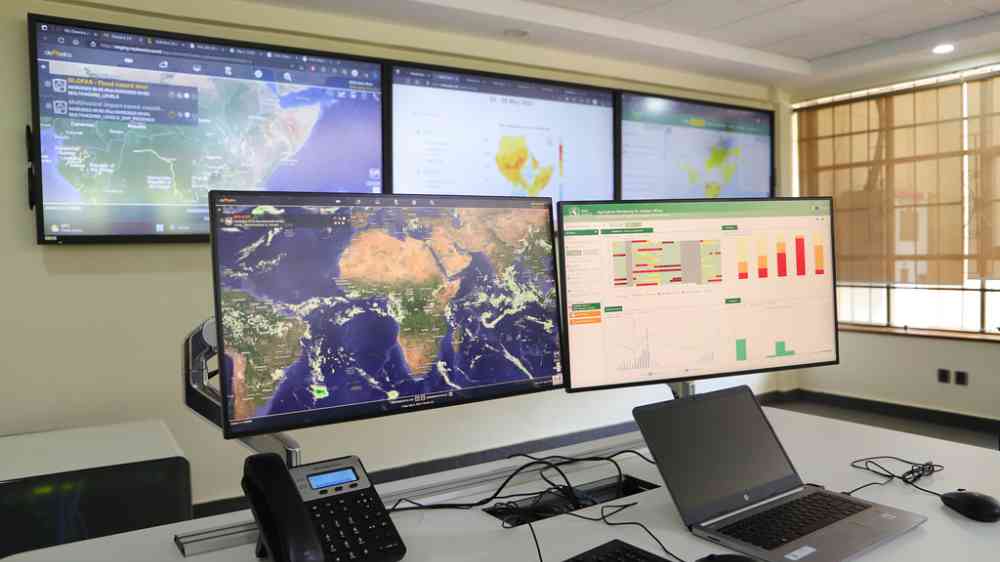
Computer screens showing maps and data
Research briefs

With the help of AI, a new open dataset turns global news into structured narratives of disasters that unfolded from 2014 to 2024, helping to better understand the dynamics of crises and human-environment interactions.

European Commission Joint Research Centre
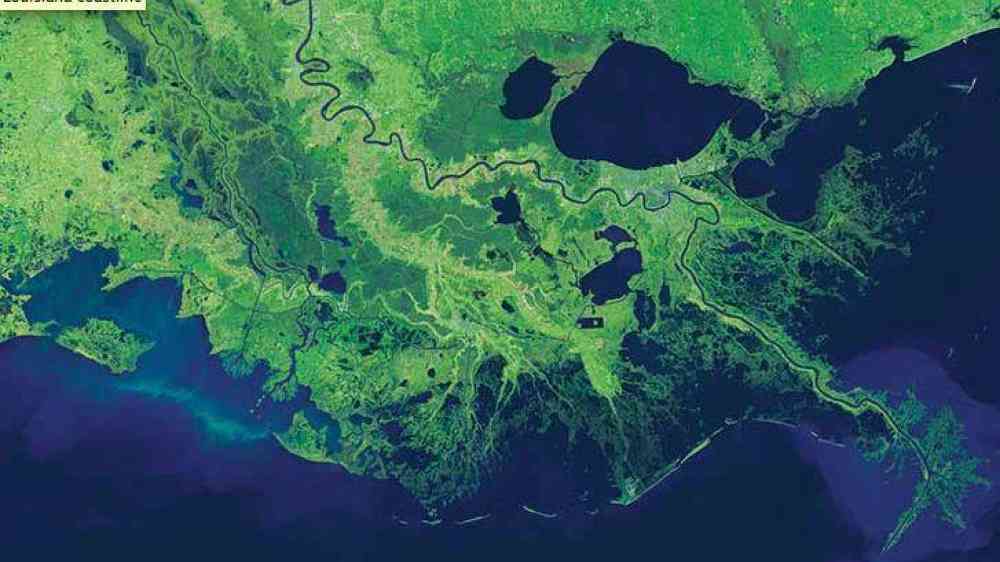
NASA Earth Observatory image from 2014 shows the Mississippi River wending toward the Louisiana coastline. (Image from earthobservatory.nasa.gov)
Research briefs

Louisiana is losing its coast faster than anywhere else in the U.S. What happens next could become a blueprint — or a warning — for vulnerable communities around the globe.

Yale School of the Environment
Wildfire heatwave compund event
Research briefs

A study connects satellite data on vegetation condition, topography, and weather conditions to examine the predicted versus actual burn severity of the 2025 Los Angeles wildfires.

Eos - AGU