1. Home
  2. Knowledge Base | PreventionWeb

Research briefs

Keep up to date with the latest research on disaster risk and resilience on the PreventionWeb knowledge base.

Explore cutting-edge research on disaster risk reduction and resilience through PreventionWeb's dedicated research briefs section. Our platform curates and highlights the most recent academic studies, providing valuable insights into disaster risk management. Each research brief distills key findings from peer-reviewed journals and academic publications.

Submit a research brief.

These briefs are designed to keep you informed about the latest scientific advances. Links to the full publications are always included, ensuring easy access to in-depth knowledge. Please note that this section exclusively features academic research, distinct from reports by international organizations or Non-Governmental Organisations.

Uploaded on
A helicopter drops water on a raging bushfire
Research briefs

Drought‑stressed forests are turning into vast carbon sources as they burn. Researchers warn that only tree-planting is no longer enough and must account for how warming, drought and pests can turn expanding forests into major fire‑driven carbon sources.

EurekAlert
Research briefs

A ‘100-year flood’ refers to a flood with a 1% chance of occurring each year – meaning, on average, a flood that bad will happen once in 100 years. But climate change means the likelihood of a serious flood could be higher than these terms imply.

Yale Climate Connections
Research briefs

Floodwaters have engulfed large parts of New South Wales, with almost 50,000 evacuated after days of heavy rainfall in a "one-in-500-year" flood event. One question worth asking is: how ready are our hospitals to cope when disaster strikes?

Conversation Media Group, the
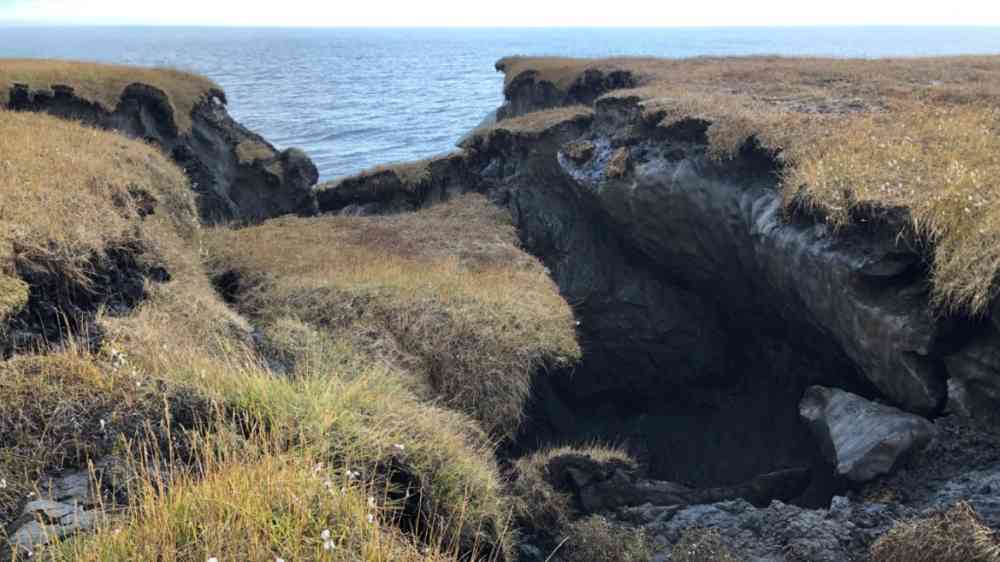
Along the stretch of coastal bluffs of Barter Island, North Slope of Alaska, a new drainage gully developed between September 2018 and September 2019.
Research briefs

In a new study, researchers used a new AI-driven approach that combines machine learning with an interpretability tool to enhance the prediction of gully formation and understanding of these models.

University of Illinois at Urbana Champaign
Research briefs

A study featured on the cover of Advances in Atmospheric Sciences sheds light on the large-scale climate patterns influencing these devastating global extreme events.

Chinese Academy of Sciences
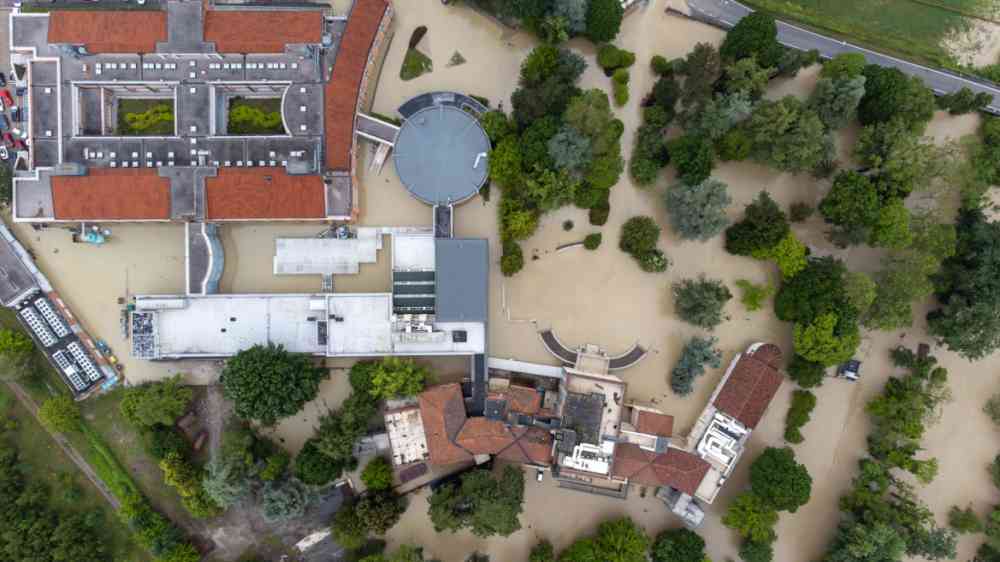
Aerial view of a flooded area in Emilia Romagna, Italy
Research briefs

A Princeton-led study uncovers the relationship between flood risk and social vulnerability; communities with high levels of renters, farming, and forestry found to be linked to increased economic loss.

Princeton University
Research briefs

Hurricane winds are a major contributor to storm-related losses for people living in the southeastern coastal states. A new study projects that wind losses for homeowners there could be 76 percent higher by the year 2060 and 102 percent higher by 2100.

The Society for Risk Analysis (SRA)
Research briefs

A team of geophysicists and atmospheric scientists has found evidence that a warming planet over the past 15 to 20 years has impacted the Atlantic Meridional Overturning Circulation (AMOC).

PhysOrg, Omicron Technology Ltd