1. Home
  2. Knowledge Base | PreventionWeb

Research briefs

Keep up to date with the latest research on disaster risk and resilience on the PreventionWeb knowledge base.

Explore cutting-edge research on disaster risk reduction and resilience through PreventionWeb's dedicated research briefs section. Our platform curates and highlights the most recent academic studies, providing valuable insights into disaster risk management. Each research brief distills key findings from peer-reviewed journals and academic publications.

Submit a research brief.

These briefs are designed to keep you informed about the latest scientific advances. Links to the full publications are always included, ensuring easy access to in-depth knowledge. Please note that this section exclusively features academic research, distinct from reports by international organizations or Non-Governmental Organisations.
Uploaded on
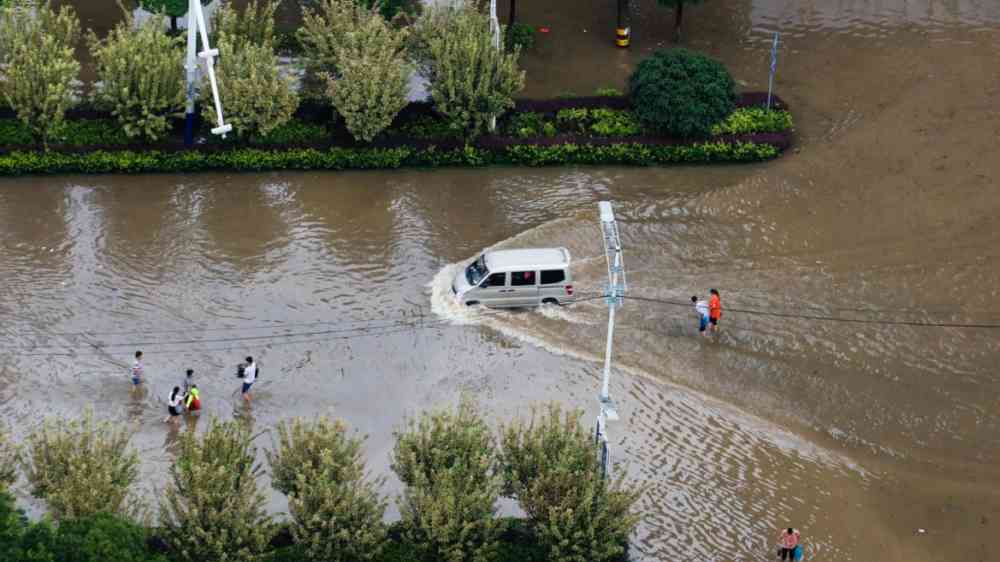
Aerial view of floods in a Chinese city, 2017
Research briefs

A paper reveals that climate extremes are increasingly striking in combination-and their compounding impact is posing a growing threat to public health across China.

Institute of Atmospheric Physics, Chinese Academy of Sciences
Research briefs

Despite climate change-driven global ocean warming, an area of the North Atlantic stands out as a zone of relative cooling. A new study projects that wind-driven changes in ocean circulation would add to the cooling effect in the region by about 2040.

University of Alaska Fairbanks
Research briefs

A spectacular breakthrough in geoscience shows that our planet is in motion even at a depth of 3000 kilometres.

ETH Zurich
Research briefs

Heatwaves, droughts and forest fires are some of the extreme climate-related events that are expected not only to become more frequent but also to increasingly strike at the same time, according to a new study.

Uppsala University
Research briefs

This paper introduces the concept of smart bridges—structures that can automatically adapt to environmental changes such as floods and seismic activity through advanced technologies.

International Journal of Scientific Research and Technology
Research briefs

New research from scientists at Trinity College Dublin strongly implies that heatwaves have a major influence on the spread of many diseases - and that many existing predictive models have overlooked this complexity.

Trinity College Dublin, the University of Dublin
Research briefs

Heat waves and cold spells are part of life on the Great Lakes. But new research from the University of Michigan shows that is true today in a fundamentally different way than it was even 30 years ago.

University of Michigan
Research briefs

The largest marine heat wave ever recorded in the North Atlantic Ocean, occurring in the summer of 2023, was primarily driven by unusually weak winds, leading to an exceptionally shallow - and warm - upper ocean layer, according to a new study.

Potsdam Institute for Climate Impact Research