1. Home
  2. Knowledge Base | PreventionWeb
  3. Themes

Health and health facilities

Capacity of health systems to anticipate, mitigate and manage situations arising from natural and man-made hazards, including biological hazards.

Across Jordan, Iraq, and Lebanon, a joint UN programme is already delivering results by strengthening migrant-inclusive health systems through a single, coordinated approach.

Latest Health & health facilities additions in the Knowledge Base

Uploaded on
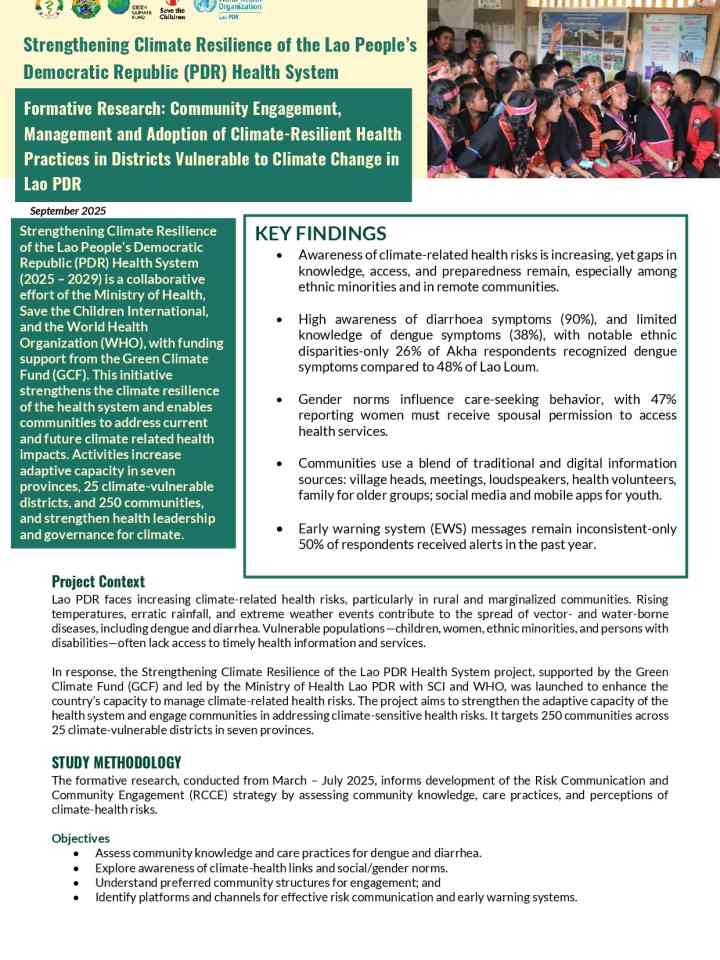
Formative research: Community engagement, management and adoption of climate-resilient health practices in districts vulnerable to climate change in Lao PDR (2025) thumbnail
Documents and publications

The formative research examines community knowledge, care‑seeking practices, and communication preferences related to climate-sensitive diseases.

Save the Children International
 Young Latin male tennis player resting and drinking water on tennis court in sunny hot day at summer
Update

With extreme heat a growing challenge for summer sport, University of Sydney researchers are working with Tennis Australia to develop evidence-based tools to keep players safe at the Australian Open.

University of Sydney
Update

Kenya's outdoor workers face rising skin damage as climate change drives higher heat and UV exposure. Dermatologists report more burns, pigmentation issues and infections, while costly sunscreen limits protection for millions.

Science and Development Network
Research briefs

People exposed to wildfire smoke have a higher risk of suffering a stroke, according to research published in the European Heart Journal.

European Society of Cardiology (ESC)
Update

The Australian Open tennis tournament, scheduled for the second half of January amid peak summer weather in the Southern Hemisphere, has been forced to rearrange some of its matches and adjust court assignments.

The Cool Down
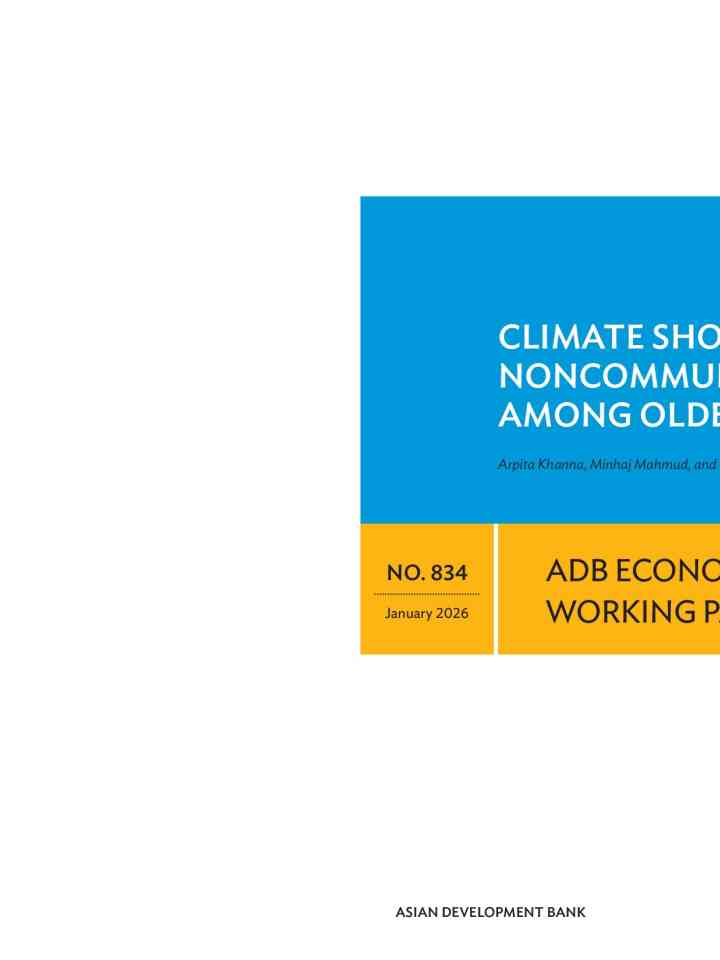
Climate shocks and noncommunicable diseases among older people in India thumbnail
Documents and publications

This paper shares findings from a study of the impact of temperature and rainfall on the incidence of noncommunicable diseases among older people in India.

Asian Development Bank (ADB)
Health system resilience: Understanding complex adaptive systems thumbnail
Documents and publications

This publication presents an edited collection that explores how health systems can mitigate crises and ongoing stresses to remain functional and effective over time.

Massachussets Institute of Technology
Outback mining town in North of Western Australia
Research briefs

From 5–10 January, 2026, south-eastern Australia experienced its most severe heatwave since 2019–20. Temperatures exceeded 40°C in major cities including Melbourne and Sydney, with even hotter conditions across regional Victoria and New South Wale.

World Weather Attribution
Uploaded on