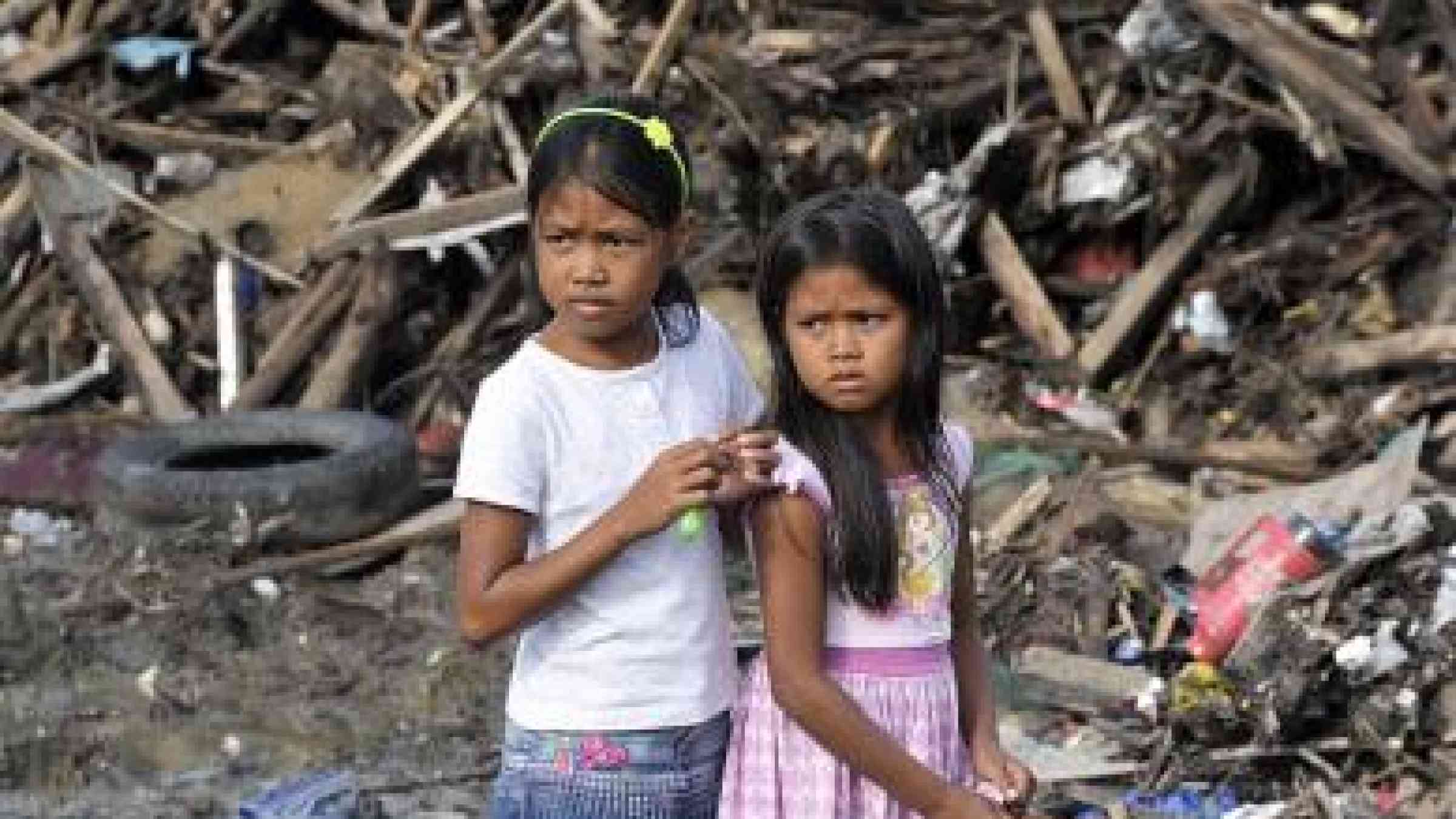
Ensuring an all-of-society engagement and partnership for DRR through empowerment and inclusive, accessible and non-discriminatory participation, paying special attention to people disproportionately affected by disasters, especially the poorest.
Here are five ways countries ensure persons with disabilities are not left behind when the next disaster strikes.
Leaders of the world’s most climate fragile states have issued a call for full decarbonisation of the world economy, 100% renewable energy by 2050, and zero emissions by 2050 to keep the world on track for below 1.5°C warming and to reduce disaster risk.
United Nations Office for Disaster Risk Reduction (UNDRR)
United Nations Office for Disaster Risk Reduction - Regional Office for Asia and Pacific
More than half a billion children live in areas with extremely high flood occurrence and 160 million in high drought severity zones, leaving them highly exposed to the impacts of climate change, Unicef said in a report released ahead of the 21st United Nations climate change conference, known as COP21. Leah Kreitzman, Unicef UK Director of Public Affairs said 'the Paris Agreement must commit to ensuring human rights, including children’s rights, are an overarching principle in guiding climate action.'...
In this opinion piece, Colin MacQuistan, argues that a 'human rights centred agreement' at COP 21 will offer 'a holistic approach that makes the connections between the economic, social, cultural, ecological and political dimensions, and links what is being done to tackle climate change with the Sustainable Development Goals and the Sendai Framework for Action on Disaster Risk Reduction'...
'If current public climate change adaptation finance pledged by developed countries were to be divided among the 1.5 billion small-holder farmers in developing countries, they would get the equivalent of just $3 a year to protect themselves from floods, severe droughts and other climate extremes,' said Oxfam Australia Chief Executive Dr Helen Szoke...
A 2012 report by ADB estimates that by 2050 there will be more than 250 million people in Bangladesh and Pakistan living in 'hot spots' threatened by negative climate change impacts, such as flooding or drought. 'Local adaptation plans can help people ensure their livelihoods and safety in the face of calamities like floods, droughts and earthquakes,' said Shafqat Aziz, of Oxfam Novib...
The World Bank Group has unveiled a new plan that calls for $16 billion in funding to help African people and countries adapt to climate change and build up the continent’s resilience to climate shocks. 'Sub-Saharan Africa is highly vulnerable to climate shocks, and our research shows that could have far-ranging impact on everything,' said World Bank Group President Jim Yong Kim...
Z-EVET, a project launched by AFAD’s local office in Kütahya, will allow the authorities to store information about the needs and permanent addresses of disabled individuals in the area to be used in cases of emergency. Using educational materials customized for people with mental, auditory, orthopedic and visual disabilities, AFAD Kütahya provided basic disaster preparedness training to 445 individuals...
Ministry of Interior, Disaster and Emergency Management Authority
Governments meeting in Paris next week must agree a strong new deal to curb global warming because they owe it to the world's children, with hundreds of millions highly exposed to the impacts of climate change, the U.N. children's agency said...