1. Home
  2. Knowledge Base | PreventionWeb
  3. Hazards

Tornado

A tornado is a rotating column of air, extending from the base of a cumuliform cloud, and often visible as a condensation funnel in contact with the ground, and/or attendant circulating dust or debris at the ground (WMO, 2017).

The strength of a tornado can be estimated from the degree of damage caused using the Enhanced Fujita scale (Wind Science and Engineering Center, 2004; National Weather Service, no date).

Tornadoes kill fewer than 100 per year on average but they can be very destructive and cause huge economic losses. The United States is a major hotspot with about 1,000 tornadoes every year, causing 80 deaths and more than 1,500 injuries on average (National Geographic, 2019).

Owing to the unpredictable nature of tornados, protecting the public is focused on education and outreach which provide information on the tornado as a threat, how to identify a tornado and practical measures on how individuals can protect themselves, and how to find and watch warning systems that alert the public (CDC, 2020).

Since the advent of Doppler Radar, lead times for tornado warnings have increased from when a tornado first touches the ground to upwards of 14 to 20 minutes or more beforehand (WMO, 2017b; National Geographic, 2019).

Risk factors

  • Lack of early warning systems and preparedness programmes.
  • Even when warning systems are in place, the aged and children have higher mortality rates.
  • Populations living in mobile homes are at greater tornado risk. The rate of serious injury for mobile homes occupants is 85.1 per 1,000 compared to 3 per 1,000 for occupants in standard homes.

Vulnerable areas

  • The most tornado-prone areas in the world are in North America, in particular the Great Plains in the United States and south-central Canada.
  • Tornado Alley, a region that includes eastern South Dakota, Nebraska, Kansas, Oklahoma, northern Texas and eastern Colorado, is home to the most powerful and destructive of these storms.
  • The United States gets 75 per cent of all the world’s tornadoes, followed by Canada and Bangladesh.
  • Australia, New Zealand, South Africa, India, Argentina and the Russian Federation are also prone to strong tornadoes.
  • Communities living in poorly built houses close to potential flying objects are in particular danger. People outdoors when tornadoes occur are at higher risk of mortality.

The Enhanced Fujita Tornado Scale

The Fujita Scale is named for Dr TT (Ted) Fujita, who made the first systematic study of tornado forces; it was replaced by the Enhanced Fujita (EF) Scale in February 2007.

Risk reduction measures

  • Monitoring systems to observe thunderstorms with radar and receive reports on tornadoes.
  • A hazard map to identify risk and vulnerability.
  • A warning/communication system to alert people in the path of a tornado.
  • Underground shelters to protect people.
  • Avoiding mobile home settlements in risky zones.
  • Education and awareness about tornadoes, warnings and safe action.
Latest Tornado additions in the Knowledge Base

Uploaded on
Update

The average number tornado outbreaks that bring multiple twisters from a single weather event is on the rise in the U.S., according to new research. The findings could change the way insurers and disaster preparedness officials respond to tornadoes.

Time Magazine Inc.
Update

Ahmad Heryawan, West Java Governor, said that he has prepared Rp75 billion in the Contingency Budget Post to anticipate the risks of disaster this year. 'It must be prepared every year. We have to prepare the budget if disaster happens,' he said, and added that similar budget is also being prepared by every district/municipality government to anticipate potential natural disasters...

Tempo Interactive
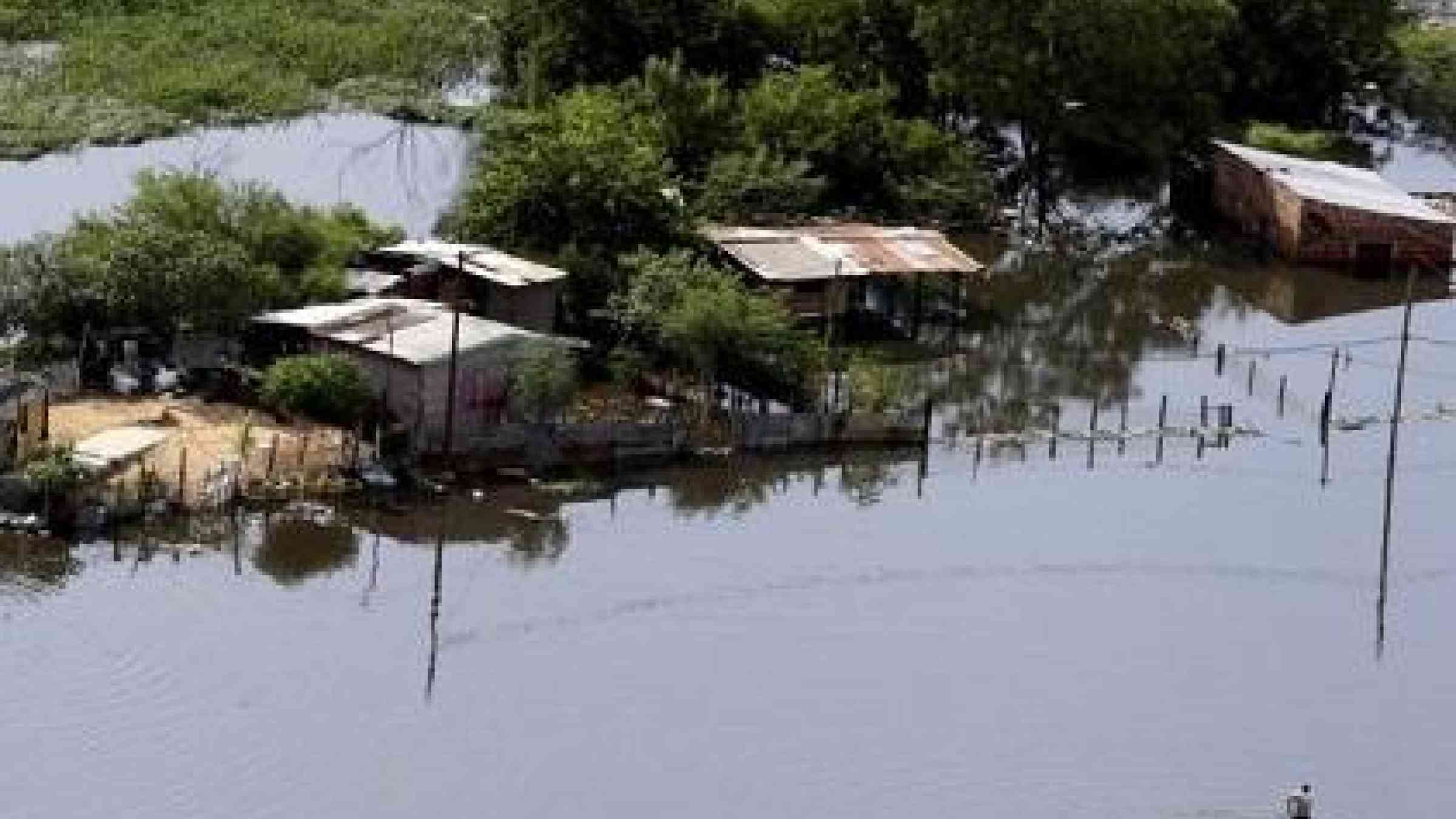
The River Paraguay has swollen to over 7.38 metres, forcing more than 49,000 families to evacuate (Photo: Diario Hoy)
Update

In the wake of the extreme tornadoes that struck the United States over Christmas, freak snowfalls in Mexico and heavy flooding in South America and the United Kingdom, Ms. Margareta Wahlström, head of the UN Office for Disaster Risk Reduction today urged governments to take more prevention actions to reduce human and economic losses caused by weather related disasters.

United Nations Office for Disaster Risk Reduction (UNDRR)
Update

Recognizing the national need for resilience against multiple natural hazards, the National Science Foundation (NSF) has initiated a new chapter in hazards research with a $40-million investment in Natural Hazards Engineering Research Infrastructure (NHERI). 'With NHERI, we are broadening NSF's 15-year investment in earthquake engineering to include critical research in wind engineering and reduce the devastation wrought by hurricanes and tornadoes.'...

National Science Foundation (NSF)
Update

Every year, the United States foots a multi-billion dollar bill for the economic and insured losses incurred from natural disasters, reports the New York Times. In 2014, the costs reached $25-billion with certain regions of the country more prone to calamity than others. So what disasters are the most common and how much do they cost? These videos breaks down the natural disasters by region...

New York Times, the
Documents and publications

In 2010, the U.S. the National Commission on Children and Disasters issued its final report, with 81 recommendations and sub-recommendations aimed at ensuring children’s unique needs are accounted for in U.S. disaster preparedness, response and recovery

Save the Children International
Documents and publications

PLOS Currents Disasters. 2015 Jun 29 . Edition 1.
Part I: doi: 10.1371/currents.dis.a7657429d6f25f02bb5253e551015f0f
Part II: doi: 10.1371/currents.dis.f2e5b9e979af6174d2f97c1f0349be5c
Part III: doi: 10.1371/currents.dis.b305fe1b479528fda724c6f84f546471
Part

Public Library of Science
Documents and publications

This map shows the worldwide distribution of natural catastrophes that occurred between 1980 and 2014, based on the data from NatCatSERVICE, and gives overviews of overall and insured losses.

With more than 25,000 entries, NatCatSERVICE is one of the

Münchener Rückversicherungs-Gesellschaft (Munich Re)
Uploaded on