1. Home
  2. Knowledge Base | PreventionWeb
  3. Hazards

Technological hazard

Technical or technological disasters are caused by events that can be intense and sudden, induced by human processes. They originate from technological or industrial conditions, dangerous procedures, infrastructure failures or specific human activities (UNGA, 2016).

Technical systems are complex, with many dependent subsystems. The failure of one element within this system can cascade throughout the chain, causing a series of failures leading to a disaster. Technical hazards are increasing due to the scope of technological expansion. They include industrial activity that includes dangerous conditions, processes, all transport systems (land, sea, air), defensive or offensive weapons systems and power plants.

By 2050, most of humanity will live downstream of large dams built in the 20th century.

A new set of emerging technological risks under the Sendai Framework includes Information and communications technology (ICT)-related hazards. The increasing dependence upon complex large-scale network architectures of information technologies also increases exposure to cybersecurity threats. These threats include computer viruses, worms, Trojan horses, malware, spoofing attacks, identity theft, the theft and illegal disclosure of data, the loss of data and contamination of data. They have the potential to disrupt essential infrastructure operations such as communication, health, banking, transportation, energy, education and many other services.

Risk factors

  • Ageing, abandoned or idle installations.
  • Insufficient institutional and legal capacities.
  • Natural hazards: storms, landslides, floods or earthquakes can cause industrial accidents.

Vulnerable areas

  • Residential communities around industrial establishments tend to be most at risk because of their proximity.

Risk reduction measures

  • Assess the risks before planning and building critical infrastructure.
  • Develop policies and practices for continuity management.
  • Integrate the risks into planning, foresee and reduce cascading effects.
  • Create a hazard map to identify people at risk and their vulnerability.
  • Draft national, regional and local response plans.
  • Put in place early warning/monitoring systems to inform response.
  • Ensure contingency and response plans are in place at a national and local level to evacuate people on time.
  • Assess new technologies.
  • Improve crisis communication before, during and after the event.
  • Organize training and exercises for complex scenarios involving multiple interdependent failures.
  • Educate and raise awareness on potential risks.
Latest Technical Disaster additions in the Knowledge Base

Uploaded on
David Alexander, Professor of Risk and Disaster Reduction, University College London
On 6th December 1917 two ships collided in Halifax, Nova Scotia. One, the SS Mont-Blanc, bore a cargo of munitions. A fire ignited them and the
National Disaster Risk Assessment
Documents and publications

In 2016 UNDRR commissioned the development of guidelines on national disaster risk assessment (NDRA) as part of a series of thematic guidelines under its “Words into Action” initiative.

United Nations Office for Disaster Risk Reduction (UNDRR)
Documents and publications

This research provides an initial literature review to gather and assess the quality of any published assessments of space weather impacts and socioeconomic studies.

Wiley
Baillie the Border Collie, a highly-skilled search and rescue dog, pictured here with her handler Mr. Kit Huffer, has become a star at the Americas region's top disaster risk reduction conference (Photo: Public Safety Canada/UNISDR)
Update

Baillie the Border Collie stands motionless, eyeballing her handler, then springs into action when he gives the command: “Find it!” The four-year-old is part of the Canada Task Force 2 Disaster Response Team, among the thousand delegates at the 5 th Regional Platform for Disaster Risk Reduction in the Americas.

United Nations Office for Disaster Risk Reduction – Regional Office for the Americas and the Caribbean
Documents and publications

Why transboundary cooperation matters in preventing industrial accidents

It discusses how the UNECE Industrial Accidents Convention (referred to as The Convention) can help to prevent industrial accidents, especially those with transboundary effects, and

United Nations Economic Commission for Europe (UNECE)
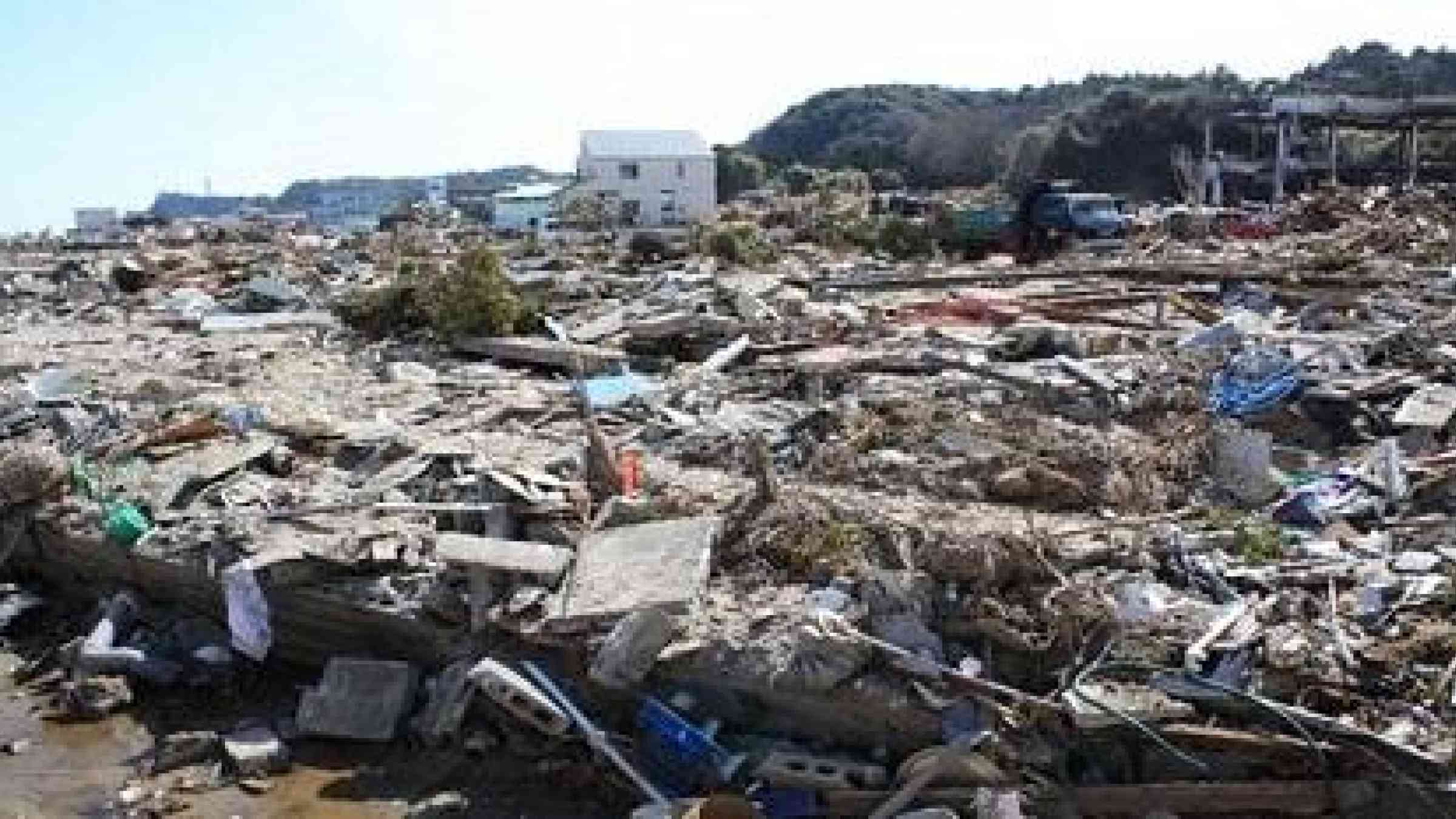
Tsunami damage in the Toyoma District of Iwaki City, Fukushima Prefecture (Photo: Fukushima Prefecture)
Update

The future of Fukushima Prefecture dramatically changed on 11 March 2011. A 9.0 magnitude earthquake off Japan’s eastern seaboard unleashed a powerful tsunami that triggered a devastating nuclear meltdown at the Fukushima Daiichi Power Plant.

United Nations Office for Disaster Risk Reduction - New York UNHQ Liaison Office
Documents and publications

This publication provides an overall understanding of chemical and industrial hazards in India, by discussing hazard identification and risk assessment, giving an overview of the legal framework for chemical disaster management and explaining how to raise

National Institute of Disaster Management (India)
Rescuers providing emergency medical attention to mock survivors on site during AIRTEST16 (Photo: NDRRMC)
Update

Lying in the midst of the Indian Ocean, Mauritius is keenly aware of the importance of preparing for natural and man-made hazards alike, and the island nation has been assessing its ability to save lives in the event of an air crash.

United Nations Office for Disaster Risk Reduction - Regional Office for Africa
Uploaded on