1. Home
  2. Knowledge Base | PreventionWeb
  3. Hazards

Technological hazard

Technical or technological disasters are caused by events that can be intense and sudden, induced by human processes. They originate from technological or industrial conditions, dangerous procedures, infrastructure failures or specific human activities (UNGA, 2016).

Technical systems are complex, with many dependent subsystems. The failure of one element within this system can cascade throughout the chain, causing a series of failures leading to a disaster. Technical hazards are increasing due to the scope of technological expansion. They include industrial activity that includes dangerous conditions, processes, all transport systems (land, sea, air), defensive or offensive weapons systems and power plants.

By 2050, most of humanity will live downstream of large dams built in the 20th century.

A new set of emerging technological risks under the Sendai Framework includes Information and communications technology (ICT)-related hazards. The increasing dependence upon complex large-scale network architectures of information technologies also increases exposure to cybersecurity threats. These threats include computer viruses, worms, Trojan horses, malware, spoofing attacks, identity theft, the theft and illegal disclosure of data, the loss of data and contamination of data. They have the potential to disrupt essential infrastructure operations such as communication, health, banking, transportation, energy, education and many other services.

Risk factors

  • Ageing, abandoned or idle installations.
  • Insufficient institutional and legal capacities.
  • Natural hazards: storms, landslides, floods or earthquakes can cause industrial accidents.

Vulnerable areas

  • Residential communities around industrial establishments tend to be most at risk because of their proximity.

Risk reduction measures

  • Assess the risks before planning and building critical infrastructure.
  • Develop policies and practices for continuity management.
  • Integrate the risks into planning, foresee and reduce cascading effects.
  • Create a hazard map to identify people at risk and their vulnerability.
  • Draft national, regional and local response plans.
  • Put in place early warning/monitoring systems to inform response.
  • Ensure contingency and response plans are in place at a national and local level to evacuate people on time.
  • Assess new technologies.
  • Improve crisis communication before, during and after the event.
  • Organize training and exercises for complex scenarios involving multiple interdependent failures.
  • Educate and raise awareness on potential risks.
Latest Technical Disaster additions in the Knowledge Base

Uploaded on
Documents and publications

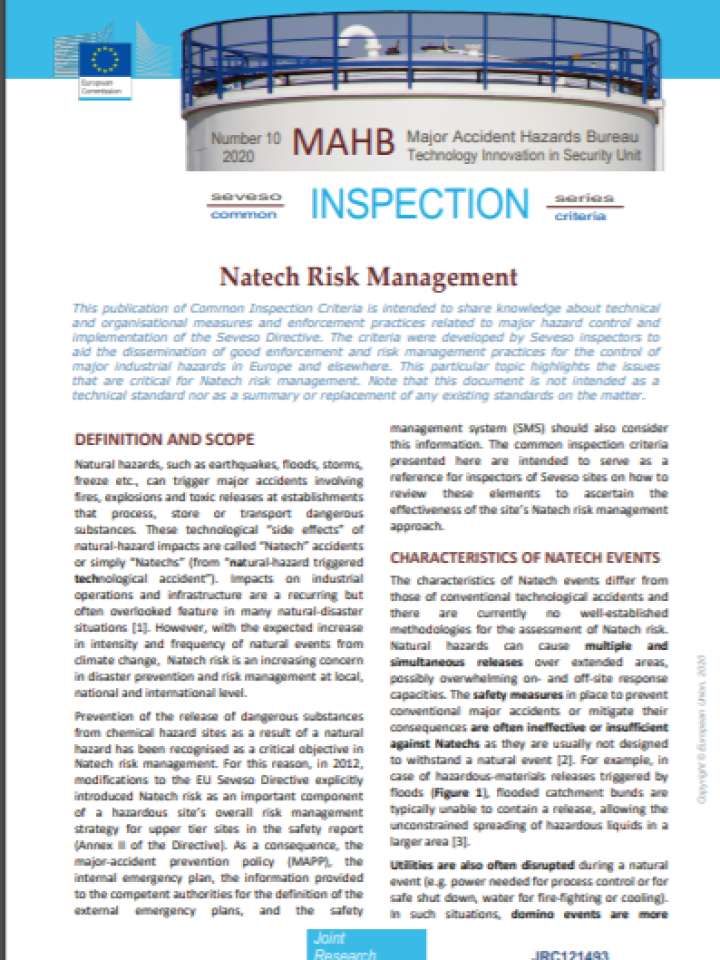
This publication of Common Inspection Criteria is intended to share knowledge about technical and organizational measures and enforcement practices related to major hazard control and implementation of the Seveso Directive. The criteria were developed by

European Union
Report cover
Documents and publications

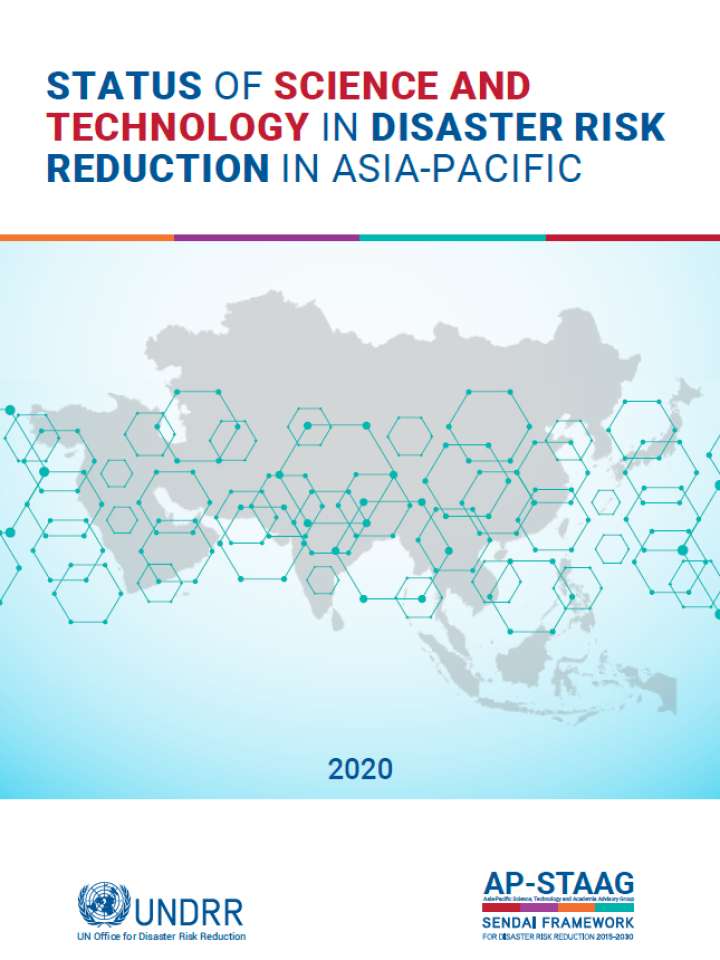
The Status of Science and Technology report is an attempt to capture some of the progress towards the application of science and technology towards risk reduction in Asia-Pacific.

United Nations Office for Disaster Risk Reduction - Regional Office for Asia and Pacific
Report cover
Documents and publications

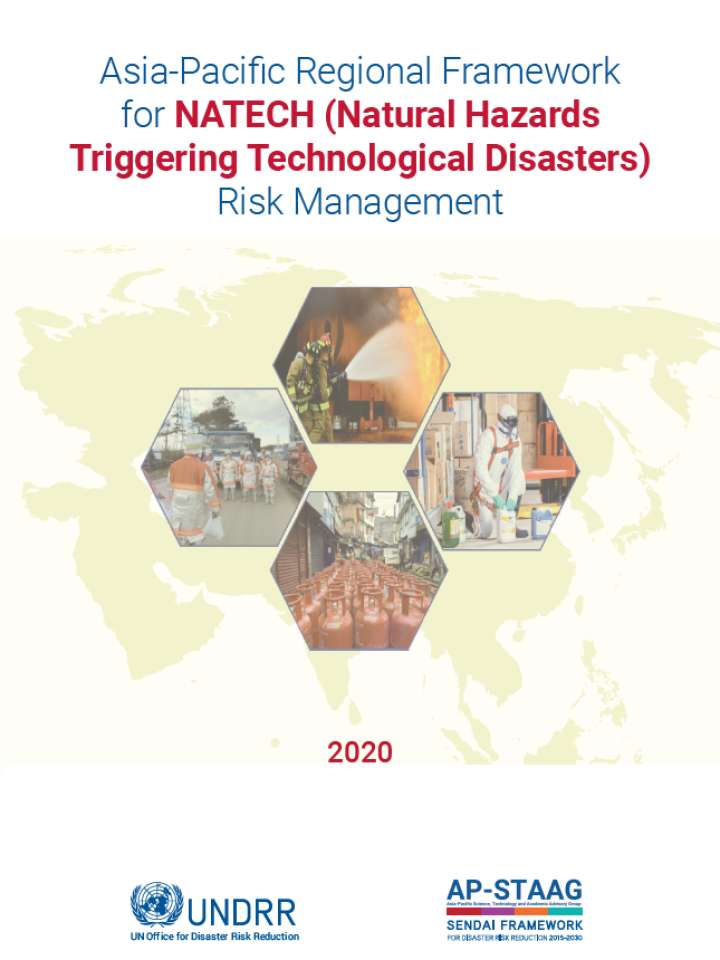
NATECH (Natural hazards triggering Technological disasters) is an emerging theme in the field of disaster risk reduction globally. The report, developed through a series of consultations and drawing on lessons from the past NATECH disasters, proposes ten guiding principles for NATECH risk management in the Asia-Pacific region.

United Nations Office for Disaster Risk Reduction - Regional Office for Asia and Pacific
Documents and publications

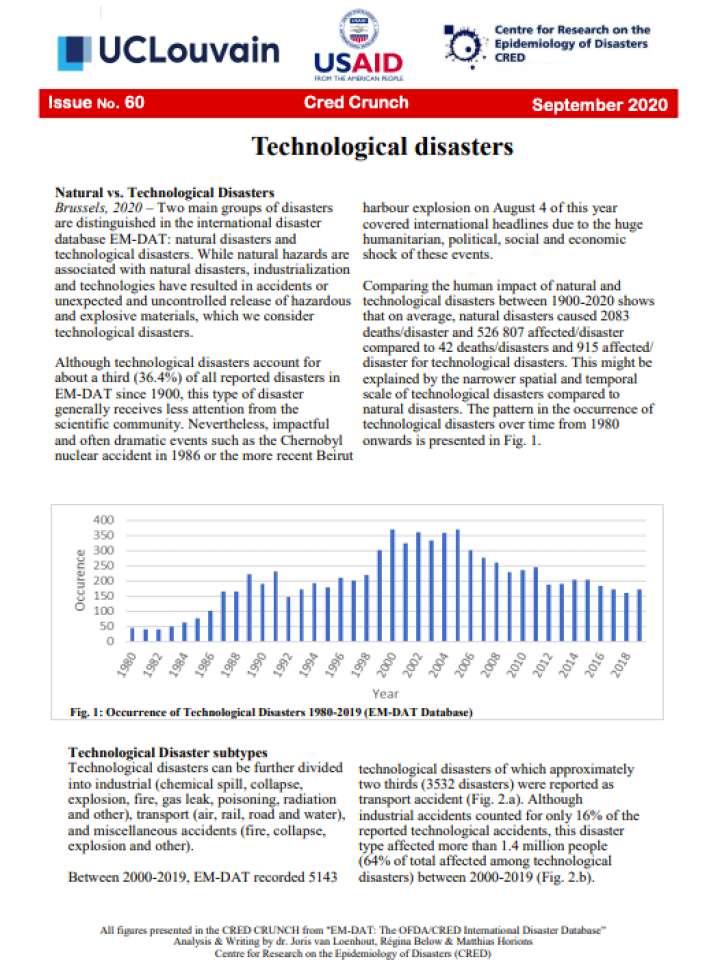
Two main groups of disasters are distinguished in the international disaster database EM-DAT: natural disasters and technological disasters. While natural hazards are associated with natural disasters, industrialization and technologies have resulted in

Centre for Research on the Epidemiology of Disasters (CRED)
Case study
Location: Canada United States of America
The study goal was to identify key decisions and actions critical to incident investigations using the 2014 crude MCHM chemical spill in West Virginia USA as a case study.
  • Environmental Science: Water Research & Technology
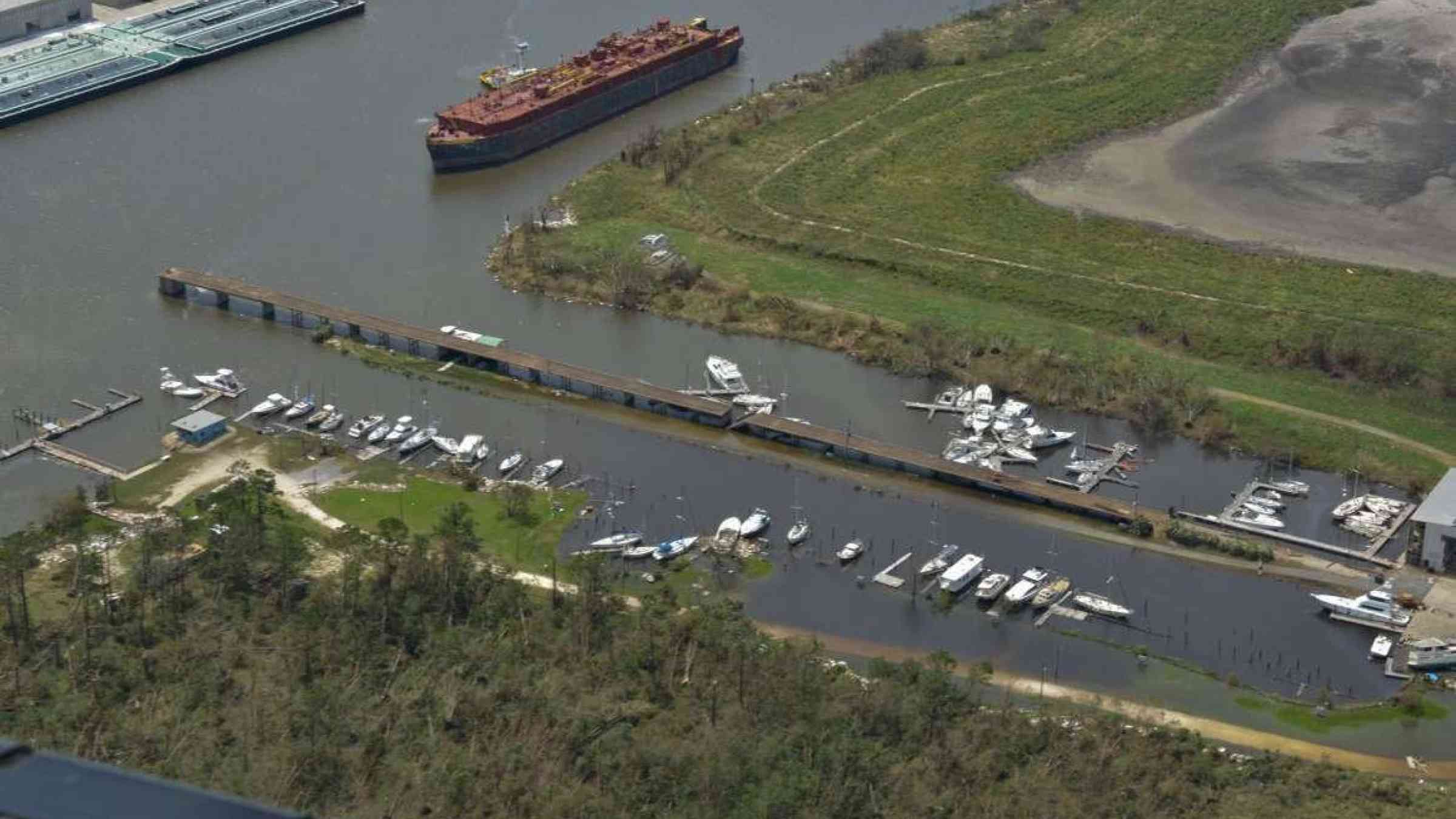
Coast Guard conducts post-storm Hurricane Laura overflight near Lake Charles. Photo: U.S. Coast Guard by Petty Officer 3rd Class Sydney Phoenix (CC BY-NC-ND 2.0)
Update

Extreme storms like Hurricane Laura are rare, but they carry the potential for very significant, even fatal, chemical exposures for displaced people.

Conversation Media Group, the
IuliaIR /shutterstock.com
Update

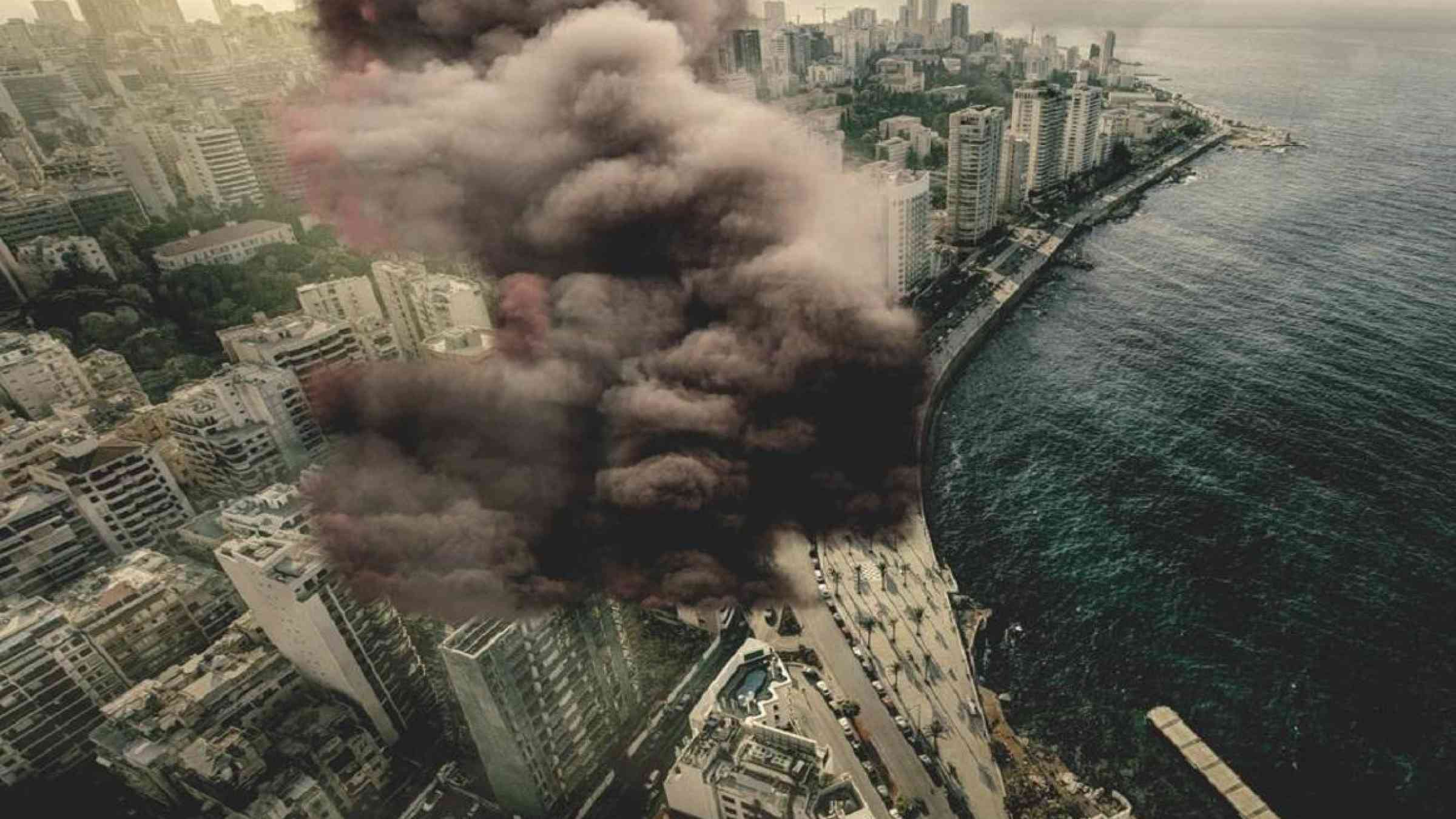
Beirut explosions attract attention to risks on transportation and dangerous goods storage. The UN is at the forefront of international efforts to reduce these risks.

United Nations - Headquarters
Concept Note International Day for Disaster Risk Reduction

An opportunity to acknowledge the progress being made toward reducing disaster risk and losses in lives, livelihoods and health in line with the Sendai Framework for Disaster Risk Reduction 2015-2030.

United Nations Office for Disaster Risk Reduction – Regional Office for the Americas and the Caribbean
Uploaded on