1. Home
  2. Knowledge Base | PreventionWeb
  3. Hazards

Technological hazard

Technical or technological disasters are caused by events that can be intense and sudden, induced by human processes. They originate from technological or industrial conditions, dangerous procedures, infrastructure failures or specific human activities (UNGA, 2016).

Technical systems are complex, with many dependent subsystems. The failure of one element within this system can cascade throughout the chain, causing a series of failures leading to a disaster. Technical hazards are increasing due to the scope of technological expansion. They include industrial activity that includes dangerous conditions, processes, all transport systems (land, sea, air), defensive or offensive weapons systems and power plants.

By 2050, most of humanity will live downstream of large dams built in the 20th century.

A new set of emerging technological risks under the Sendai Framework includes Information and communications technology (ICT)-related hazards. The increasing dependence upon complex large-scale network architectures of information technologies also increases exposure to cybersecurity threats. These threats include computer viruses, worms, Trojan horses, malware, spoofing attacks, identity theft, the theft and illegal disclosure of data, the loss of data and contamination of data. They have the potential to disrupt essential infrastructure operations such as communication, health, banking, transportation, energy, education and many other services.

Risk factors

  • Ageing, abandoned or idle installations.
  • Insufficient institutional and legal capacities.
  • Natural hazards: storms, landslides, floods or earthquakes can cause industrial accidents.

Vulnerable areas

  • Residential communities around industrial establishments tend to be most at risk because of their proximity.

Risk reduction measures

  • Assess the risks before planning and building critical infrastructure.
  • Develop policies and practices for continuity management.
  • Integrate the risks into planning, foresee and reduce cascading effects.
  • Create a hazard map to identify people at risk and their vulnerability.
  • Draft national, regional and local response plans.
  • Put in place early warning/monitoring systems to inform response.
  • Ensure contingency and response plans are in place at a national and local level to evacuate people on time.
  • Assess new technologies.
  • Improve crisis communication before, during and after the event.
  • Organize training and exercises for complex scenarios involving multiple interdependent failures.
  • Educate and raise awareness on potential risks.

Latest Technical Disaster additions in the Knowledge Base

Uploaded on
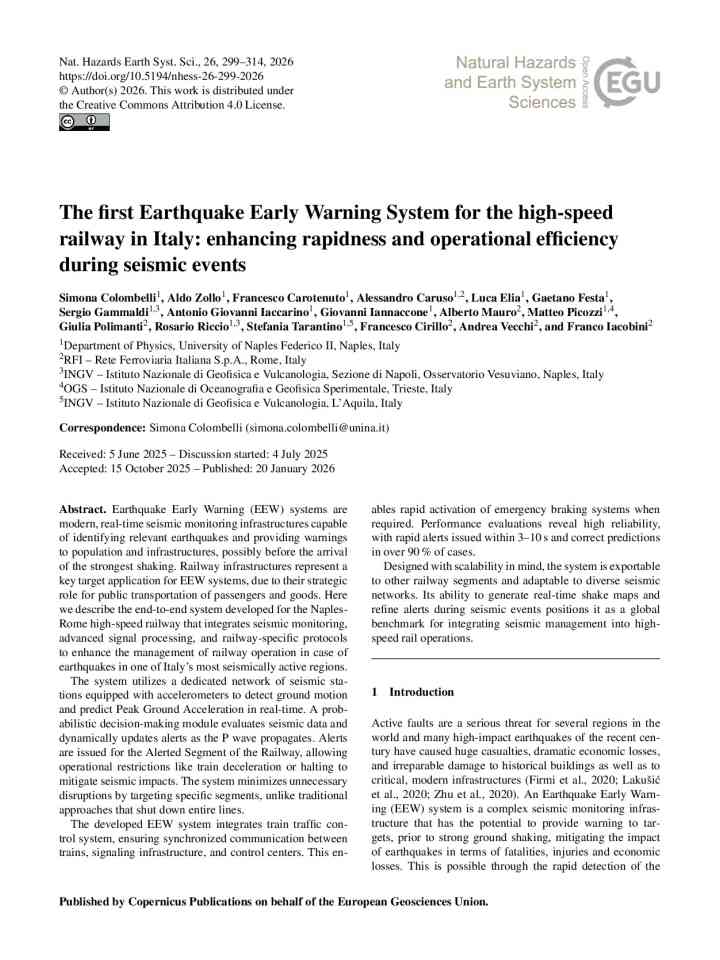
The first Earthquake Early Warning System for the high-speed railway in Italy: enhancing rapidness and operational efficiency during seismic events thumbnail
Documents and publications

This paper describes the end-to-end early warning system developed for the Naples-Rome high-speed railway that integrates seismic monitoring, advanced signal processing, and railway-specific protocols to enhance the management of railway operation.

Natural Hazards and Earth System Sciences, the
Soil
Research briefs

New study by researchers at Freie Universität published in "Nature Communications" shows that independent environmental stressors such as heat, drought, and microplastics affect soils differently when combined.

Freie Universität Berlin
A mother and her two sons walk under the sun carrying an umbrella
Update

In recent years, India has experienced frequent and intense heat waves alongside some of the highest levels of air pollution in the world. To understand how different groups of people view these hazards 10,751 adults were surveyed nationwide.

Yale Program on Climate Change Communication
Fishermen in a boat in Ethiopia
Update

UNDP's Resilient Urban Futures Initiative is helping Hawassa to understand the risk landscape. Through the initiative a comprehensive risk profiling exercise has been conducted, a major milestone in Hawassa's journey to become a resilient metropolis.

United Nations Development Programme (UNDP)
waste plastic bottles and other types of plastic waste at the Thilafushi waste disposal site
Update

At the most simple level, it is likely that the garbage pile was over-steepened, perhaps compounded by poor management of water. The processes through which tipping of waste at the top of the pile will be a focus.

Eos - AGU
Update

As Switzerland mourns the loss of 40 people killed in a fire at a ski resort on New Year's, questions about the safety and regulations of large venues have cropped up.

Microsoft
Power after the storm achieving grid resilience in a climate-changed world thumbnail
Documents and publications

In this report, the authors analyze a decade of power outage data from the central United States, drawing on outage records, media reporting, and peer-reviewed scientific literature.

Union of Concerned Scientists
Update

Over the last decade, extreme weather events were the cause of the top 10 worst power outages in the central United States, according to new analysis by the Union of Concerned Scientists (UCS).

Union of Concerned Scientists
Uploaded on