1. Home
  2. Knowledge Base | PreventionWeb
  3. Hazards

Insect infestation

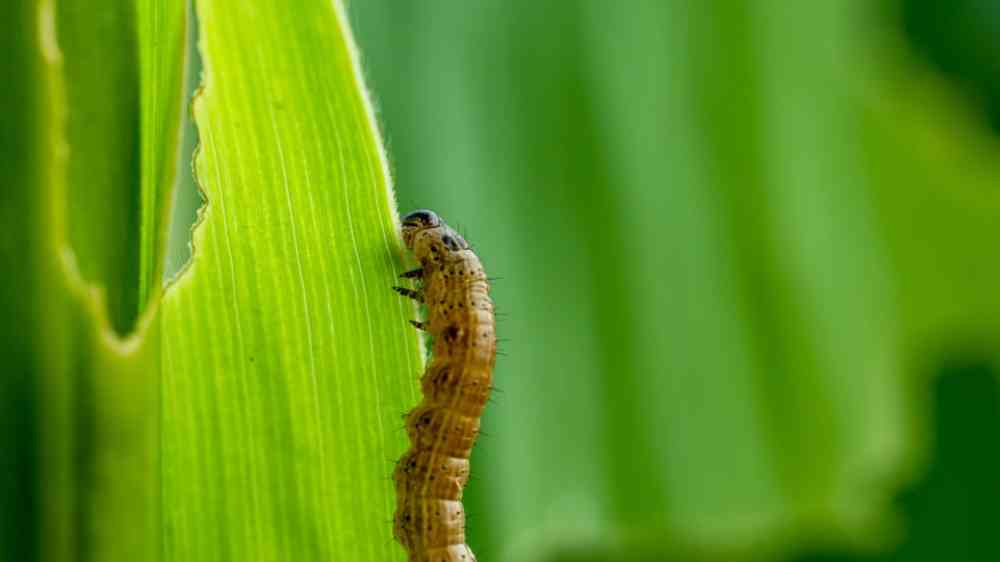
An insect pest infestation is a recently detected insect pest population, including an incursion, or a sudden significant increase of an established insect, disease agents or weed population in an area leading to damage to plants in production fields, forests or natural habitats and causing substantial damage to productivity, biodiversity or natural resources (adapted from FAO, 2019).

This planting technique reduces crop losses and improves food security.

Risk factors

Higher temperature, severe and extreme weather events and drought stress can all result in reduced vigour of trees, making them more vulnerable to outbreaks of native and introduced pests and diseases. For example, the dieback of millions of hectares of pine forests caused by outbreaks of native bark beetles in Central America, Europe and North America is associated with climate change, impacts of extreme weather events, and, in some cases, inadequate forest management practices (FAO, 2020b).

Favourable climatic conditions, disruption of ecosystems and negligence of crop/forest hygiene contribute to growth in insect populations which can cause substantial damage regularly. In many cases, long distance spread of insects results from transportation of infested goods.

Risk reduction measures

Following principles of sustainable plant production, sustainable forest management and integrated pest management practices are the best approach for control, focusing on diversified production systems, regular surveillance, preparedness before potential outbreaks, and a rapid response to prevent escalation to unmanageable scales (Guzewich et al., 1997). Post disaster needs assessment (PDNA) is designed to evaluate immediate needs for recovery and restoration for better disaster response (HIP).
Latest Insect infestation additions in the Knowledge Base

Uploaded on
Documents and publications

This brochure presents the human health and environmental activities of FAO's Emergency Centre for Locust Operations (ECLO).

Food and Agriculture Organization of the United Nations (FAO)
Documents and publications

The Horn of Africa and the Near East has received unusually widespread and heavy rainfall mainly along the Red Sea coast and interior of Saudi Arabia and Yemen since January 2007. These rains led to the development of favourable ecological conditions to

Food and Agriculture Organization of the United Nations (FAO)
Documents and publications

Desert locust invasions affect an area extended from the Atlantic Coast of Northern Africa to eastern India. Plagues arise, however, in the arid and semiarid recession core region. Desert locust breeding and migration are synchronized with rainy seasons

Food and Agriculture Organization of the United Nations (FAO)
Documents and publications

In order to control the breeding process of desert locusts, the countries hosting recession areas carry out surveys. This document summarizes the findings of the process carried out from 14 to 18 February 2004 on an area of around 1963 Ha between Djibouti

Food and Agriculture Organization of the United Nations (FAO)
Documents and publications

In order to control the breeding process of desert locusts, the countries hosting recession areas carry out surveys. This document summarizes the findings of the process carried out from 26 January to 2 January 2003 in an area between Egypt and Sudan. It

Food and Agriculture Organization of the United Nations (FAO)
Documents and publications

In order to control the breeding process of desert locusts, the countries hosting recession areas carry out surveys. This document summarizes the findings of the process carried out from 1 April to 1 May 2007 on an area between I.R. Iran and Pakistan. It

Food and Agriculture Organization of the United Nations (FAO)
Documents and publications

In order to control the breeding process of desert locusts, the countries hosting recession areas carry out surveys. This document summarizes the findings of the process carried out between the 8th and 15th of January 2005 on Tihama Coastal Plain between

Food and Agriculture Organization of the United Nations (FAO)
Documents and publications

Even if the Desert Locust has been the most feared agricultural pest in the northern part of Africa for thousands of years, the threat it posed to the rural food security in marginal subsistence areas and its impacts on the welfare of the farming

Food and Agriculture Organization of the United Nations (FAO)
Uploaded on