1. Home
  2. Knowledge Base | PreventionWeb
  3. Hazards

Avalanche

An avalanche is a mass of snow and ice falling suddenly down a mountain slope and often taking with it earth, rocks and rubble of every description (WMO, 1992).

Thousands of avalanches occur every year, killing an average of 500 people worldwide. Avalanches occur when massive slabs of snow break loose from a mountainside and shatter like broken glass as they race downhill. These moving masses can reach speeds of 130 km/hour within about five seconds. They cannot always be predicted but the weather conditions, which make them more likely, can be forecast in advance. Most accidents now occur because people ignore warnings. The majority of avalanche incidents are due to slab avalanches with skiers involved. Avalanches are bigger, travel greater distances and are triggered earlier in the year. These changes can be attributed clearly to rising temperatures, which have reached 0.2 to 0.4 degrees annually in some parts of the Himalayas.

New simulations can improve avalanche forecasting.

Avalanche protection and control measures include early warning which is key (EAWS). By way of controlled explosions, artificial avalanche triggering aims temporarily to safeguard possible starting zones (SLF). Defensive structures prevent the formation of avalanches. In order circumstances, when an avalanche is released, it can be diverted or intercepted by a dam. Other means of protection against avalanches include physical structures for buildings and snow sheds (SLF).

Avalanche risk factors

  • Quick changes in weather, snowpack and terrain.
  • Increasing human populations: winter sports lovers at ski resorts and developers building in vulnerable locations.
  • Climate change.

Vulnerable areas

  • Human settlements in avalanche-prone zones.
  • Rural mountainous villages with no early warning systems.
  • Human settlements with no forest cover.
  • Skiing populations and tourists not educated in avalanche risk.

Risk reduction measures

  • Not constructing buildings, roads, etc. in avalanche hazard areas.
  • Early warning systems at local and national levels.
  • Information on avalanches, their impacts and risks for tourism information offices.
  • Tree planting to protect against the release of avalanches.
  • Building codes and appropriate materials to reinforce resilience.
  • Raising awareness, educating and training residents and visitors on what to do before, during and after an avalanche.
Latest Avalanche additions in the Knowledge Base

Uploaded on
Documents and publications

Résumé du rapport final 22 mars 2011:

Cette étude analyse les effets du changement climatique dans la vallée de Saas en Suisse, au sein de quatre secteurs importants, à savoir (1) l’eau, (2) l’habitat/les infrastructures, (3) la biodiversité et (4) le

Econcept
Documents and publications

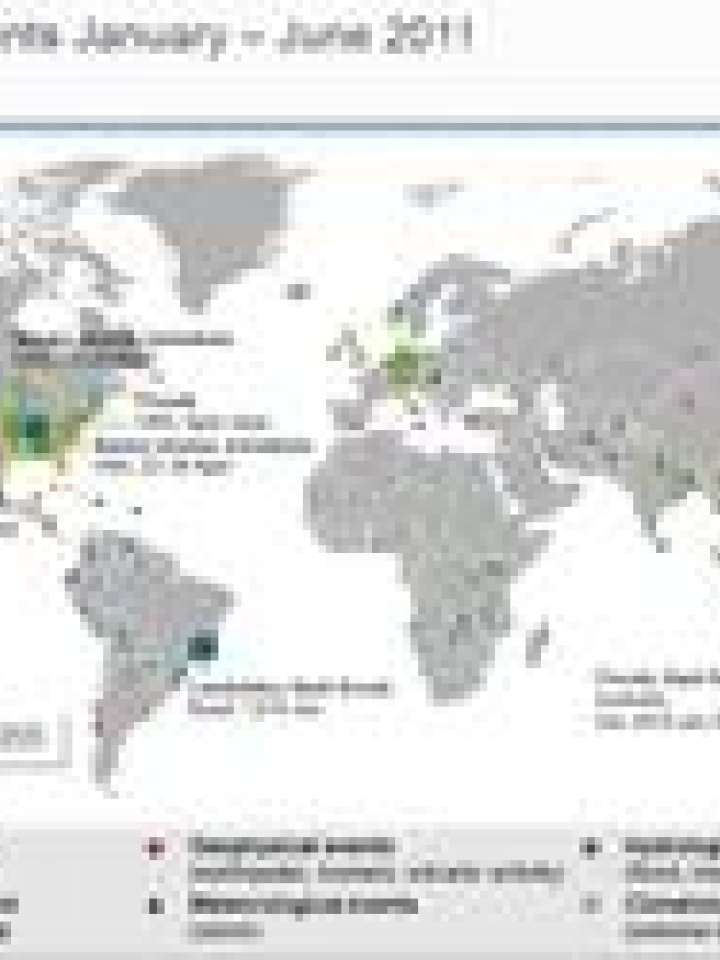
This map shows the worldwide distribution of natural catastrophes that occurred between January and June 2011, according to Munich Re, NatCatSERVICE.

An exceptional accumulation of very severe natural catastrophes makes 2011 the highest-ever loss year on

Münchener Rückversicherungs-Gesellschaft (Munich Re)
Photo copyright by Flickr user, USAID water
Documents and publications

This training manual is intended to assist those working on emergency response and disaster risk management. It aims to provide an overview of the major land issues that may arise following a natural hazard, which need to be considered and included in the

Food and Agriculture Organization of the United Nations (FAO)
United Nations Human Settlements Programme (UN-HABITAT)
Update

According to a BBC report, glacial lakes in the Himalayas could pose a major hazard to population centres if they are ruptured by earthquakes, scientists say. 'When the last earthquakes hit the region, there were barely any glacial lakes in the Himalaya region', says Sushil Kumar of the Wadia Institute of Himalayan Geology...

British Broadcasting Corporation (BBC)
Documents and publications

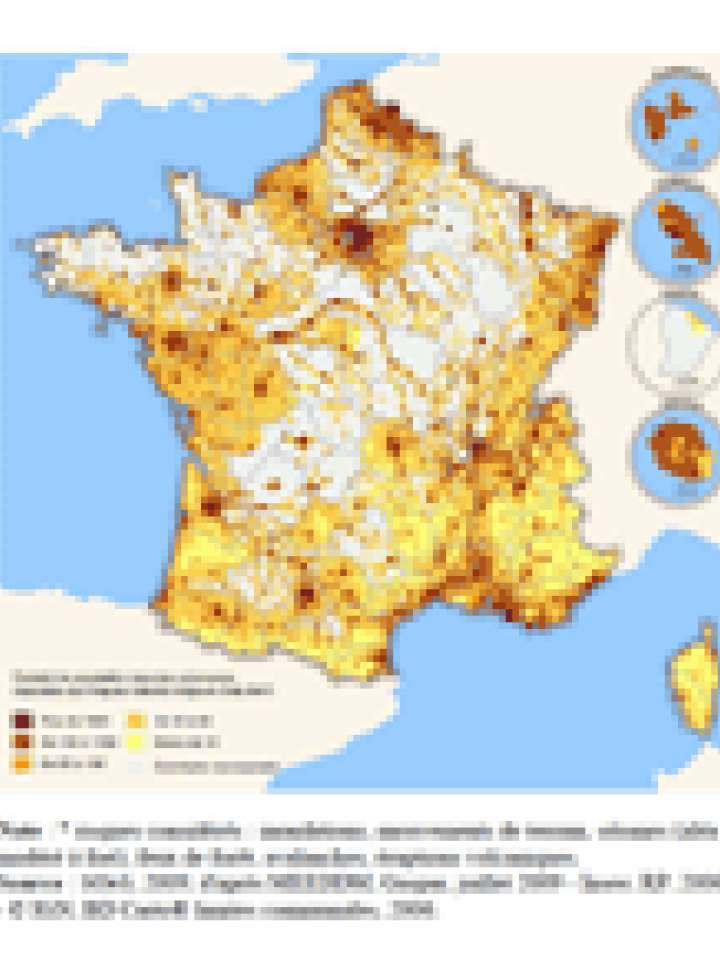
Cette carte représente la densité de population dans les communes exposées aux risques majeurs.

Les risques majeurs font référence à des événements ponctuels de faible probabilité mais dont la réalisation donne lieu à de très graves conséquences

Ministry for Ecological and Solidarity Transition
Documents and publications

This handbook demonstrates how to combat natural disasters in tourist areas and mitigate their impacts. It guides the reader through disaster onset to post-disaster reconstruction and the relaunching of a tourist destination. It considers hazards such as

World Meteorological Organization (WMO)
World Tourism Organization (WTO)
Update

After a year devoted to biodiversity, the United Nations has turned its attention to forests. In Switzerland, trees cover more than 30 per cent of the country.

swissinfo.ch - International Service of the Swiss Broadcasting Corporation
Documents and publications

This report assesses the occurrence and impacts of disasters and the underlying hazards such as storms, extreme temperature events, forest fires, water scarcity and droughts, floods, snow avalanches, landslides, earthquakes, volcanoes and technological

European Environment Agency
Uploaded on