1. Home
  2. Hubs: tools and knowledge
  3. Wildfire Portal

Resilient development

Resilient development integrates wildfire risk into the way communities are planned, built and managed, reducing exposure and vulnerability before disasters occur.

Preventing new development in the highest-risk areas, maintaining defensible space around settlements, protecting critical infrastructure and preserving natural buffers can all help reduce the likelihood that wildfires become catastrophic disasters.

Resilient building and mitigation practices are a cornerstone of this approach. Fire-resistant construction materials, ember-resistant design, appropriate roofing and ventilation systems, and the use of building codes tailored to wildfire hazards can significantly improve the survivability of homes and public infrastructure.
Uploaded on
Update

Poorly planned and unmanaged growth, especially in high-risk areas, can result in catastrophe. California, like many states, can mitigate risk by advancing policies related to the link between growth management, hazard mitigation and land use. Urban planners, state policies, adaptation, proper incentives and community collaboration are vital tools for resilience.

Huffington Post Inc.
Update

Bhutan grapples with improving residents' livelihoods while conserving the authenticity of their homes and buildings. The Division for Conservation of Heritage Sites has thus developed a management plan that engages IOs and religious congregations to better understand traditional buildings' behaviour while ensuring continued capacity building to enhance resilience.

World Bank, the
Update

The spread and intensity of the wildfires raging in California call for a far higher level of prevention, containment and management than before. Property owners and developers, fire departments, utilities and other entities need to strengthen collaboration and revisit building codes and insurance industry practices.

University of Pennsylvania
Update

The Camp Fire is the most destructive wild fire in history, with 6,700 structures burned in California, stoking concerns about future wild fires and their risk drivers. The increase of housing in the Wildland Urban Interface, a century of firefighting techniques that favoured response over preparedness, and climate change will likely propel future fires.

Risk Management Solutions
Documents and publications

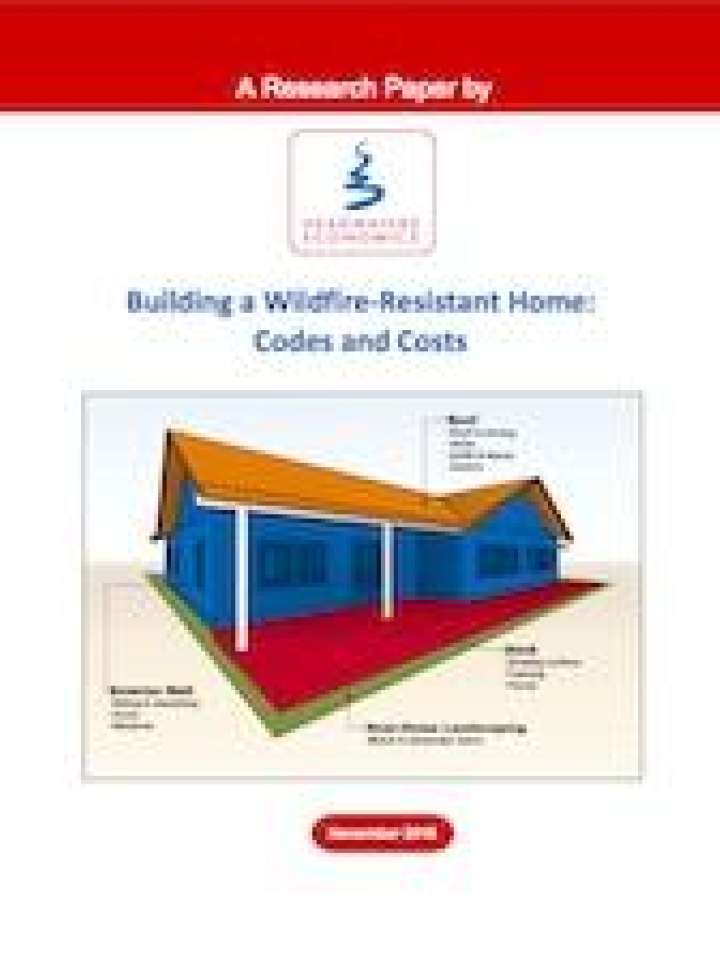
This study compares existing codes and standards for wildfire-resistant construction and estimates cost differences in constructing a wildfire-resistant home compared to a typical home. It also examines the cost of retrofitting a typical home to be more

Headwaters Economics
Update

In many states, laws don’t require sellers to disclose that a property is in a flood or wildfire area, leaving homeowners with unexpected damage and losses. While disaster risks and costs increase, notification efforts for property owners vulnerable to disaster still remain uneven across the U.S., with wide gaps.

Guardian, the (UK)
Update

A California group, “Architecture of Resilience,” seeks solutions to the rebuilding effort after fires. Using “thoughtful design,” the group is looking for ideas that are also more socially and environmentally conscious than what was lost. Better construction locations, resilient materials and renewable energy are at the forefront of the group's efforts.

World Bank, the
Update

The Flagstaff City Council's Wildland Urban Interface Code, which requires all buildings to be built with fire-resistant building material and adequate water supply for firefighters, has proven to be effective in mitigating fire damage. However, Flagstaff remains one of the few cities in both Arizona and the US to enforce such a code.

Arizona Daily Sun
Uploaded on