This report assesses wildfire-resilient construction costs in Colorado, finding that adopting CWRC Class 1 or IBHS Essential standards increases costs minimally, while higher-tier pathways add moderate premiums focused on exterior components like decks.
Cooperative Institute for Research in Environmental Sciences (CIRES)
California’s Fifth Climate Change Assessment summarizes climate projections, hazards and vulnerabilities across the state, highlighting increasing risks and adaptation approaches for California’s natural, built and social systems.
California Governor’s Office of Land Use and Climate Innovation
Climate change could threaten the reliability of half of U.S. drinking water utilities by 2050 through wildfires, heat, floods and rising seas. Experts urge utilities to assess risks and adapt infrastructure to protect safe water supplies.
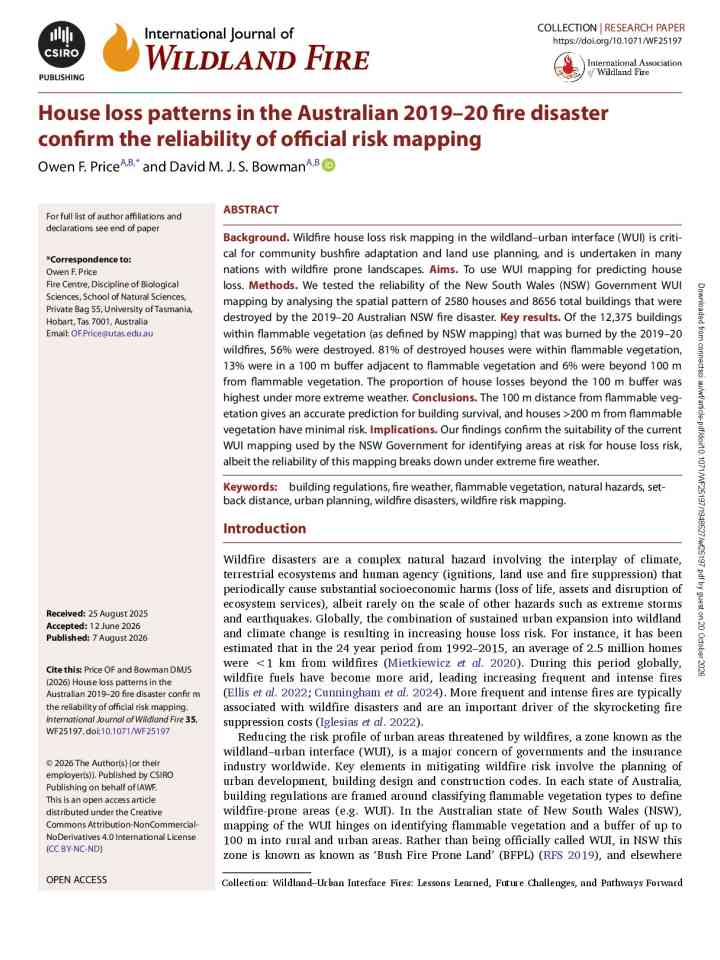
This paper analyzes 2019–20 NSW wildfire losses, finding 94% of destroyed houses were within 100 m of mapped flammable vegetation, validating the NSW Bush Fire Prone Land mapping’s 100 m buffer but noting risks extend further in extreme fire weather.
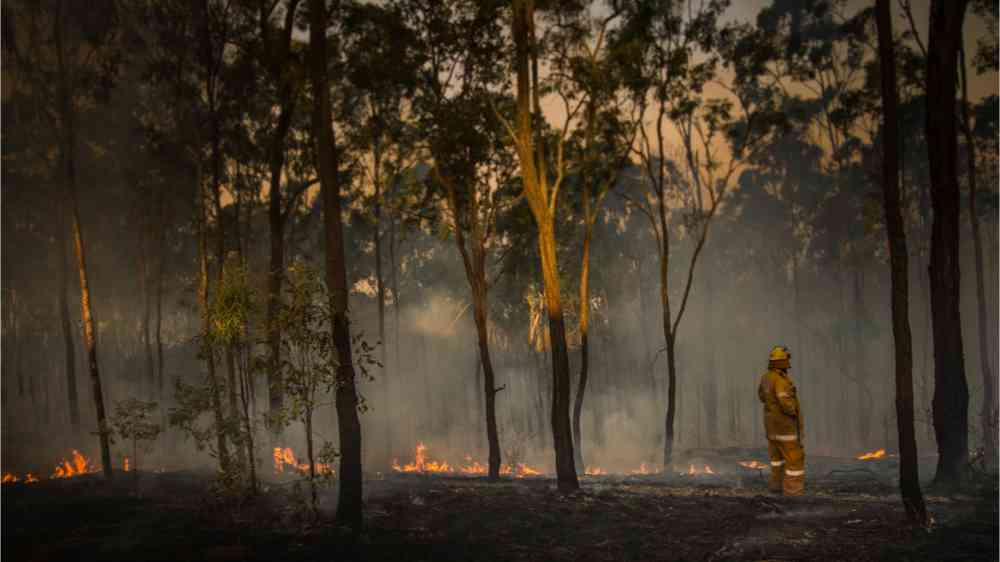
This summer, Australia could face some of its most extreme bushfire conditions ever, due to the severity of an ever-strengthening El Niño. And for many Australians, memories of catastrophic natural disasters are still painfully fresh.
This study aims to develop a risk-based model for assessing fire hazards in highway bridges, intended as a practical decision-support tool for infrastructure managers to identify critical scenarios and prioritise mitigation strategies.
International Journal of Disaster Risk Reduction (Elsevier)