1. Home
  2. Hubs: tools and knowledge
  3. Extreme Heat Portal
Uploaded on
Crowd waiting for the train during a hot day in London, UK (2022)
Update

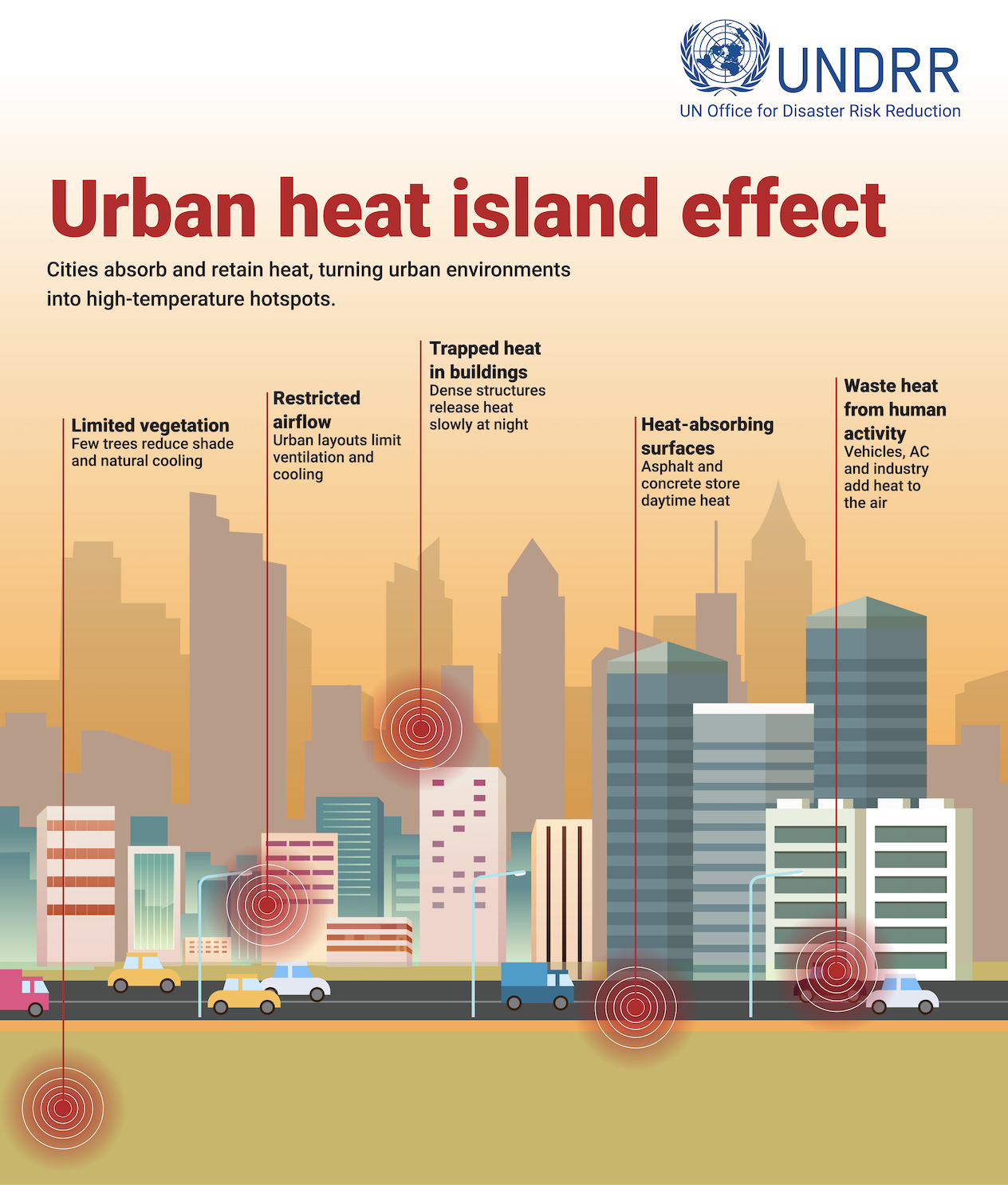
Urban infrastructure can be one of the most powerful tools to keep people cool, without relying on energy-hungry air conditioning. The key is focusing on "surface infrastructure" — the places where the physical city and the atmosphere interact.

World Resources Institute
Update

Summers have been heating up for decades and they’ll only get hotter if heat-trapping pollution continues — making future summers in Minneapolis feel more like current summers in Tulsa.

Climate Central
paper cover
Documents and publications

This study focuses on a fast-developing city in India, and employs a comprehensive methodology to build climate resilience through capacity building of faculty, students, stakeholders, and dissemination efforts targeting the public and school children.

Natural Hazards Research (KeAi - ScienceDirect)
Cover
Documents and publications

This study analyzes the spatial and temporal variation of air temperature in the Bangkok Metropolitan Administration (BMA) using dynamic climate modeling

World Bank, the
Update

The urban heat island sits in a rural heat ocean.

Grist Magazine
Research briefs

With heatwaves hitting Canada harder and more often, there’s a need to rethink how we design homes and neighbourhoods. Speaking with three UBC experts, they explain how smarter design and nature-based solutions can keep Canadians cool, safe and healthy.

University of British Columbia
Cover
Documents and publications

This report explores the emerging challenge of extreme heat, explaining what is at stake, what cities are doing, and what needs to happen next.

World Bank, the
Update

To enable cities to adapt to extreme heat, authorities must clearly understand the risks and which solutions work best for whom.

Context
Uploaded on