1. Home
  2. Hubs: tools and knowledge
  3. Extreme Heat Portal
Uploaded on
People on a main street in Ginza, Tokyo on a hot day protecting themselves from the heat by using umbrellas.
Research briefs

Researchers led by Associate Professor Hideki Kikumoto at the Institute of Industrial Science, The University of Tokyo have developed a new method to fuse climate analysis datasets with weather observations.

University of Tokyo 東京大学
Handbook on urban heat management in the Global South thumbnail
Documents and publications

This handbook combines real examples and strategies from cities in the Global South that are effectively tackling extreme heat. There is a particular focus on solutions that are, feasible, affordable, and easy to adapt.

World Bank, the
Update

Research from the University of Oklahoma reveals that “compound events” — periods when heat wave conditions coincide with high air pollution levels — are becoming more frequent and intense in urban areas across the United States.

University of Oklahoma
Update

Seville has adopted several water-based solutions to reducing urban temperatures.

CBC/Radio-Canada
Garbage truck
Update

To help identify — and ultimately mitigate — heat islands in South Bend, a team of University of Notre Dame researchers has partnered with the city to collect data using a novel method: garbage trucks.

University of Notre Dame
Research briefs

A new deep-learning based model developed by the University of Freiburg and Karlsruhe Institute of Technology (KIT) calculates for the first time how heat stress will develop on each square meter of a city in the future.

Karlsruhe Institute of Technology
Albert Ludwig University of Freiburg
People sitting outside during the UK heatwave
Update

Deadly summer heat waves have become the new norm in recent years for Europe, the world’s fastest-warming continent. With air conditioning in only 20% of the Europe’s buildings, city leaders face a pressing dilemma.

World Resources Institute
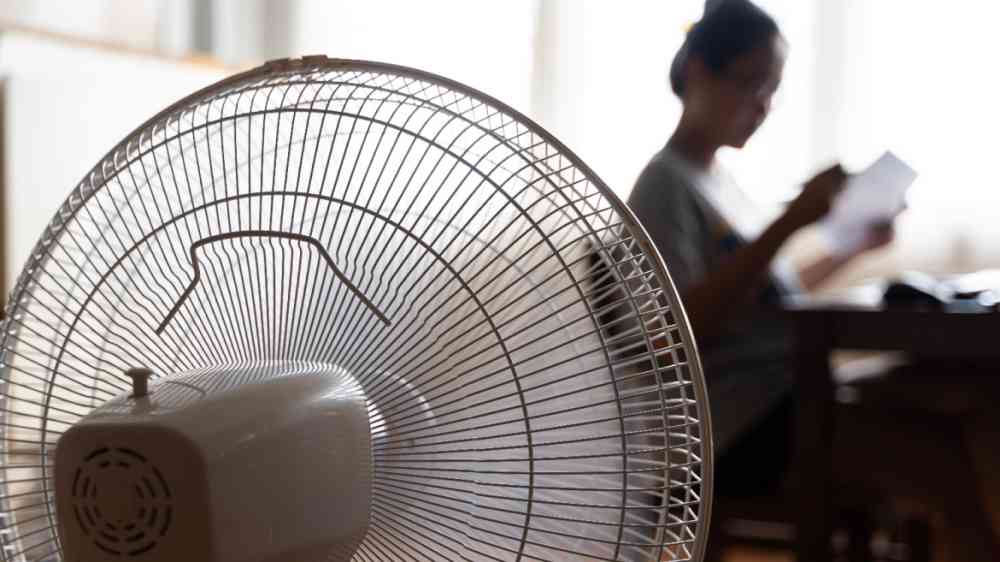
An electric fan cools down a resident inside her house
Update

With heatwaves becoming hotter and more frequent, demand for air conditioning is expected to rise significantly. However, if the UK responds to hotter summers simply by installing more AC, they risk a costly, energy-hungry and more unequal future.

Conversation Media Group, the
Uploaded on