1. Home
  2. Hubs: tools and knowledge
  3. Extreme Heat Portal

Heat and education

Uploaded on
Children in Colombia colouring in COPE Disaster Champion books
Martha Keswick Lina Suárez
In each of the COPE books, the squad heads off on missions to disaster-prone areas to teach other kids how to be ready for disasters, how to become agents of change in their communities and deliver a clear key DRR message.
Research briefs
Greening school playgrounds can improve quality of life

A new study finds greening school playgrounds can improve quality of life in cities and help deal with climate change.

Open University of Catalonia - Universitat Oberta de Catalunya
Young family strolling atop sea wall at Galveston (Texas, USA) beach past colorful row of houses. Concrete sea wall protects barrier Island from hurricane storm surge.
Update
A year of evidence showing the impact of disaster risk reduction

From extreme heat and floods to earthquakes and cyclones, a wealth of examples collected on PreventionWeb offer clear evidence that disaster risk reduction delivers tangible results.

United Nations Office for Disaster Risk Reduction (UNDRR)
Update
California schools are feeling the heat

Even though trees help keep children safe from the Sun, some school districts have lost 25% of their tree canopy in just 4 years.

American Geophysical Union
Update
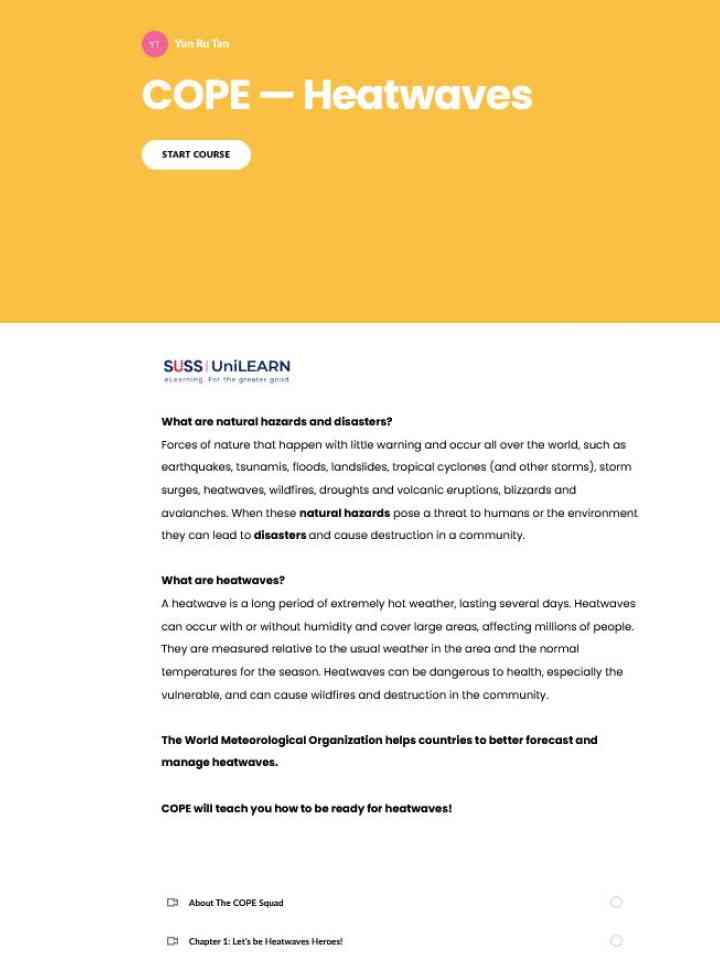
Bringing COPE Squad to Life: interactive learning platform at COP30

COPE Disaster Champions, in collaboration with SUSS, is thrilled to announce the official launch of a new interactive learning platform hosted on SUSS UniLEARN.

COPE Disaster Champions
Singapore University of Social Sciences
World Meteorological Organization (WMO)
COPE course heatwaves-cover
Educational materials

The COPE squad embarks on an adventure to the WMO headquarters in Geneva to learn about climate and environmental issues. Then, they travel to the city of Paris to discover how the city implements their ‘climate action plan’ to help deal with heatwaves.

COPE Disaster Champions
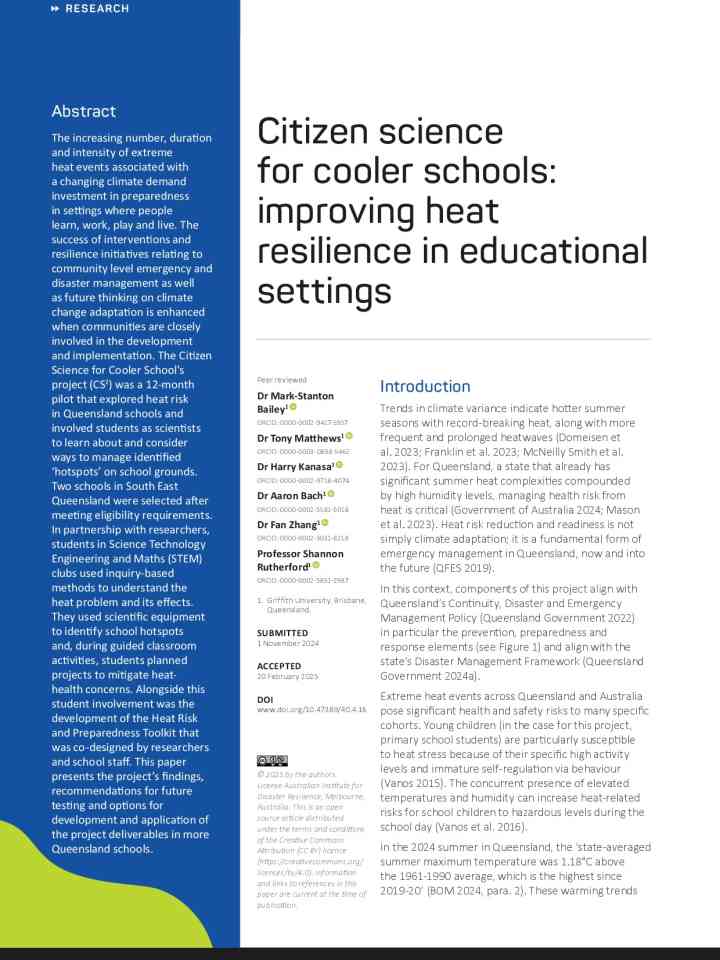
Citizen science for cooler schools: improving heat resilience in educational settings thumbnail
Documents and publications

The Citizen Science for Cooler School's project (CS2) was a 12-month pilot that explored heat risk in Queensland schools and involved students as scientists to learn about and consider ways to manage identified ‘hotspots’ on school grounds.

Australian Institute for Disaster Resilience (AIDR)
Crowd of Japanese highschool students wearing school uniforms
Research briefs
Japan: Classroom heat widens the achievement gap

Children are particularly vulnerable to such environmental stressors. This column uses nationwide exam data from Japanese primary and secondary schools to explore how heat exposure affects student learning.

VOXEU/ CEPR
Uploaded on