Research briefs

Keep up to date with the latest research on disaster risk and resilience on the PreventionWeb knowledge base.

Explore cutting-edge research on disaster risk reduction and resilience through PreventionWeb's dedicated research briefs section. Our platform curates and highlights the most recent academic studies, providing valuable insights into disaster risk management. Each research brief distills key findings from peer-reviewed journals and academic publications.

Submit a research brief.

These briefs are designed to keep you informed about the latest scientific advances. Links to the full publications are always included, ensuring easy access to in-depth knowledge. Please note that this section exclusively features academic research, distinct from reports by international organizations or Non-Governmental Organisations.

Uploaded on
Research briefs

Humid heat extremes are less frequently studied, but no less important, than those of dry heat.

Eos - AGU
Cook Islands
Research briefs

A first-of-its-kind review provides valuable evidence that NbS can be effective climate adaptation strategies in SIDS, with broadly positive social, ecological, and economic outcomes.

Oxford Smith School of Enterprise and the Environment
Research briefs

Nature-based solutions (NbS), such as restoring wetlands and reconnecting floodplains, can significantly reduce flood impacts by slowing and absorbing runoff.

University of Vermont
Research briefs

Deadly and destructive, earthquakes remain unpredictable, but faster models that look beneath the ground, can help better assess the risks.

Stevens Institute of Technology
Research briefs

The “compounded resilience” strategy lays out how local governments can take advantage of opportunities to both limit adverse impacts of climate change on their communities and reduce the greenhouse gas emissions that drive climate change.

North Carolina State University (NCSU)
Relief workers distribute rice in a warehouse in the aftermath of Typhoon Haiyan
Research briefs

Storms that hit the northern part of the Philippines tend to be stronger but slower moving while southern storms tend to be faster and accelerate more rapidly, meteorologists from the University of the Philippines identified in a recent study.

University of the Philippines
Research briefs

A study published in Science Advances finds that incorporating vegetation into city landscapes can actually cause increased heating under certain conditions.

PhysOrg, Omicron Technology Ltd
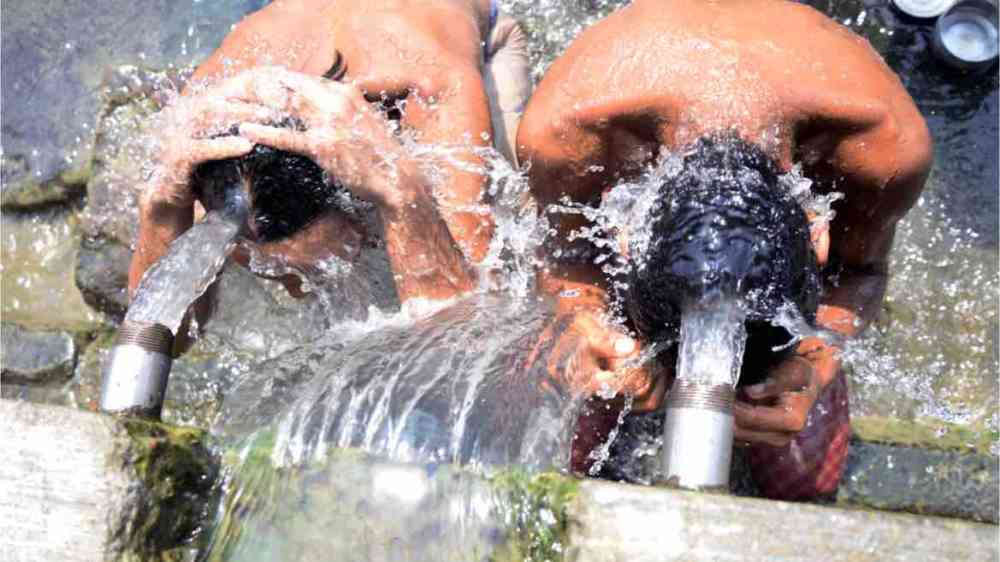
People take bath to keep them self cool from heat wave
Research briefs

A long stretch of humid heat followed by intense thunderstorms is a weather pattern historically seen mostly in the tropics. But climate change is making humid heat waves and extreme storms more common in traditionally temperate midlatitude regions.

MIT News, Massachusetts Institute of Technology