Research briefs

Keep up to date with the latest research on disaster risk and resilience on the PreventionWeb knowledge base.

Explore cutting-edge research on disaster risk reduction and resilience through PreventionWeb's dedicated research briefs section. Our platform curates and highlights the most recent academic studies, providing valuable insights into disaster risk management. Each research brief distills key findings from peer-reviewed journals and academic publications.

Submit a research brief.

These briefs are designed to keep you informed about the latest scientific advances. Links to the full publications are always included, ensuring easy access to in-depth knowledge. Please note that this section exclusively features academic research, distinct from reports by international organizations or Non-Governmental Organisations.

Uploaded on
Research briefs

Although honey bees have the ability to regulate hive temperatures, new research shows that extreme summer heat can overwhelm these critical pollinators' cooling systems, leading to significant colony population declines.

University of Chicago
Research briefs

Resilience to climate change is less about building walls than cultivating the social capacities for people to navigate uncertainty with agency, solidarity, and security.

Stanford Social Innovation Review, Stanford University
Research briefs

Researchers found that artificial intelligence can learn to estimate heat by studying patterns in ordinary red-green-blue (RGB) images, the type of standard color photos taken by digital cameras.

Clemson University, South Carolina
Research briefs

In their most recently published study, research team member Kenneth Lachlan looked closer at several communities in the eastern areas of the state and surveyed residents to learn more about how they received information during weather emergencies.

University of Connecticut
Istanbul, Turkey
Research briefs

New research from USC shows that variation in underground temperature and sediment thickness segment the Main Marmara Fault in ways that control where earthquakes start, how far they spread and where they stop—findings that could reshape risk assessments.

University of Southern California
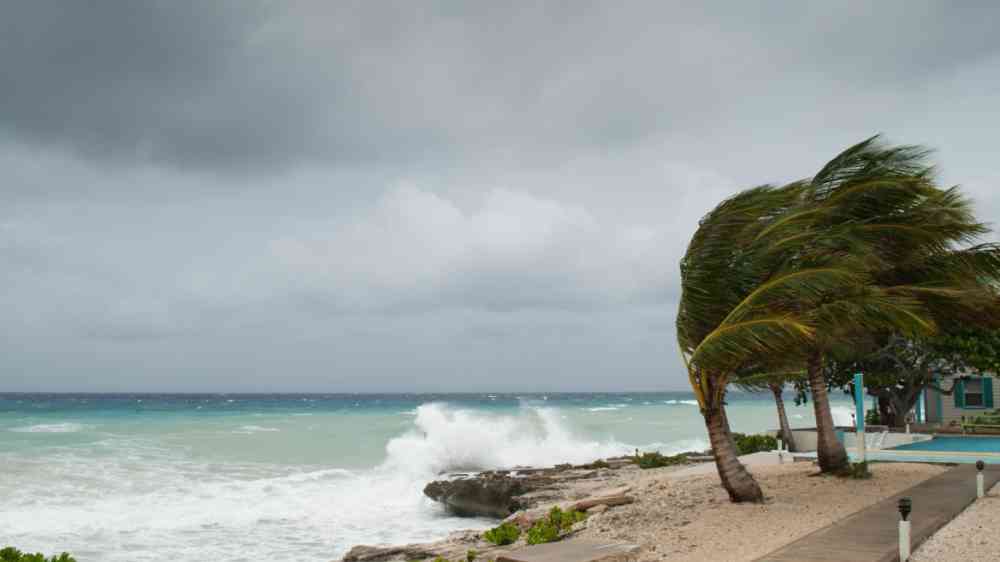
Palms in a storm at the coast.
Research briefs

A new interdisciplinary study led by researchers with collaborators from the City University of Hong Kong, has found that the intensifying positive phase of ENSO could significantly reduce life expectancy across high-income Pacific Rim countries.

Nanyang Technological University
Research briefs

For decades, economists have focused on how climate change will impact the future. New research from Derek Lemoine shows the impact is already here: climate change has reduced U.S. income by an estimated 12%.

University of Arizona Press
Research briefs

Physics-based models should be supplemented with AI hydrological models, and creating regional flooding estimates, rather than relying on site-specific estimates, according to a study.

Cornell University