Research briefs

Keep up to date with the latest research on disaster risk and resilience on the PreventionWeb knowledge base.

Explore cutting-edge research on disaster risk reduction and resilience through PreventionWeb's dedicated research briefs section. Our platform curates and highlights the most recent academic studies, providing valuable insights into disaster risk management. Each research brief distills key findings from peer-reviewed journals and academic publications.

Submit a research brief.

These briefs are designed to keep you informed about the latest scientific advances. Links to the full publications are always included, ensuring easy access to in-depth knowledge. Please note that this section exclusively features academic research, distinct from reports by international organizations or Non-Governmental Organisations.

Uploaded on
Research briefs

As the climate warms, extreme events such as heatwaves, heavy rainfall and droughts are becoming more frequent, more extensive and more damaging. For scientists, the key question is no longer only whether these events will intensify in a warmer world.

Institute of Atmospheric Physics, Chinese Academy of Sciences
Research briefs

Rising temperatures across the United States are often assumed to be a major force driving people to relocate. But new research from Florida Atlantic University shows a more nuanced reality: climate alone is not a primary driver of migration patterns.

Florida Atlantic University (FAU)
An artist's rendering of the Jason 3 satellite
Research briefs

How well does our current satellite fleet capture the world’s major floods? Scientists turn to the Dartmouth Flood Observatory record for a data-driven answer.

Eos - AGU
Glaciers Himalaya
Research briefs

Some glaciers don’t just melt—they explode into motion, and climate change is making them far harder to predict.

University of Portsmouth
Research briefs

Smaller quakes from secondary faults—which are not included in national seismic hazard modeling—occur more frequently than previously thought.

Eos - AGU
Bay of Bengali
Research briefs

Powerful cyclones can push seawater miles inland, threatening densely populated communities and critical infrastructure built along coastal areas.

Argonne National Laboratory
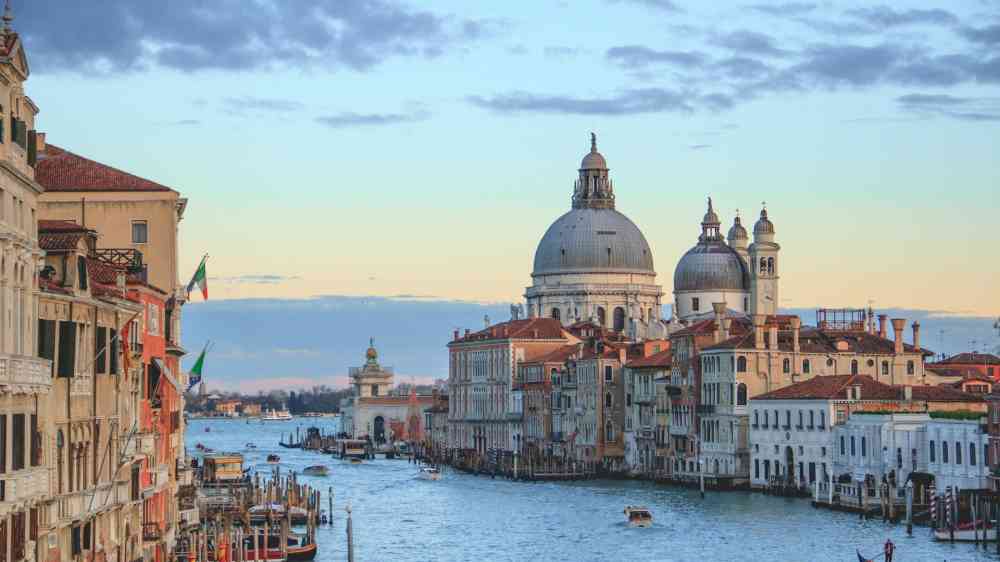
Metropolitan City of Venice, Italy
Research briefs

Relocating the city of Venice is among four potential options – including movable barriers, ring dikes and closing the Venetian Lagoon - that could help it adapt to future sea-level rise over the next 200 years, according a new study .

University of East Anglia
Research briefs

A study reveals that Waikīkī in Hawai‘i is facing a fundamental shift in flood hazards as sea levels rise–transitioning from a flooding that is driven primarily by rainfall to events increasingly dominated by tidal processes.

University of Hawai'i at Manoa