Research briefs

Keep up to date with the latest research on disaster risk and resilience on the PreventionWeb knowledge base.

Explore cutting-edge research on disaster risk reduction and resilience through PreventionWeb's dedicated research briefs section. Our platform curates and highlights the most recent academic studies, providing valuable insights into disaster risk management. Each research brief distills key findings from peer-reviewed journals and academic publications.

Submit a research brief.

These briefs are designed to keep you informed about the latest scientific advances. Links to the full publications are always included, ensuring easy access to in-depth knowledge. Please note that this section exclusively features academic research, distinct from reports by international organizations or Non-Governmental Organisations.
Uploaded on
Research briefs

Researchers from the ETH have now introduced a new artificial intelligence (AI) model that has learned these interactions and feedback autonomously and, compared to previous AI models, more precisely captures how air, land and water interact on Earth.

EurekAlert
Research briefs

Experts say extreme weather is boosting the odds that the pathogens carried by rodents will spill over into human populations.

Grist Magazine
Research briefs

A new imaging modality explores the complex subduction‐collision transition zone below southern Taiwan.

Eos - AGU
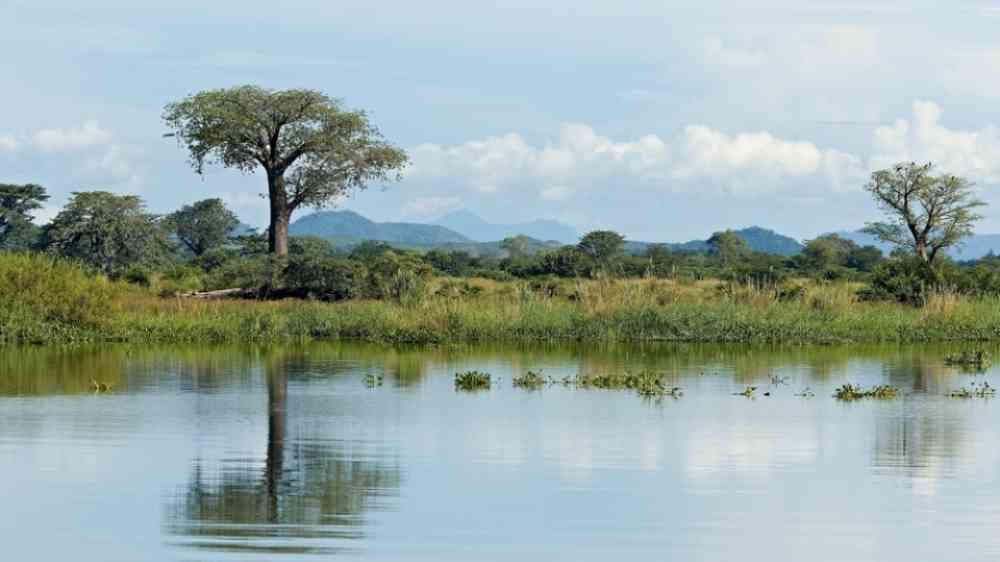
The Shire River landscape in Liwonde National Park, Malawi, Africa
Research briefs

The gas in hot springs could reveal the very first signs of a new tectonic plate boundary forming.

Frontiers in Earth Science
Research briefs

Under the lead of the Leibniz Institute for Baltic Sea Research Warnemünde (IOW), climate simulations were used to investigate how 19 inland seas, including the Baltic Sea, are responding to climate change.

Informatonsdienst Wissenschaft
Research briefs

For decades, Antarctic sea ice appeared resistant to global warming. Now, scientists say a cascade of ocean and atmospheric changes has ‘flipped the system’ – and the consequences could accelerate climate change worldwide.

University of New South Wales
Research briefs

A key Atlantic Ocean current system that helps regulate the planet's climate could weaken more than expected by 2100, with potentially devastating consequences worldwide, a new study has found.

PhysOrg, Omicron Technology Ltd
Research briefs

Regions with greater socioeconomic inequalities are more affected by cold weather, whereas areas with higher levels of wealth and urbanization are at greater risk during heat waves and lower risk during cold spells.

PhysOrg, Omicron Technology Ltd