Research briefs

Keep up to date with the latest research on disaster risk and resilience on the PreventionWeb knowledge base.

Explore cutting-edge research on disaster risk reduction and resilience through PreventionWeb's dedicated research briefs section. Our platform curates and highlights the most recent academic studies, providing valuable insights into disaster risk management. Each research brief distills key findings from peer-reviewed journals and academic publications.

Submit a research brief.

These briefs are designed to keep you informed about the latest scientific advances. Links to the full publications are always included, ensuring easy access to in-depth knowledge. Please note that this section exclusively features academic research, distinct from reports by international organizations or Non-Governmental Organisations.
Uploaded on
Research briefs

Researchers modeled climate to understand what contributed to the rapid warming of the planet last year

University of Miami
Research briefs

Given record-setting heat waves around the world in recent years, an international team of researchers investigated if the rate of global warming has increased significantly, or “surged,” over the last half century at statistically detectable rates.

University of California, Santa Cruz
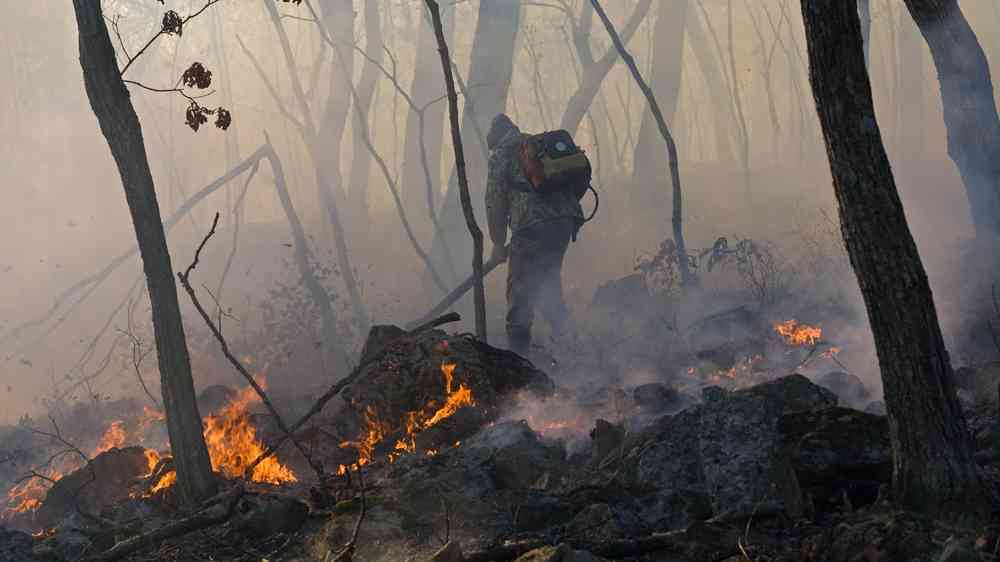
Suppression of forest fire.
Research briefs

Live field experiments in Sierra Nevada mountains are first of their kind

University of California, Irvine
A women farmer in Zimbabwe walking along her field checking the crops
Research briefs

Extreme weather events linked to climate change are fuelling violence against women long after they occur, say researchers, prompting calls for more gender-focused climate action.

Science and Development Network
officer checking the condition of the solar panel, early warning system, in anticipation of landslides
Research briefs

A deep learning technique could reduce the error in 10-day weather forecasts by more than 90%, allowing communities to better prepare for extreme events such as heat waves.

Eos - AGU
Research briefs

Many people are aware that large earthquakes are often followed by a sequence of aftershocks as stresses are redistributed in the surrounding area. Many may not be aware that there are also sequences of earthquakes that occur before most large earthquakes

GNS Science
Toppled trees and power lines in Perry, Florida in the aftermath of Hurricane Helene, USA
Research briefs

Climate change worsened Hurricane Helene’s impact by intensifying rainfall and wind, causing severe flooding and destruction in coastal and inland areas. Rising temperatures contributed to these extremes, according to a World Weather Attribution study.

World Weather Attribution
Research briefs

Which models are the most plausible and best reflect the future of the planet's climate? EPFL scientists have developed a rating system and classified climate model outputs generated by the global climate community and included in the recent IPCC report.

PhysOrg, Omicron Technology Ltd