Research briefs

Keep up to date with the latest research on disaster risk and resilience on the PreventionWeb knowledge base.

Explore cutting-edge research on disaster risk reduction and resilience through PreventionWeb's dedicated research briefs section. Our platform curates and highlights the most recent academic studies, providing valuable insights into disaster risk management. Each research brief distills key findings from peer-reviewed journals and academic publications.

Submit a research brief.

These briefs are designed to keep you informed about the latest scientific advances. Links to the full publications are always included, ensuring easy access to in-depth knowledge. Please note that this section exclusively features academic research, distinct from reports by international organizations or Non-Governmental Organisations.
Uploaded on
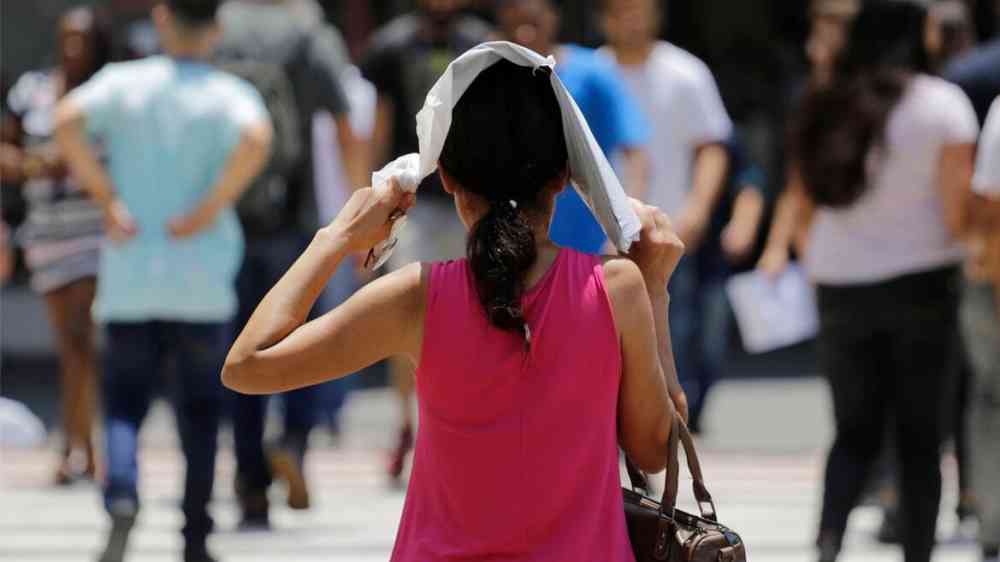
A woman protects herself from the hot sun in Sao Paulo, Brazil.
Research briefs

A team of international researchers has developed a natural fabric that urban residents could wear to counter rising temperatures in cities worldwide, caused by buildings, asphalt, and concrete.

University of South Africa
Super Typhoon Mangkhut (known as Ompong) In the Philippines
Research briefs

A new study links global warming to increased heatwaves and extreme rainfall in the Indo-Pacific. Shifts in tropical weather patterns, driven by changes in the Pacific Walker Circulation, are causing more frequent extremes, especially in Southeast Asia.

National University of Singapore
Flooded street
Research briefs

Machine learning-equipped camera systems can be an effective and low-cost flood defence tool, researchers show.

University of Bath
Blurry image of a sunny urban skyline
Research briefs

This study proposes a novel way of quantifying and projecting future vulnerability to heat stress in different areas of a city, providing local decision-makers with knowledge for designing more effective adaptation strategies.

Center for International Climate Research
Research briefs

Even if it is possible to reverse the rise of global temperatures after a temporary “overshoot” of 1.5 degrees Celsius, some climate damages triggered at peak warming will be irreversible, a study published in Nature shows.

Potsdam Institute for Climate Impact Research
Research briefs

The key to more accurate rainfall predictions may lie in the intricate dance of falling snowflakes, a new study has found.

University of Reading
Research briefs

An international team of 12 researchers across six institutions have recently made valuable enhancements to pyCSEP; a quintessential open-source software package used to develop and evaluate earthquake forecasting experiments.

GNS Science
Research briefs

Natural climate patterns such as El Niño are causing tropical glaciers to lose their ice at an alarming rate, a new study has found.

Ohio State University