Research briefs

Keep up to date with the latest research on disaster risk and resilience on the PreventionWeb knowledge base.

Explore cutting-edge research on disaster risk reduction and resilience through PreventionWeb's dedicated research briefs section. Our platform curates and highlights the most recent academic studies, providing valuable insights into disaster risk management. Each research brief distills key findings from peer-reviewed journals and academic publications.

Submit a research brief.

These briefs are designed to keep you informed about the latest scientific advances. Links to the full publications are always included, ensuring easy access to in-depth knowledge. Please note that this section exclusively features academic research, distinct from reports by international organizations or Non-Governmental Organisations.

Uploaded on
Research briefs

A recent study finds extreme weather accelerates nitrate pollution in groundwater. Heavy rains after drought cause nitrates to seep 33 feet in 10 days, exceeding EPA limits. Urges real-time soil nitrate monitoring and conservation practices.

University of California, Davis
Research briefs

Researchers found that Bering Sea ice has declined in nine of the last ten winters, increasing winds and waves. This reduces protection for Alaska's coastal communities, making them more vulnerable to storms. The trend is expected to worsen by the 2040s.

University of Maryland
Rocks block a road in Tejeros, Gran Canaria, Spain after heavy rains trigger landslides and rockfalls
Research briefs

A new paper suggests that recent attempts to reduce loss of life in this part of northwest China may have had some effect.

Eos - AGU
Eyjafjallajökull erupting above its ice cap in Iceland
Research briefs

Glaciers that are within three miles of a volcano move nearly 50% quicker than average, a new study has found, which could help create early warning of future eruptions.

PhysOrg, Omicron Technology Ltd
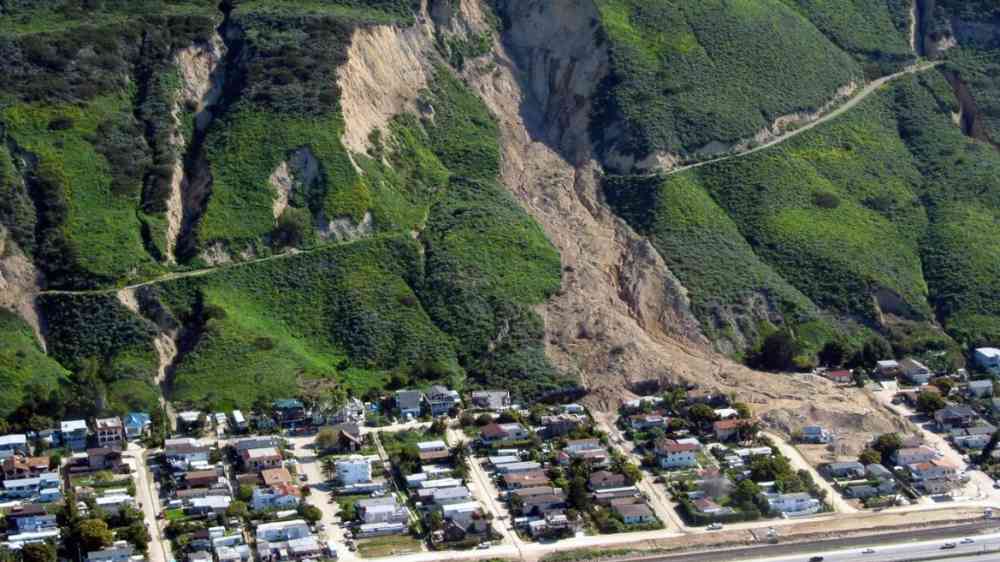
Rock and soil cover destroyed houses in La Conchita, California after a landslide tore through the community in 2005.
Research briefs

The inventory identified some 1,000 landslide points in São Sebastião, São Paulo state, Brazil. The research group is now using airborne laser scanning and other data inputs to create a methodology capable of more precise results.

São Paulo Research Foundation (Agência FAPESP)
Research briefs

About two months before Mauna Loa spewed rivers of glowing orange molten lava, geologists detected small earthquakes nearby and other signs, and they warned residents on Hawaii's Big Island.

PhysOrg, Omicron Technology Ltd
Inmates gather for a program in Perryville State Prison, Arizona
Research briefs

A recent study aimed to better understand how disasters affect incarcerated women and nonbinary and transgender people. As incarcerated persons must depend on administrators for health and safety, they are at increased risk when hazards strike.

Conversation Media Group, the
Research briefs

A study using a pre-1700 baseline shows human-induced global warming has already reached 1.5°C, exceeding previous estimates using an 1850-1900 baseline. This new method provides a clearer view of human-caused warming but highlights urgent action needs.

University of Leeds