Research briefs

Keep up to date with the latest research on disaster risk and resilience on the PreventionWeb knowledge base.

Explore cutting-edge research on disaster risk reduction and resilience through PreventionWeb's dedicated research briefs section. Our platform curates and highlights the most recent academic studies, providing valuable insights into disaster risk management. Each research brief distills key findings from peer-reviewed journals and academic publications.

Submit a research brief.

These briefs are designed to keep you informed about the latest scientific advances. Links to the full publications are always included, ensuring easy access to in-depth knowledge. Please note that this section exclusively features academic research, distinct from reports by international organizations or Non-Governmental Organisations.
Uploaded on
Research briefs

Computer simulations are helping scientists and engineers improve predictions for liquefaction—a sometimes deadly earthquake effect where the soil loses its stiffness, thus toppling buildings and more.

The University of Texas at Austin
Research briefs

U biologist Jon Wang, with UC Irvine colleagues, uses satellite imagery to document the growing destructiveness of Western wildfires since 1980.

University of Utah
Research briefs

Researchers of Wageningen University & Research warn that rivers are becoming more vulnerable to sudden, permanent changes, such as a river spontaneously changing its course.

Wageningen University and Research Centre
Research briefs

Florida is likely to be the canary in the coal mine, showing a drop in coastal home values starting now.

University of Connecticut
Research briefs

A new study has made significant advances in understanding how atmospheric electric field measurements can help predict severe weather events.

The Hebrew University of Jerusalem
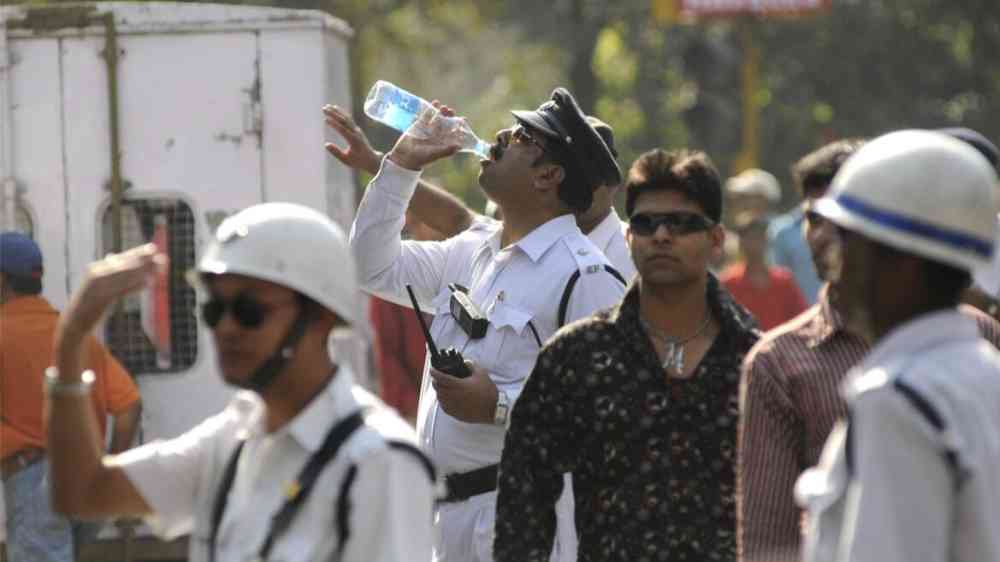
A traffic officer drinks water during a hot day in Kolkata, India
Research briefs

The Lancet Countdown report highlights "record-breaking threats" people's health face as a consequence of climate change. Major risks include negative effects on food security, spread of diseases, ecosystems, infrastructure and the economy.

Conversation Media Group, the
Research briefs

Researchers recommend limiting each graphic, which the IPCC refers to as "figures," and its title to one key message. The study produced a detailed checklist to improve the design of graphics that target policymakers and practitioners.

University of Southern California
Research briefs

A study warns Colorado's West Slope basins could hit a tipping point, risking unsustainable Lake Powell water deliveries under climate change. Advanced modeling reveals underestimated drought risks, urging integrated, science-based water management.

Cornell University