Research briefs

Keep up to date with the latest research on disaster risk and resilience on the PreventionWeb knowledge base.

Explore cutting-edge research on disaster risk reduction and resilience through PreventionWeb's dedicated research briefs section. Our platform curates and highlights the most recent academic studies, providing valuable insights into disaster risk management. Each research brief distills key findings from peer-reviewed journals and academic publications.

Submit a research brief.

These briefs are designed to keep you informed about the latest scientific advances. Links to the full publications are always included, ensuring easy access to in-depth knowledge. Please note that this section exclusively features academic research, distinct from reports by international organizations or Non-Governmental Organisations.
Uploaded on
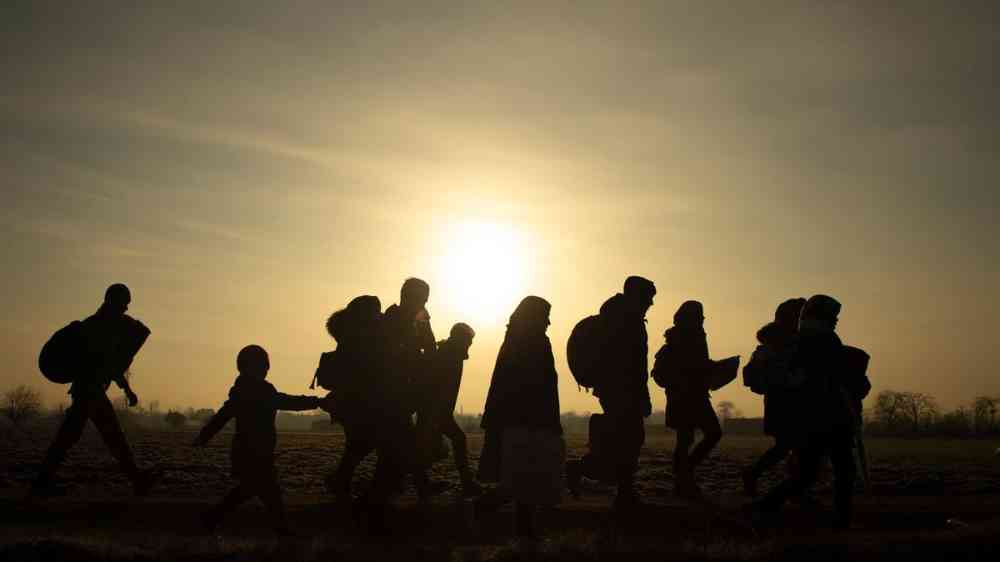
Migrants walk towards Türkiye’s Pazarkule border crossing with Greece’s Kastanies, Edirne, Türkiye
Research briefs

People are already being forced to flee the consequences of climate change to an alarming extent in the Global South, says Jan Freihardt. He believes, however, that Europe's fear of mass climate migration is exaggerated, poing other root causes.

ETH Zurich
Research briefs

Reflecting sunlight can protect a neighborhood from scorching temperatures, but surrounding neighborhoods could suffer as a result.

Eos - AGU
Research briefs

An analysis of the health care records of 1.2 million Southern California residents found that higher long-term smoke exposure was associated with a significant increase in the odds that a person would be diagnosed with dementia.

University of Washington
Research briefs

The “once-in-a-decade” storm that devastated the Pacific Northwest last week caused widespread outages, damage, and at least two deaths. Data shows the storms are becoming more common. Could climate change be a key driver?

University of Miami
Lumpini park and Bangkok city building view from roof top bar on hotel, in Bangkok, Thailand
Research briefs

A recent study in Nature Communications used NASA satellite data to identify a major gap in global resilience to climate change: cities in the Global South have far less green space - and therefore less cooling capacity - than cities in the Global North.

National Aeronautics and Space Administration (NASA)
Person holding an umbrella during a hot day in a square
Research briefs

A new study takes a look into extreme heat waves that hit predominantly in the last five years or so, particularly areas where extreme heat is accelerating considerably faster than more moderate temperatures.

Columbia Climate School
Research briefs

In certain parts of the United States, the ability of residents to prepare for and respond to flooding is being undercut on three different levels: an underestimation of risks, social vulnerability, and pervasive skepticism on climate change.

University of Michigan
A blazing wildfire starts to encroach on residential areas in Braga, Portugal
Research briefs

While climate change sets the stage for larger and more intense fires, humans are actively fanning the flames.

Eos - AGU