Research briefs

Keep up to date with the latest research on disaster risk and resilience on the PreventionWeb knowledge base.

Explore cutting-edge research on disaster risk reduction and resilience through PreventionWeb's dedicated research briefs section. Our platform curates and highlights the most recent academic studies, providing valuable insights into disaster risk management. Each research brief distills key findings from peer-reviewed journals and academic publications.

Submit a research brief.

These briefs are designed to keep you informed about the latest scientific advances. Links to the full publications are always included, ensuring easy access to in-depth knowledge. Please note that this section exclusively features academic research, distinct from reports by international organizations or Non-Governmental Organisations.

Uploaded on
Big wave beneath huge clouds
Research briefs

On New Year’s Day 1995, a monstrous 80-foot wave in the North Sea slammed into the Draupner oil platform. Its biggest impact was what it left behind: hard data. It was the first time a rogue wave had ever been measured in the open ocean.

Georgia Institute of Technology
Research briefs

New research led by the University of Victoria (UVic) has illuminated a significant and previously unrecognized source of seismic hazard for the Yukon Territory of northwestern Canada.

University of Victoria
Local people readying a boat and getting prepared for floods in the context of a community strategy called COMUNGERD (Communities United for Disaster Risk Management) in Guaranda, Colombia.
Research briefs

Researchers are calling for a more reliable approach to understanding water-related hazards by explicitly accounting for uncertainty in their predictions, arguing this could improve how communities prepare.

NYU Tandon School of Engineering
Wildfire raging near houses
Research briefs

Fire season is expanding in California, with an earlier start to wildfire activity in most of the state. In parts of the northern mountains, the season is now starting more than 10 weeks earlier than it did in the 1990s, a new study shows.

Conversation Media Group, the
Research briefs

A new study published in Earth’s Future by researchers has pointed the dual drivers behind this unprecedented heat: large-scale atmospheric circulation and an unusually strong soil moisture feedback

Institute of Atmospheric Physics, Chinese Academy of Sciences
Research briefs

The core findings hold: economic damages from climate change till mid-century are substantial and outweigh the costs of mitigation, they are mainly driven by temperature changes and affect regions with low incomes and low historical emissions most.

Potsdam Institute for Climate Impact Research
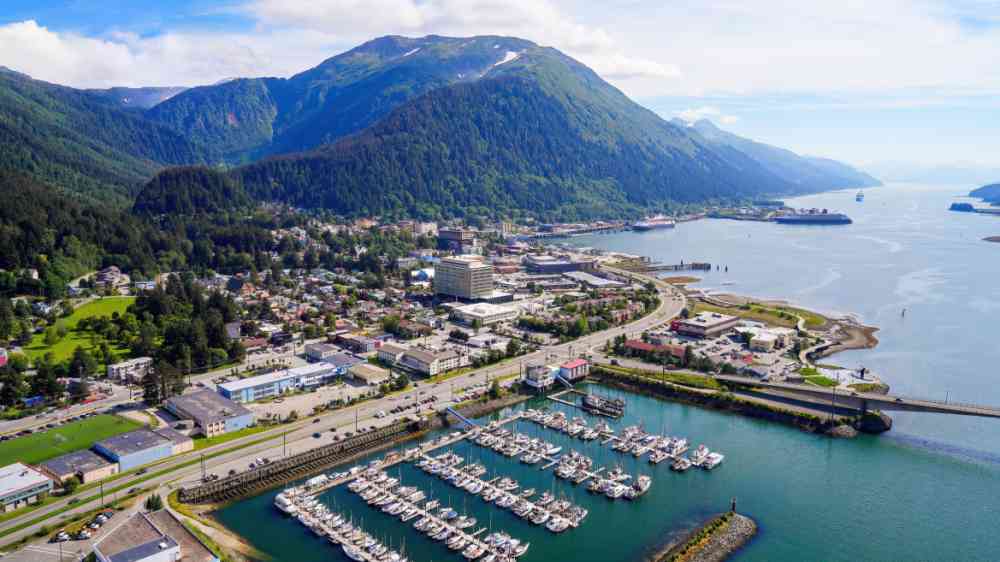
Aerial view of the downtown Juneau, the state capital of Alaska, USA, along the Gastineau Channel in the Arctic.
Research briefs

For a wide variety of earthquake scenarios in Alaska, an earthquake early warning (EEW) system could provide at least 10 seconds of warning time for hazardous shaking, according to a new report.

Seismological Society of America
Aerial drone view of a moody atlantic ocean wave on a black sand beach during summer in Iceland
Research briefs

Researchers at Tohoku University worked together with Swiss RE International SE (Japan Branch) to come up with solutions for more sustainable and cost-effective parametric insurance that supports both victims and disaster risk financing policymakers.

Tohoku University 東北大学