Research briefs

Keep up to date with the latest research on disaster risk and resilience on the PreventionWeb knowledge base.

Explore cutting-edge research on disaster risk reduction and resilience through PreventionWeb's dedicated research briefs section. Our platform curates and highlights the most recent academic studies, providing valuable insights into disaster risk management. Each research brief distills key findings from peer-reviewed journals and academic publications.

Submit a research brief.

These briefs are designed to keep you informed about the latest scientific advances. Links to the full publications are always included, ensuring easy access to in-depth knowledge. Please note that this section exclusively features academic research, distinct from reports by international organizations or Non-Governmental Organisations.


Uploaded on
Flooded street
Research briefs

As a Ph.D. student studying the impacts of coastal flooding in Annapolis, Md., Miyuki Hino heard from people familiar with the area that rain caused flooding, but the conventional method of measuring floods wasn’t picking it up.

Eos - AGU
The ancient moai on Easter Island 2,000 miles off the coast of Chile at sunset
Research briefs

By 2080 rising sea levels could cause seasonal waves to reach Ahu Tongariki, the iconic ceremonial platform that is part of the Rapa Nui National Park, a UNESCO world heritage site.

University of Hawai'i
Research briefs

Coral records extend the Indian Ocean sea-level timeline by 60 years, offering the first century-long view of accelerating change linked to human-driven climate impacts

National University of Singapore
Image of wildfire
Research briefs

A recent study is shedding light on the factors that contributed to the significant wildfires in Manitoba in May 2025. The research explores how unusual weather patterns and stressed vegetation combined to create an ideal environment for disaster.

University of Ottawa
The hillsides Montecito, California after debris flow in Dec. 4, 2017 following the recordThomas fire
Research briefs

In the wake of a wildfire, there’s often an assumption that burned landscapes will be more susceptible to landslides. But new research from the University of Oregon suggests it’s not always that simple.

University of Oregon
Research briefs

Over a 20-year period, atmospheric rivers could double the amount of rain falling on part of the Southeast, the researchers found.

Inside Climate News
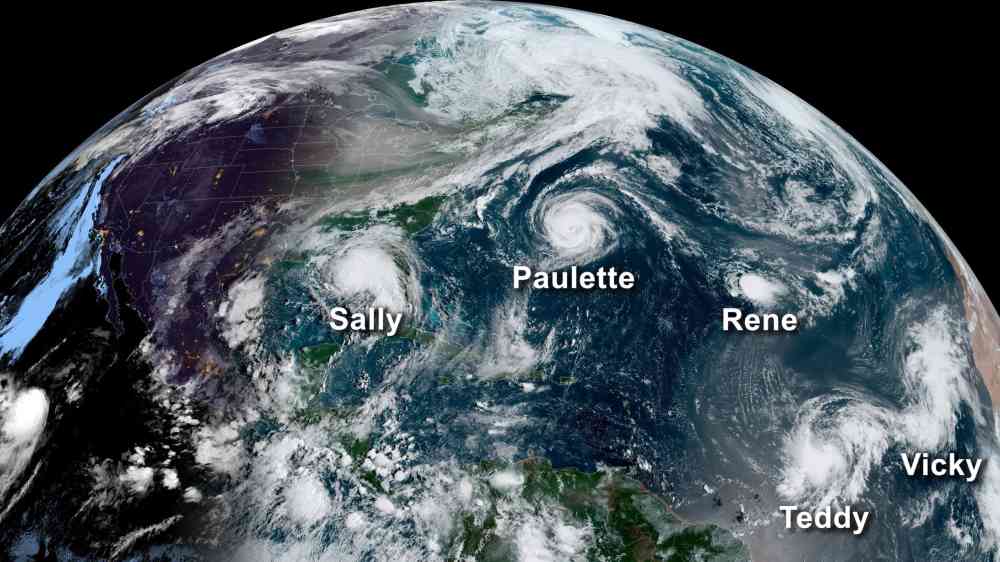
This image from NOAA's GOES-16 satellite on September 14, 2020, shows five tropical systems spinning in the Atlantic basin at one time. From left to right: Hurricane Sally in the Gulf of Mexico, Hurricane Paulette east of the Carolinas, the remnants of Tropical Storm Rene in the central Atlantic, and Tropical Storms Teddy and Vicky in the eastern Atlantic. A total of 10 named storms formed in September 2020—the most for any month on record.
Research briefs

A new study published in Nature Climate Change confirms hurricane clusters are becoming more frequent in the North Atlantic in recent decades—a trend projected to continue in the near future.

Fudan University (FDU)
Research briefs

Deaths by suicide and drug overdose significantly increased in the aftermath of the August 2023 Maui wildfire, according to a new study published in the Journal of the American Medical Association (JAMA).

University of Hawai'i