Research briefs

Keep up to date with the latest research on disaster risk and resilience on the PreventionWeb knowledge base.

Explore cutting-edge research on disaster risk reduction and resilience through PreventionWeb's dedicated research briefs section. Our platform curates and highlights the most recent academic studies, providing valuable insights into disaster risk management. Each research brief distills key findings from peer-reviewed journals and academic publications.

Submit a research brief.

These briefs are designed to keep you informed about the latest scientific advances. Links to the full publications are always included, ensuring easy access to in-depth knowledge. Please note that this section exclusively features academic research, distinct from reports by international organizations or Non-Governmental Organisations.

Uploaded on
Research briefs

Hurricane agency forecasts warn at the country-scale and not for one site. This paper introduces LiveCyc, a probabilistic forecasting system that takes any agency forecast and works out the wind distribution at the 1-km scale of a single neighborhood.

National Oceanic and Atmospheric Administration
Romania - Danube flooding, 2010
Research briefs

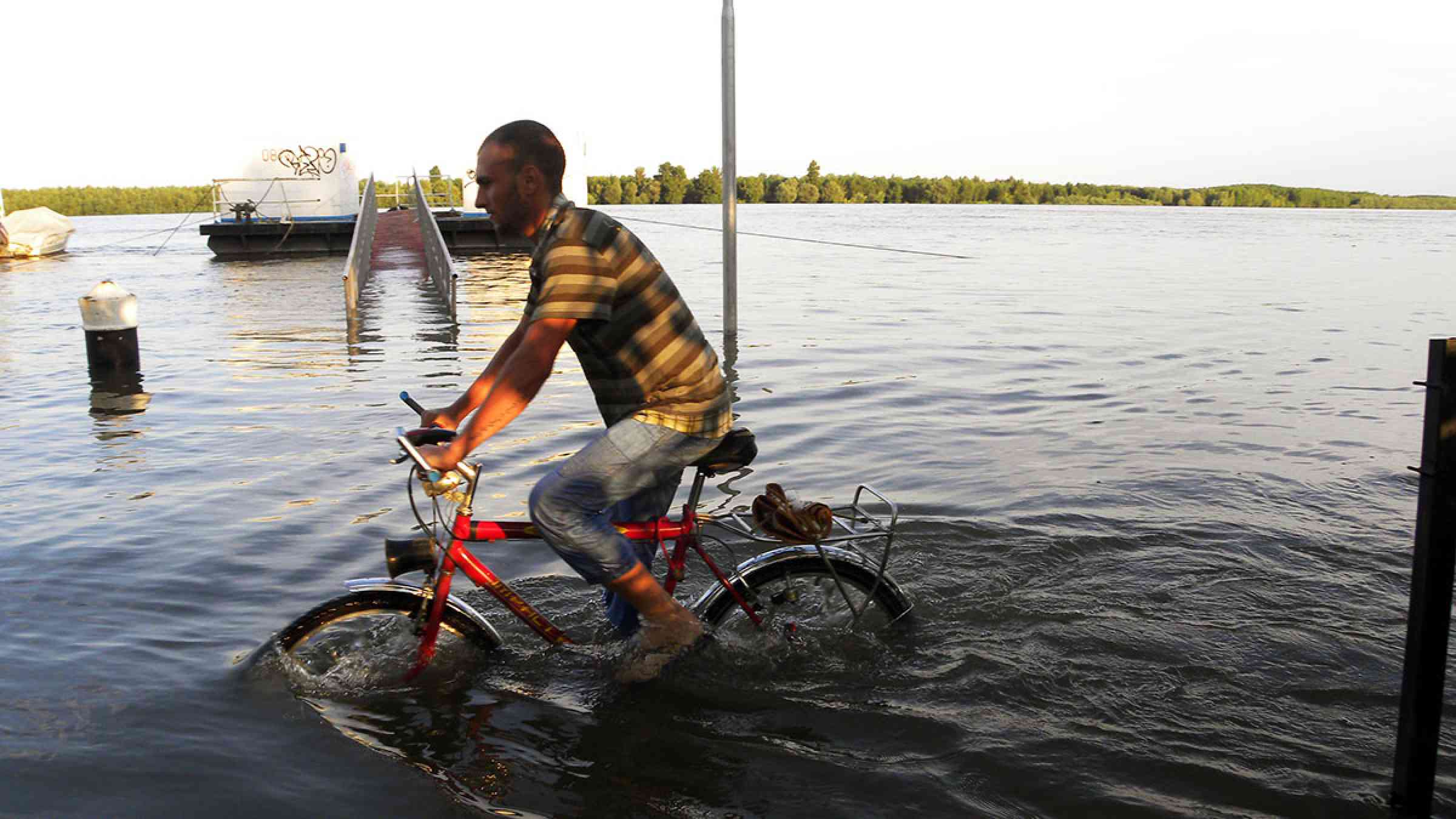
The analysis points towards a common governance roadmap. It suggests better integration of flood‑risk information into urban planning, stronger and more actionable warning systems, more resilient critical infrastructure, and greater cooperation.

Centro Euro-Mediterraneo sui Cambiamenti Climatici (CMCC)
Research briefs

Because atmospheric dust overall has a slight cooling effect on the climate, researchers say its decrease may have contributed modestly to recent climate warming.

University of California, Los Angeles
Weather monitoring equipment with a sunset sky backdrop, highlighting technology and atmosphere.
Research briefs

Study reveals a hidden problem: Temperature proxies used in many climate-impact studies can contain substantial measurement error, leading to misestimation of true impacts of temperature and, potentially understate climate impacts by at least 15%.

Wake Forest University
Research briefs

The devastating floods that swept through San Antonio and the Texas Hill Country in 2025 left researchers with an urgent question: What can be learned from these events to better prepare communities for the next catastrophic flood?

The University of Texas at San Antonio
Aerial view shows flood-damaged areas after a massive flash flood swept through the Bhotekoshi River in Nuwakot, Nepal
Research briefs

Evidence shows the seismic signal was caused not by an earthquake but by the rapid collapse of about 2 km² of rock and glacier ice. The mass fell roughly 1,400 m, releasing enormous energy and generating earthquake-like seismic waves.

World Weather Attribution
Research briefs

New research finds that large-scale weather patterns explain much of the year-to-year variation in northern India’s winter air pollution and may make seasonal forecasts of severe air pollution possible.

Princeton University
Research briefs

As the planet heats up, permafrost, wildfires, wetlands, and freshwaters are starting to release greenhouse gases of their own—on top of everything human activity and infrastructure already emit—driving up global temperatures.

SPARK